
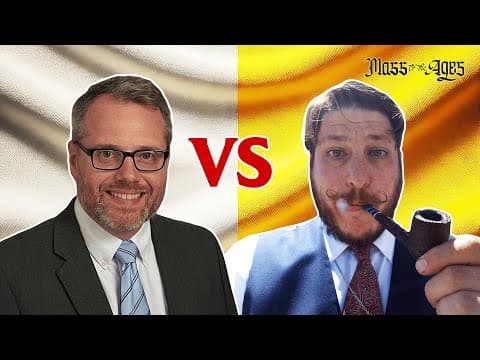
This blog post delves into the debate surrounding the Pope's authority to suppress the Latin Mass, particularly in light of Traditionis Custodes. Experts Dr. John Joy and Mr. Ryan Grant discuss the implications of papal authority, the nature of liturgical rights, and the historical context of the Latin Mass versus the Novus Ordo.
In this discussion, we explore a significant question within the Catholic Church: Does the Pope have the authority to suppress the Latin Mass and replace it with the Novus Ordo? This inquiry arises from the 2021 document Traditionis Custodes, which sparked debates among Catholics regarding the limits of papal authority.
The conversation features insights from Dr. John Joy, a scholar with a PhD in magisterial theology, and Mr. Ryan Grant, founder of Mediatrix Press. They emphasize that the debate is not about whether the Pope should have made changes to the liturgy but rather whether he had the authority to do so. The term "ultra vires" is introduced, referring to actions taken beyond one's legal authority.
The discussion references the Council of Trent, which stated that the Church has the power to determine or change the sacraments according to circumstances. This raises the question of whether the Pope's actions in Traditionis Custodes were within his authority or ultra vires.
Dr. Joy points out the complexity of distinguishing between the traditional Latin Mass and the Novus Ordo. Pope Benedict XVI described them as two forms of the same rite, while Pope Francis declared the Novus Ordo as the exclusive form. This creates ambiguity regarding the status of the traditional Latin Mass.
Dr. Joy argues that the Pope does not have the authority to abrogate the traditional Roman rite. He draws parallels with the Eastern Churches, which have the right to preserve their liturgical traditions. If the Eastern rites are protected, the same should apply to the traditional Latin Mass.
The Catechism states that no sacramental rite may be modified arbitrarily, even by the supreme authority of the Church. This suggests that there are limits to the Pope's authority regarding liturgical changes, emphasizing the need for respect for the mystery of the liturgy.
The discussion highlights that liturgical practices are not merely arbitrary but are rooted in the Church's tradition. St. Basil the Great's writings emphasize that unwritten customs, including liturgical practices, hold equal authority to written scripture. This underscores the importance of the traditional Latin Mass as part of the Church's heritage.
The Second Vatican Council's teachings are examined, particularly regarding the autonomy of Eastern Churches and the implications for the Western Church. The argument is made that if the Pope cannot suppress Eastern rites, he similarly cannot suppress the traditional Latin Mass.
Both Dr. Joy and Mr. Grant express optimism about the future of the traditional Latin Mass. They note that during the COVID-19 pandemic, traditional Masses remained accessible, attracting many faithful. This trend suggests a potential resurgence of interest in the traditional liturgy.
The conversation acknowledges the challenges posed by modern liturgical practices and the need for a return to tradition. The discussion concludes with a hopeful outlook for the Church, emphasizing that the faithful's desire for the traditional Latin Mass may lead to a reevaluation of its status within the Church.
The debate over the Pope's authority to suppress the Latin Mass raises profound questions about the nature of papal power, the importance of tradition, and the future of liturgical practices in the Catholic Church. As the faithful continue to seek a deeper connection to their heritage, the conversation surrounding the Latin Mass remains vital and ongoing.



















