
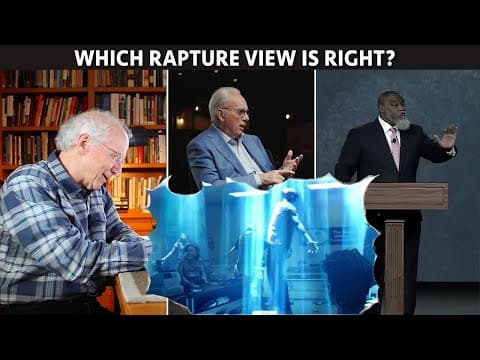
This blog post delves into the differing views on the rapture held by influential evangelical leaders Voddie Baucham, John MacArthur, and John Piper. Each leader presents unique interpretations of biblical texts regarding the timing of the rapture in relation to tribulation, highlighting the complexities and divisions within Christian eschatology.
The topic of the rapture has long been a point of contention among evangelical leaders, with differing interpretations leading to various beliefs about its timing and nature. In this post, we will explore the perspectives of three influential figures in the evangelical community: Voddie Baucham, John MacArthur, and John Piper. Each of these leaders holds a respected position within the faith, yet they diverge significantly in their views on the rapture.
Voddie Baucham is known for his strong theological stance and commitment to biblical truth. Baucham argues against the concept of a secret rapture occurring before the tribulation. He states:
"I do not believe that there's anything in the book of Revelation that supports the idea of a secret rapture of the church before the tribulation."
Baucham emphasizes that the conjecture of a rapture between Revelation chapters 3 and 4 lacks textual support. He points out that the Bible does not teach that the church will be absent during tribulation. In fact, he references Revelation 1, where John identifies himself as a partner in tribulation, suggesting that believers will indeed face hardships.
Baucham further critiques the notion that God would spare His people from suffering, highlighting the historical persecution of Christians. He notes:
"Suffering is real. And it's real for the people of God."
He argues that the church has always faced trials, citing examples from early Christian history, such as the persecution under Nero. Baucham believes that the idea of a pre-tribulation rapture is a misconception held primarily by those in the Western world who have not experienced significant hardship.
John MacArthur, another prominent evangelical leader, presents a contrasting view. He asserts that the rapture is an imminent event that will occur before the tribulation. MacArthur explains:
"It's going to be the rapture of the church. That's an unsigned event. In other words, there's no sign preliminary to that event."
According to MacArthur, the rapture will happen suddenly, followed by a seven-year period of tribulation. He believes that this sequence is supported by biblical prophecy, particularly in the book of Daniel. MacArthur's position stands in stark opposition to Baucham's, as he maintains that Christians will not be present during the tribulation period.
John Piper, a respected theologian and scholar, offers yet another perspective on the rapture. He acknowledges the traditional view of the rapture but argues that it does not align with certain biblical texts. Piper states:
"Let no one deceive you in any way, for that day will not come unless the rebellion comes first and the man of lawlessness is revealed."
Piper believes that the rapture will occur after the tribulation, referencing 1 Thessalonians 4, where believers are caught up to meet the Lord. He clarifies that this meeting does not imply a return to heaven but rather a welcoming of Christ as He establishes His kingdom on earth.
Piper also discusses the concept of God's wrath, suggesting that believers are not appointed to experience the bowls of wrath poured out on the beast, but they will endure persecution. He emphasizes the need for readiness among Christians, regardless of when the rapture occurs.
The differing views of Baucham, MacArthur, and Piper illustrate the complexities within Christian eschatology. While all three agree on the existence of a seven-year tribulation and the eventual return of Christ, they diverge on the timing of the rapture. This division can be summarized as follows:
The debate over the timing of the rapture continues to be a significant topic within evangelical circles. Each perspective offers unique insights into biblical prophecy and the nature of suffering for believers. As Christians navigate these differing views, it is essential to remain grounded in scripture and prepared for the return of Christ, regardless of when it may occur. As one saying goes, "hope for pre but prepare for post," reminding believers to be ready at all times for the coming of the Lord.
In the end, the call remains clear: be ready, for we do not know the day or hour of His return.



















