
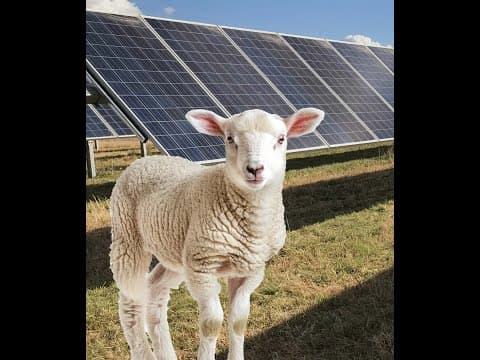
This blog post delves into the concept of solar grazing, a sustainable practice that utilizes sheep for vegetation management under solar panels. It discusses the benefits, challenges, and business opportunities associated with solar grazing, featuring insights from industry experts and case studies from Nebraska and beyond.
In recent years, solar energy has emerged as a vital component of the energy landscape in the United States, particularly in states like Nebraska. As solar projects proliferate, effective vegetation management becomes crucial to ensure the efficiency and longevity of solar installations. One innovative solution gaining traction is solar grazing, which involves using livestock, particularly sheep, to manage vegetation beneath solar panels. This blog post explores the concept of solar grazing, its benefits, challenges, and the business opportunities it presents.
Solar grazing refers to the practice of using sheep to control vegetation growth under solar panels. This method not only helps maintain the efficiency of solar installations by preventing overgrowth but also provides a sustainable source of income for sheep producers. The practice contrasts with traditional vegetation management methods, such as mowing, which can be labor-intensive and less environmentally friendly.
Cameron Myley from the American Land Board emphasizes the potential for solar grazing to enhance the sustainability of the sheep industry in the U.S. By integrating sheep grazing into solar projects, producers can increase their inventory and create new revenue streams. The demand for energy continues to rise, and with it, the need for effective vegetation management strategies in solar installations.
Nebraska is witnessing a surge in solar energy projects, with approximately 18,000 acres of solar installations proposed, alongside 6,000 acres of solar with battery storage. As these projects develop, effective vegetation management will be essential. The industry standard for solar installations is increasingly leaning towards one-axis tracking systems, which optimize energy production by following the sun's path across the sky. This technology requires careful planning for vegetation management to ensure optimal performance.
While solar grazing presents numerous benefits, it also comes with challenges:
Eric Bronson from James River Grazing shares his experiences managing vegetation for solar projects in Virginia. He highlights the importance of building strong relationships with solar companies and emphasizes the need for effective communication about the benefits of grazing. Eric notes that successful solar grazing operations often involve a hybrid approach, combining grazing with mowing to ensure optimal vegetation management.
As the demand for renewable energy continues to grow, the potential for solar grazing as a sustainable practice is significant. The U.S. Department of Energy is actively promoting research and development in this area, including initiatives like the Lasso Prize, which incentivizes the development of cattle agrivoltaics systems. This reflects a broader trend towards integrating agriculture with renewable energy production.
Solar grazing represents a promising intersection of renewable energy and sustainable agriculture. By leveraging livestock for vegetation management, producers can enhance the efficiency of solar installations while generating additional income. As Nebraska continues to expand its solar energy footprint, embracing innovative practices like solar grazing will be essential for maximizing the benefits of this growing industry.
For sheep producers and solar developers alike, exploring the opportunities presented by solar grazing could lead to a more sustainable and profitable future. Engaging in educational workshops and collaborating with industry experts can provide valuable insights into implementing this practice effectively.



















