
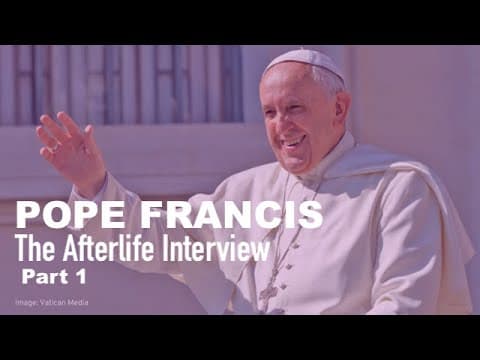
In this engaging interview, Pope Francis discusses his experiences and challenges during his papacy, touching on themes of reform, the church's future, and the importance of compassion and justice. He reflects on his legacy, the need for change within the church, and the significance of returning to the core teachings of Jesus.
In a captivating session led by Dr. Lisa Medus and psychic medium Veronica Drake, the late Pope Francis shares insights from his time as the head of the Catholic Church. This interview delves into his experiences, challenges, and hopes for the future of the church, providing a unique perspective on his legacy and the path forward for Catholics.
Dr. Lisa Medus introduces the session, emphasizing the importance of the documentary for Paola Marino and encouraging viewers to support it. The conversation quickly shifts to the interview with Pope Francis, who served as the head of the Catholic Church from March 13, 2013, until his death in 2025. Notably, he was the first Jesuit pope, the first from Latin America, and the first pope born outside Europe since the 8th century.
Pope Francis acknowledges the challenges of advancing the church towards living Jesus's truth. He likens the institution to a boulder that is difficult to push uphill, emphasizing the need for patience and careful navigation through the church's rigid structures. He states, "Jesus didn't come to control us; he was about liberation."
When discussing the appointment of Pope Leo XIV, Francis expresses optimism about his successor's ability to serve the people and bring about necessary changes. He believes that Leo will be able to address the church's financial issues and corruption, stating, "The corruption has got to be rooted out."
Pope Francis reflects on his mission to temper the influence of Opus Dei, an institution within the Catholic Church criticized for its cult-like qualities. He emphasizes the need for deep reform to protect the heart of the church from manipulation and greed.
When asked about the possibility of a female pope, he acknowledges that while it is not imminent, the church will eventually open its heart to feminine energy. He encourages a return to the radical teachings of Jesus, emphasizing love and compassion.
Pope Francis discusses the complexities of leadership, particularly in relation to political figures like President Trump. He describes Trump as a reflection of the nation, embodying both brilliance and brokenness. He believes that leaders are influenced by the collective energy of their people and that change must come gradually.
The conversation touches on the mysterious death of Pope John Paul I, with Pope Francis acknowledging external pressures that contributed to his demise. He suggests that the weight of reforming the Vatican may have played a role in his untimely death.
Pope Francis shares that his faith has evolved over time, but he remains committed to the core principles of mercy, justice, truth, and radical compassion. He emphasizes the importance of living as Jesus did, with simplicity and love.
Addressing the church's handling of abuse cases, he expresses deep remorse for the slow response to these issues. He acknowledges that silence can be a sin and that the church must prioritize justice over protecting its own reputation.
In this first part of the interview, Pope Francis offers profound insights into his papacy, the challenges he faced, and his hopes for the future of the Catholic Church. He calls for a return to the fundamental teachings of Jesus, urging Catholics to embrace love and compassion in their lives. As the conversation concludes, the anticipation builds for the next part of this enlightening dialogue.



















