
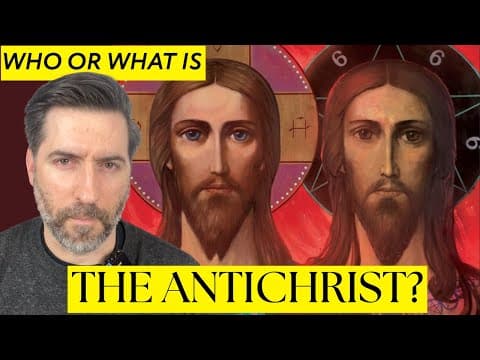
This blog post delves into the multifaceted concept of the Antichrist, tracing its origins in Christian scripture, examining historical interpretations, and exploring its psychological implications. It discusses the evolution of the Antichrist figure from biblical times to modern interpretations, highlighting the symbolic nature of the Antichrist as a representation of collective fears and anxieties within Christianity.
As the spooky season approaches, we delve into a topic that has intrigued and disturbed many: the Antichrist. This figure has been a significant part of Western religious thought, especially in Christianity, and has gained renewed attention in contemporary discussions, particularly following Peter Thiel's recent lectures on the subject. In this post, we will explore the origins, interpretations, and implications of the Antichrist, drawing from various scholarly perspectives and historical contexts.
To understand the Antichrist, we must first examine the scriptural basis for this concept. Interestingly, the term "Antichrist" does not appear in the Bible as a singular figure with a defined role. Instead, it is a concept inferred from various biblical texts. The term is mentioned only five times in the letters of John, where it refers to individuals within the early Christian community who deviated from orthodox beliefs, often labeled as heretics or false prophets.
The letters of John suggest that the Antichrist is not merely an individual but rather a spirit that exists in the world, manifesting through various people who oppose the teachings of Christ. This interpretation contrasts with the traditional view of the Antichrist as a singular, malevolent figure.
The concept of the Antichrist is often conflated with that of the Beast, a figure described in the Book of Revelation. The Beast symbolizes a political entity, often interpreted as the Roman Empire, which persecuted Christians. Revelation describes the Beast as a fearsome creature with seven heads and ten horns, representing successive rulers and kingdoms.
The Beast's identity has been linked to historical figures, most notably Emperor Nero, whose name can be calculated to yield the infamous number 666. This connection highlights the Beast's role as a persecutor of Christians and a representation of evil in a political context.
Throughout history, the Antichrist has been interpreted in various ways, influenced by the socio-political climate of the times. Early Christian fathers viewed the Antichrist as a future figure who would embody ultimate evil, leading to a fusion of the Antichrist and the Beast into a singular character representing all that opposes Christ.
Medieval writers such as Adso of Montier-en-Der and St. Hildegard of Bingen contributed significantly to the Antichrist narrative. Adso's writings provided a detailed account of the Antichrist's origins, portraying him as a Jewish figure from the tribe of Dan, symbolizing evil. St. Hildegard's visions depicted the Antichrist as a deceptive figure who would mimic Christ's life, ultimately leading to tyranny and persecution.
In contemporary times, the Antichrist has been reimagined in various cultural contexts, often depicted in literature and media. The popular "Left Behind" series presents a modern interpretation of the Antichrist as a charismatic leader who rises to power during apocalyptic times, reflecting current anxieties about global leadership and morality.
The identification of various historical and political figures as the Antichrist continues, with names ranging from political leaders to cultural icons. This trend illustrates how the Antichrist serves as a projection of societal fears and anxieties, adapting to the context of each era.
Delving deeper, we can explore the psychological implications of the Antichrist concept. Carl Jung viewed the Antichrist as the shadow of Christ, representing the repressed aspects of human nature that Christianity often condemns. This perspective suggests that the Antichrist embodies traits that society deems evil, such as aggression and pride, which are often suppressed in the pursuit of a moral ideal.
Jung argued that the polarization of good and evil within the Christian narrative leads to a collective unconscious that perpetuates the cycle of conflict between these forces. The Antichrist, therefore, becomes a symbol of the darker aspects of humanity that must be acknowledged and integrated rather than denied.
To overcome the influence of the Antichrist, Jung proposed the need for individuals and societies to integrate their shadow aspects. This integration involves recognizing and accepting the traits that are often deemed unacceptable, allowing for a more balanced and holistic understanding of the self. By doing so, individuals can resist the allure of tyrannical figures who exploit these repressed traits for their gain.
The concept of the Antichrist is a complex and evolving narrative that reflects humanity's fears, anxieties, and moral struggles throughout history. From its biblical origins to its modern interpretations, the Antichrist serves as a powerful symbol of the darker aspects of human nature and the societal challenges we face. Understanding this figure requires a multifaceted approach that considers historical, theological, and psychological perspectives, ultimately leading to a deeper comprehension of ourselves and the world around us.



















