
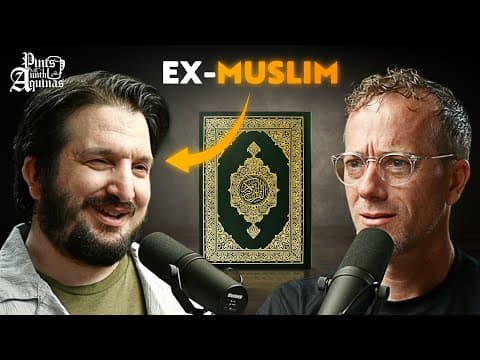
This blog post delves into the author's journey of questioning the Quran's teachings, highlighting contradictions, interpretations, and the struggle between faith and reason. It discusses the challenges faced by devout Muslims when confronted with scientific inaccuracies and the evolution of interpretations over time.
In a candid exploration of faith and reason, the author shares their journey as a devout Muslim who grappled with the teachings of the Quran. Despite their commitment to practicing Islam, they encountered numerous contradictions and questions that led them to critically assess the religious text they once accepted without doubt.
For several years, the author dedicated themselves to practicing Islam, engaging in prayer and study. However, as they read the Quran multiple times, they began to notice inconsistencies and troubling narratives that contradicted their understanding of the world. The Quran is often described as the perfect, unchanged word of Allah, yet the author found elements within it that seemed ignorant or even nonsensical.
The author highlights specific issues that sparked their doubts, including:
In their quest for understanding, the author sought interpretations of the Quran that could provide clarity. However, they found that many explanations seemed to distract from the core issues rather than address them directly. This led to a deeper internal conflict as they attempted to suppress their doubts while remaining faithful.
The author discovered that early Islamic scholars, such as the Mutazil, who advocated for rational interpretations, were suppressed over time. This suppression limited the diversity of thought within Islamic scholarship, leaving many questions unanswered. The author noted that contemporary interpretations often attempt to reinterpret problematic verses rather than confront them directly.
A significant point of contention for the author was the Quran's claims about the natural world. While some Muslims argue that the Quran is not a scientific text, the author points out that the Quran itself presents itself as a source of signs and evidence about creation. This contradiction raises questions about the text's validity when it fails to align with established scientific understanding.
The author reflects on the challenges of understanding the Quran in translation. They faced accusations of misinterpretation due to their lack of proficiency in Arabic. However, they countered these claims by utilizing authoritative sources and translations to analyze the text more deeply. The availability of online resources has made it easier for individuals to explore the Quran's verses and their meanings.
The author draws parallels between the Quran and the Bible, noting that both texts have faced scrutiny regarding their interpretations. However, they argue that the Quran's claim to be the unerring word of Allah complicates the discussion. Unlike the Bible, which contains various genres and interpretations, the Quran presents itself as a definitive guide with no room for doubt.
The author suggests that Muhammad may have drawn from existing Jewish and Christian narratives but failed to fully comprehend or accurately convey these stories. This raises questions about the authenticity of the Quran as a divine revelation and its role in establishing Islam as the ultimate truth.
The author's journey reflects a broader struggle faced by many individuals who question their faith in light of new information and understanding. The contradictions within the Quran and the challenges of interpretation highlight the complexities of religious belief in a modern context. As the author continues to explore these issues, they invite readers to engage critically with their own beliefs and the texts that shape them.



















