
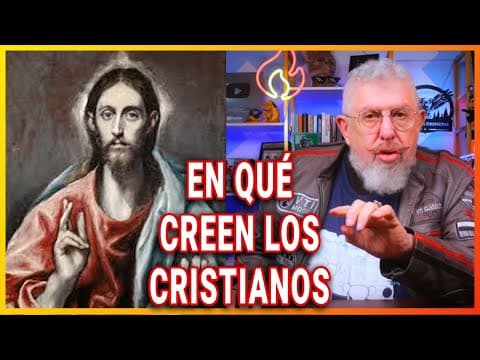
Christianity, the world's largest religion with over 2.4 billion adherents, encompasses a vast diversity of beliefs and denominations, often conflicting and contradictory. This article examines the complexities within Christian doctrines, the challenges of defining true belief, the role of sacred texts, and the implications of such diversity on faith and identity.
Christianity is the largest religion globally, with approximately 2.4 billion followers, representing about one-third of the world's population. It is followed by Islam with around 1.9 billion adherents and Hinduism with about 1.2 billion. However, these numbers include a significant portion of children under 13 years old, who often accept beliefs without full understanding or choice. Adjusting for this, the number of adults with firmly rooted religious beliefs is closer to 1.8 billion Christians, 1.4 billion Muslims, and 900 million Hindus.
Christianity is not a monolithic group but a broad denomination encompassing people who believe in vastly different doctrines. Historically, these differences have led to conflicts, persecution, and violence among Christian groups. The Catholic Church, for example, counts 1.39 billion baptized members as of 2024, but this figure can be misleading. Many individuals, like the author, were baptized without consent and do not identify as Catholic or hold any religious beliefs, yet remain counted as members.
Beyond Catholicism, there are approximately 190 million members of the two Orthodox Churches and about 1.03 billion Protestants spread across numerous denominations including Anglicans, Baptists, Evangelicals, Lutherans, Calvinists, Methodists, Adventists, Pentecostals, and many others. Despite their differences, all claim to be Christian and to hold the truth, even when they disagree on what that truth is.
The definition of a Christian is somewhat vague. According to Wikipedia, Christians share the belief that Jesus of Nazareth is the Son of God and the Messiah prophesied in the Old Testament, who suffered, was crucified, descended to hell, and rose from the dead for humanity's salvation. This simple definition raises many questions about the nature of Jesus' conception, the necessity of his sacrifice, and the attributes of God.
Christians believe in much more than this basic definition. For instance, the Nicene Creed, recited by many Catholics and Orthodox Christians, states belief in the Holy Spirit, the Holy Catholic Church, the communion of saints, the forgiveness of sins, the resurrection of the body, and eternal life. Yet, many adherents do not fully understand concepts like the "communion of saints," which theologians have debated extensively.
The "communion of saints" has multiple interpretations. Saint Thomas Aquinas suggested it refers to a common fund of the Church's goods, implying baptized individuals could theoretically claim a share of the Vatican's wealth—though this is practically impossible. Others interpret it as referring to the sacraments, holy things, or the Christian community itself. Regardless of the definition, most believers accept it without deep understanding.
This example illustrates the broader issue of what Christians truly believe. Differences can be subtle or profound, sometimes leading to serious doctrinal disputes.
According to the Catholic Catechism, all Catholics must believe that the Holy Scriptures—the Old and New Testaments—are authored by God, who inspired human authors to write without error on matters of salvation. This belief demands acceptance of biblical accounts such as the creation of the universe in seven days, the creation of birds on the fifth day, and animals and humans on the sixth day.
These literal interpretations often conflict with scientific evidence, such as the fossil record showing evolution over billions of years. Believers face the challenge of reconciling faith with scientific understanding.
Many Christians selectively accept parts of their religion that appeal to them while ignoring or minimizing others. For example, some may reject the literal creation story or the violent episodes described in the Old Testament, such as the command to destroy entire nations.
This selective belief raises questions about the coherence and consistency of Christian faith across its vast adherent base.
Christianity's vast diversity and internal contradictions highlight the complexity of religious belief. With over two billion adherents worldwide, the religion encompasses a wide range of doctrines, practices, and interpretations. Understanding what Christians truly believe requires acknowledging this diversity and the challenges it poses to defining a unified faith.
The discussion also underscores the importance of critical reflection on religious teachings, the role of sacred texts, and the interplay between faith and reason in contemporary society.
Ultimately, Christianity's rich tapestry of beliefs reflects both its historical depth and the ongoing quest for spiritual truth among its followers.



















