
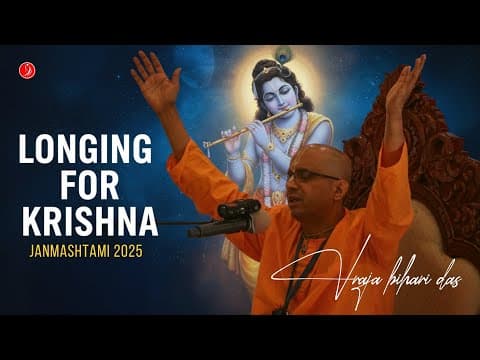
On Janmashtami, we delve into the profound teachings and pastimes of Lord Krishna as narrated in the Bhagavatam. The discourse emphasizes the importance of longing for Krishna, the nature of devotion, and the transformative power of hearing Krishna's glories. Through various anecdotes and philosophical insights, we learn how to cultivate a deeper connection with Krishna and the essence of true devotion.
Janmashtami is a significant occasion for millions of devotees around the world, marking the appearance of Lord Krishna. In this discourse, we explore the profound teachings and pastimes of Krishna as narrated in the Bhagavatam, particularly focusing on the first chapter of the 10th Kanto, where King Parikshit poses questions to Shukadeva Goswami about Krishna's divine nature.
The conversation begins with King Parikshit expressing his eagerness to hear about Krishna. He emphasizes that he is not merely fasting but is instead feasting on the nectar of Krishna kata, which nourishes his soul. This highlights a crucial aspect of devotion: the longing for Krishna. Parikshit’s sincere desire to hear about Krishna serves as a reminder that true devotion transcends mere ritualistic practices.
During the glorification of Krishna, three types of individuals benefit:
All three participants experience an increase in their longing for Krishna, which is particularly poignant on Janmashtami.
As practitioners of bhakti, we often oscillate between two modes: determination and longing. The determination mode is characterized by a focus on solutions, techniques, and practical classes aimed at improving our Krishna consciousness. In contrast, the longing mode invites us to appreciate Krishna for who He is, without seeking anything in return. This mode encourages us to immerse ourselves in the beauty and mystery of Krishna, fostering a deeper emotional connection.
Krishna is described as wonderful, mysterious, and beautiful. The gopis, for instance, express their perfection in simply gazing at Krishna as He returns from the forest, adorned with His flute and surrounded by friends. This imagery illustrates that true love for Krishna is not transactional; it is about appreciating His divine qualities and presence.
Hearing about Krishna's pastimes is not just an intellectual exercise; it is a means to cultivate love and longing for Him. The stories of Krishna, such as His playful interactions with the gopis and His divine exploits, serve to deepen our emotional connection and understanding of His nature.
The discourse also emphasizes the importance of community in fostering devotion. By appreciating the good qualities in others and engaging in collective glorification of Krishna, we create an environment conducive to spiritual growth. This communal aspect is vital in attracting Krishna into our lives and enhancing our longing for Him.
The pastimes of Krishna are filled with charm and sweetness. For example, the story of Putana, who came to kill Krishna but was ultimately granted liberation due to her actions, illustrates Krishna's merciful nature. He accepts the least qualification and rewards it with the highest grace, showcasing His compassion.
Krishna's childhood is marked by playful mischief, such as stealing butter and charming the residents of Vrindavan. These pastimes are not merely stories; they are lessons in love, devotion, and the nature of relationships. The gopis’ complaints about Krishna’s antics reveal their deep affection for Him, as they express their love through their concerns.
To truly connect with Krishna, we must cultivate a longing for Him. This longing can be nurtured through sincere chanting of His holy names and engaging in devotional practices. The story of a young boy who recognized Krishna's beauty upon seeing Him in a temple serves as a reminder that Krishna's allure transcends cultural and religious boundaries.
Chanting the holy names of Krishna is a powerful practice that helps us develop a deeper connection with Him. It is through this chanting that we can express our longing and devotion, allowing Krishna to fill our hearts with love and grace.
As we celebrate Janmashtami, let us embrace the mood of a beggar, recognizing our insignificance and longing for Krishna's grace. By immersing ourselves in Krishna kata and chanting His names, we can transform our hearts and deepen our relationship with the divine. Let us express our gratitude to the teachings of our spiritual masters, who guide us on this path of devotion.
In the spirit of Janmashtami, may we all strive to increase our longing for Krishna and experience the joy of His divine presence in our lives.



















