
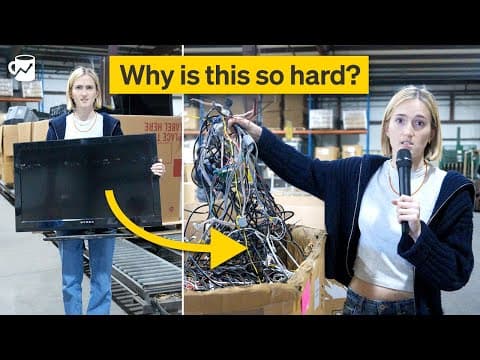
This blog post details a personal journey to recycle tech waste, highlighting the growing e-waste problem, the recycling process, and the challenges faced by recycling facilities. It emphasizes the importance of responsible disposal and the need for better regulations and consumer awareness.
In today's tech-driven world, the accumulation of electronic waste, or e-waste, has become a significant issue. With millions of tons of tech waste generated each year, many individuals find themselves unsure of how to dispose of their old devices responsibly. This blog post recounts a personal journey to recycle tech waste, shedding light on the challenges and solutions in the recycling process.
In 2022, a staggering 62 million tons of e-waste were created, yet less than a quarter of that was recycled. This alarming statistic highlights a widespread issue: many people are unaware of how to properly dispose of their tech waste. The problem is exacerbated by planned obsolescence, where products are designed to have shorter life cycles, leading to increased waste. As technology continues to permeate every aspect of our lives, the amount of e-waste generated is growing five times faster than recycling efforts can keep up with.
Armed with a collection of old tech items, including four iPhones, a TI-83 calculator, a vape, two MacBook charging cords, and a MacBook Air, I set out to explore the best options for recycling and selling these devices. My first stop was a tech pawn shop called PayMore.
At PayMore, I learned that they would only accept my two newer iPhones, the laptop, and the calculator. The offers were modest: $25 for the laptop, $5 for the calculator, and $80 each for the iPhones, provided they were unlocked and the iCloud was disconnected. The shop had strict criteria, refusing to take laptops older than 2015 or iPhones with a home button. They also offered to recycle items they wouldn't accept, suggesting I check with Apple for potential credit on my devices.
Next, I biked to the nearest Apple Store, which was quite a trek. Apple offered a better deal for the two newer iPhones but deemed my laptop too old for any credit, recommending it for recycling instead. The process was straightforward, but it was clear that many older devices were being left behind in the recycling conversation.
Determined to find more recycling options, I consulted a New York state government website and discovered that Best Buy and Goodwill were drop-off centers for tech waste. However, my experience at Goodwill was disappointing; they did not accept any electronics.
At Best Buy, I found a much more convenient solution. They had a designated bin for electronics recycling, allowing customers to drop off items without waiting in line. While they charged a $30 fee for TVs and monitors, other items could be recycled free of charge. This ease of access made Best Buy a standout option for tech waste recycling.
After figuring out recycling, I turned my attention to donating usable tech. I contacted a local organization that accepted donations of laptops and other electronics. They informed me that my 2015 MacBook Air could be donated to someone in need, and I would receive a tax deduction based on its market value. This was a positive outcome, as it allowed my old device to continue serving a purpose.
To gain a deeper understanding of the recycling process, I visited one of the largest e-waste recycling facilities in the U.S., located just outside Boston. This facility processes around 10 million pounds of tech waste annually, with a significant portion coming from businesses and government organizations.
The facility's owner, Keith, explained that they engage in a process called demanufacturing, which is the first step in recycling. They manually disassemble devices, sorting components for further processing. For example, old TVs are taken apart to recover valuable materials like copper and glass. The facility also handles hazardous materials, such as batteries, with great care to prevent fires and ensure safety.
Despite the facility's efforts, challenges remain. The recycling industry struggles to keep pace with the growing volume of e-waste. Regulations like Extended Producer Responsibility (EPR) laws have helped improve recycling rates, but not all states have adopted these measures. Additionally, the complexity of processing different types of tech waste means that many facilities must rely on downstream recyclers to handle specific materials.
As the tech landscape evolves, so too must our approach to recycling. The rise of vapes and other new technologies presents additional challenges for recyclers, as regulations often lag behind innovation. However, there are positive trends, such as a growing awareness among consumers about the importance of recycling and the push for repair laws to combat planned obsolescence.
The journey to recycle tech waste is fraught with challenges, but it is essential for the health of our planet. As consumers, we must take responsibility for our old devices, ensuring they are either donated, sold, or recycled properly. By doing so, we can help mitigate the growing e-waste problem and contribute to a more sustainable future. The recycling process may be complex, but with increased awareness and better regulations, we can work towards a solution that benefits everyone.



















