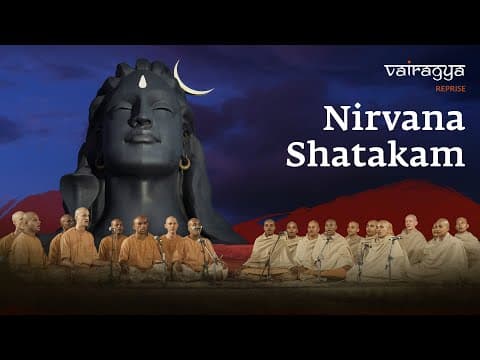
Nirvana Shatakam, a profound spiritual hymn, emphasizes the concept of non-duality and the realization of the self as pure consciousness, transcending physical and mental identities.
Nirvana Shatakam, also known as the Atma Shatakam, is a revered spiritual hymn attributed to the great philosopher and saint Adi Shankaracharya. This text encapsulates the essence of non-duality (Advaita) and the realization of the self as pure consciousness. In this blog post, we will delve into the key themes and teachings of Nirvana Shatakam, exploring its significance in spiritual practice and understanding.
Nirvana Shatakam consists of six verses that articulate the nature of the self and the ultimate reality. Each verse systematically negates various aspects of identity, leading to the affirmation of the self as pure consciousness. The repetition of the phrase "Shivoham" (I am Shiva) serves as a powerful reminder of the unity of the individual self with the universal consciousness.
The hymn begins with a series of negations, stating what the self is not. It emphasizes that the true self is beyond the physical body and senses. The lines convey that one is not the mind, intellect, ego, or even the senses such as hearing, touch, taste, sight, or smell. This negation is crucial in understanding that the self transcends all physical forms.
Nirvana Shatakam further explores the idea of transcending dualities such as pleasure and pain, good and evil, and life and death. The text asserts that the self is not bound by karma (actions) or the results of actions, thus liberating the seeker from the cycle of birth and rebirth. This liberation is a central theme in many spiritual traditions, emphasizing the importance of realizing one's true nature.
The hymn emphasizes the oneness of existence, stating that there is no distinction between the individual self and the universal consciousness. The repeated affirmation of "Shivoham" reinforces the idea that the seeker is not separate from the divine. This realization is pivotal in achieving spiritual enlightenment and inner peace.
Nirvana Shatakam also addresses the nature of reality, stating that concepts such as virtue, sin, happiness, and sorrow are transient and do not define the true self. The hymn encourages practitioners to look beyond these fleeting experiences and recognize the eternal nature of consciousness.
In the journey of self-realization, the role of a guru or spiritual teacher is often highlighted. While the hymn does not explicitly mention the guru, the teachings of Adi Shankaracharya emphasize the importance of guidance in understanding the profound truths of non-duality.
Nirvana Shatakam serves as a powerful reminder of the essence of non-duality and the realization of the self as pure consciousness. By negating the physical and mental identities, the hymn guides seekers towards the understanding that they are not separate from the divine. This realization is not just a philosophical concept but a transformative experience that can lead to profound inner peace and liberation.
As we reflect on the teachings of Nirvana Shatakam, we are invited to embark on our own journey of self-discovery, transcending the limitations of our identities and embracing the unity of existence. The path to enlightenment is illuminated by the wisdom of this timeless hymn, encouraging us to chant "Shivoham" and awaken to our true nature.