
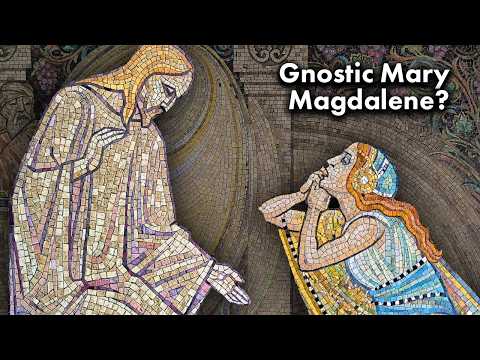
The Gospel of Mary presents a unique view of Christian eschatology, focusing on the soul's journey after death rather than a cosmic apocalypse. This early Christian text, attributed to Mary Magdalene, emphasizes inner knowledge and the soul's ascent, challenging traditional narratives of sin and salvation. It highlights the importance of personal insight and the role of women in early Christianity, showcasing a dialogue between Mary and the disciples that redefines authority and spiritual truth.
What happens at the end of the world? For many Christians, the answer is familiar: Jesus returns in glory, the dead rise, the wicked are judged, and the righteous live forever in a new heaven and earth. This vision is prevalent in the book of Revelation and the apocalyptic teachings of Jesus in the canonical gospels. However, the Gospel of Mary offers a radically different perspective. In this early Christian text, the end of the world is not a cosmic spectacle but an internal journey that begins at death.
The Gospel of Mary reimagines Christian eschatology and soteriology, shifting the focus from a distant apocalypse to the intimate reality of the soul's true origin and its return to a primordial state. Central to this narrative is Mary of Magdala, or Mary Magdalene, who recounts a vision received from Jesus.
Discovered in 1896, the Gospel of Mary is a Coptic text, likely translated from Greek, and is believed to have been composed in the 2nd century CE. The text is heavily damaged, with only nine of the original 19 pages surviving, which means readers often jump into the middle of a conversation between Jesus and his disciples.
Unlike the canonical gospels, the Gospel of Mary does not narrate the life and death of Jesus. Instead, it presents a dialogue or teaching scene set after the resurrection. The risen Jesus imparts wisdom to his disciples, and Mary shares her vision. This format resembles other early Christian texts that communicate hidden wisdom through dialogue, such as the Hermetic texts and the Nag Hammadi codices.
The Gospel can be divided into two main parts: 1) a teaching from Jesus about the nature of matter and 2) a vision from Mary regarding the ascent of the human soul after death. Together, these elements convey a bipartite eschatology, presenting distinct paths for matter and the soul.
In the Gospel of Mary, Jesus discusses the nature of matter, responding to the disciples' question about its destruction at the end of time. He states, "Every nature, every form, every creature exists in and with each other, and they will be dissolved again into their own root." This reflects early Christian concerns about the physical world and its relationship to spiritual realities.
Many early Christians, particularly the Valentinians, viewed the material world as a result of a cosmic error, trapping the soul in corrupted matter. Jesus's teaching suggests a cycle of dissolution and restoration, where the good (likely referring to Jesus) comes to restore everything to its original state.
When Peter asks about the sin of the world, Jesus responds, "There is no sin, but it is you who perform sin when you do what is like the nature of adultery." This radical statement reframes sin not as disobedience to divine law but as a disconnection from the divine root. Sin arises from the entanglement of the immaterial soul with the material body, leading to passions that misalign the soul with its true origin.
Jesus warns against being led astray, emphasizing that the Son of Man is within each person. This suggests that the divine presence is not an external event but an internal reality, challenging traditional apocalyptic expectations.
The Gospel of Mary highlights Mary Magdalene's significant role as a disciple. Although the text does not specify which Mary it refers to, scholars widely agree that it is Mary Magdalene. She is portrayed as a confidant of Jesus, possessing deep insight into his teachings. In the Gospel, she steps forward to share hidden knowledge, asserting her authority in a male-dominated context.
This dynamic reflects broader tensions in early Christianity regarding women's roles and authority. The text captures a moment of disagreement among the disciples, particularly between Peter and Mary, illustrating the struggle over who gets to speak for Jesus and what constitutes legitimate teaching.
Mary's vision describes the soul's journey after death, where it encounters hostile forces such as desire, ignorance, and wrath. These forces attempt to hinder the soul's ascent to its true origin. The soul engages in dialogue with these powers, affirming its identity and shedding the physical body, which is likened to a garment.
This theme resonates with Platonic philosophy, where the soul is seen as temporarily trapped in the body. The Gospel of Mary emphasizes that knowledge gained during life empowers the soul to navigate these challenges after death, leading to a peaceful rest.
In the Gospel of Mary, salvation unfolds in two stages: first, through knowledge during life, and second, through the soul's ascent after death. This perspective shifts the focus from a future apocalyptic event to the present Christian experience. The text suggests that the Savior is not returning in a dramatic fashion but is already present within believers, guiding them toward spiritual insight.
The Gospel of Mary presents a profound and radical reinterpretation of Christian eschatology and soteriology. It emphasizes the importance of inner knowledge, the soul's journey, and the role of women in early Christianity. By challenging traditional narratives of sin and salvation, the text invites readers to explore their spiritual paths and the divine presence within themselves. The ongoing debate over authority and interpretation in early Christian communities remains relevant today, reflecting broader questions about who gets to shape religious narratives and truths.



















