
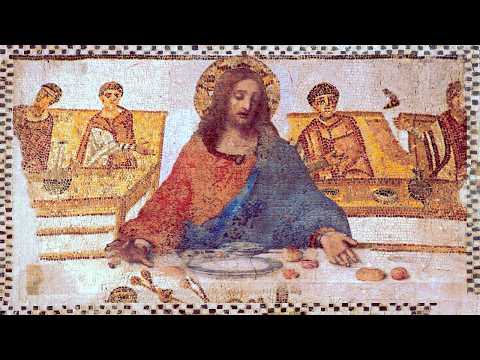
The Eucharist, a central Christian ritual, has complex origins rooted in Greco-Roman dining customs rather than solely in the Last Supper. Early Christian meals were substantial gatherings that evolved over time, influenced by cultural practices and theological developments.
The Eucharist, also known as the Lord's Supper or Holy Communion, is one of the most widespread rituals in Christianity, involving the gathering of believers to eat bread and drink wine in remembrance of Jesus Christ's death. However, the origins of this ritual are complex and multifaceted, influenced by various cultural and theological factors.
The term "Eucharist" comes from the Greek word meaning "to give thanks" and is rooted in the accounts of the Last Supper found in the Gospels of Matthew, Mark, and Luke. During this meal, Jesus shared bread and wine with his disciples, stating:
The Gospel of Luke adds the instruction, "Do this in remembrance of me," which has become a foundational aspect of the ritual.
Historically, scholars have sought to trace a direct line from the Last Supper to contemporary Eucharistic practices. However, recent scholarship suggests that the origins of the Eucharist are not as straightforward as previously thought. Early evidence indicates that the Eucharist did not emerge from a single event but rather evolved from various communal meal practices.
In the earliest centuries of Christianity, the Eucharist was not a token ritual but a substantial meal. The Apostle Paul, in his first letter to the Corinthians, describes gatherings where Christians shared a meal. However, issues arose when wealthier members consumed food and drink excessively, leaving poorer members hungry. Paul admonished them, emphasizing the need for unity and the significance of the meal as a commemoration of Jesus's death.
Paul's description of the Eucharistic meal uses the Greek term "dapnown," which is better understood as a banquet rather than a simple supper. These gatherings were formal events that played a crucial role in Greco-Roman social and religious life, often including prayers, hymns, and discussions of philosophy or ethics.
The structure of these early meals often included two phases: a food phase and a wine-drinking phase, known as a symposium. The meals could vary in formality and content, ranging from modest gatherings to lavish banquets. Bread was a staple, and wine was a common beverage, providing essential nutrition in the ancient Mediterranean diet.
The Christian Eucharistic meals closely resembled the banquets held by Greco-Roman associations, which were social and religious organizations that flourished in the ancient world. These associations often gathered for communal meals that included offerings, prayers, and hymns, reflecting a blend of social and sacred practices.
Over time, the nature of the Eucharist began to change. By the 4th century, separate Eucharistic rituals emerged, indicating a shift from communal meals to more ritualized practices. This transition may have been influenced by the growth of the Christian community, making it impractical to host large communal meals.
As Christianity expanded, the Eucharist began to be celebrated in dedicated worship spaces, leading to a more structured and symbolic practice. The shift from substantial meals to token portions of bread and wine likely occurred gradually, influenced by logistical challenges and changing cultural norms.
While the Gospels frame the Last Supper as a Passover meal, scholars debate the extent to which this framing influenced early Eucharistic practices. The earliest Christian texts, such as the Didache, do not reference the Last Supper but instead focus on the communal aspects of the meal, emphasizing unity and devotion to Jesus.
The origins of the Eucharist reveal a rich tapestry of cultural influences, theological developments, and evolving practices. Rather than being a direct imitation of the Last Supper, the Eucharist emerged from the broader context of Greco-Roman dining customs and communal meals. Understanding this complexity allows for a deeper appreciation of the ritual's significance in early Christianity and its ongoing evolution in contemporary practice.



















