
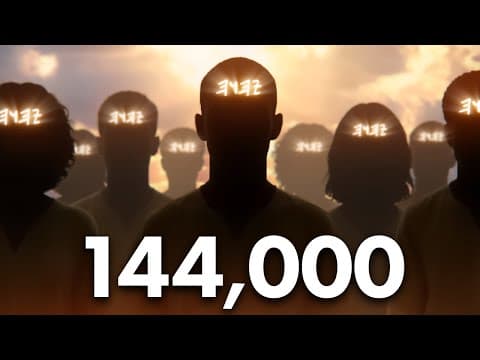
The 144,000 mentioned in Revelation are a mysterious group marked by God for salvation. This blog post delves into their identity, interpretations, and significance within the context of biblical prophecy, exploring both ancient and modern perspectives.
The Book of Revelation is filled with enigmatic imagery and symbolism, and one of its most intriguing passages describes a group of 144,000 individuals who are sealed by God. This number, derived from the multiplication of 12 tribes of Israel and 12,000 from each tribe, raises questions about its literal versus symbolic meaning. This blog post will explore the identity of the 144,000, their significance, and the various interpretations that have emerged over centuries.
Revelation is known for its vivid imagery, including beasts, cosmic battles, and symbolic numbers. The number seven frequently appears, symbolizing perfection or completeness, while the number twelve represents wholeness and divine authority. The introduction of the 144,000 draws on these symbolic meanings, appearing in two key chapters: Revelation 7 and Revelation 14.
In Revelation 7, the author describes a vision of four angels holding back destructive winds until the servants of God are marked with a seal on their foreheads. The number of those sealed is stated as 144,000, with 12,000 from each of the 12 tribes of Israel. This sealing signifies divine protection and marks them for salvation.
The 144,000 reappear in Revelation 14, where they are depicted as following the Lamb (Jesus) and singing a unique song that only they can learn. They are described as blameless and pure, having not defiled themselves with women, which adds another layer to their exclusivity.
The seal mentioned in Revelation carries significant meaning. In Greek, it is referred to as "sfragis," indicating ownership or authority. This concept of sealing is rooted in the Hebrew Bible, particularly in Ezekiel 9, where God commands an angel to mark the faithful in Jerusalem to protect them from judgment. The seal serves as a protective measure against supernatural harm, a theme prevalent in ancient Jewish and Christian traditions.
The identity of the 144,000 has been a subject of debate among scholars and theologians. Here are some interpretations:
Some early Christian writers, including the Apostle Paul, suggested that the 144,000 represent a faithful remnant of Jewish believers in Jesus. This interpretation aligns with the specific tribal breakdown in Revelation 7, indicating a literal ethnic identity.
Other scholars argue that the 144,000 should not be understood as a literal number but rather as a symbolic representation of God's faithful people. This view posits that the number signifies completeness and wholeness, encompassing all believers, not just ethnic Jews.
The mention of the 144,000 as virgins who have not defiled themselves with women suggests a connection to purity and readiness for spiritual warfare. This idea resonates with ancient Jewish practices where warriors observed strict purity laws before battle. The celibacy of the 144,000 may symbolize their dedication and readiness to serve God in the final battle against evil.
In Revelation, the 144,000 are contrasted with the followers of the beast, who are marked with the number 666. This deliberate juxtaposition highlights the distinction between those loyal to God and those aligned with evil. The followers of the beast receive a mark that signifies their allegiance to a corrupt system, while the 144,000 are sealed with divine protection.
The identity of the 144,000 continues to spark speculation among modern Christians. Various groups have developed distinct interpretations:
Jehovah's Witnesses believe that only 144,000 anointed Christians will be resurrected to heaven, serving as leaders in God's kingdom. This interpretation emphasizes a literal understanding of the number and its exclusivity.
Dispensationalists view the 144,000 as a literal group of Jewish converts during the end times, tasked with evangelizing the world during the tribulation period. This perspective aligns with a chronological reading of Revelation as a prophetic timeline.
Some modern theologians argue that the 144,000 represent the entire community of redeemed believers, transcending ethnic boundaries. This interpretation emphasizes the unity of God's people across different backgrounds.
The identity of the 144,000 in the Book of Revelation remains a complex and multifaceted topic. Whether viewed as a literal Jewish remnant, a symbolic representation of all believers, or a unique group marked for divine protection, their significance in the narrative of Revelation is profound. As we explore these interpretations, we gain insight into the broader themes of faithfulness, purity, and divine protection in the face of cosmic conflict. The ongoing discussion surrounding the 144,000 reflects the rich tapestry of biblical interpretation and the enduring quest for understanding within the Christian tradition.



















