
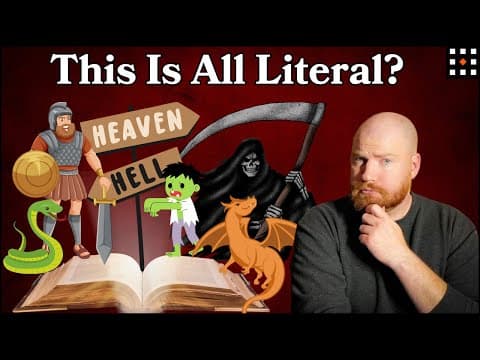
This blog post examines the literal interpretations of various bizarre and controversial elements found in the Bible, challenging the notion that such interpretations are unreasonable. It highlights examples of giants, talking animals, divine punishments, and apocalyptic prophecies, arguing that many believers selectively choose what to take literally based on contemporary values.
In this post, we will explore some of the most bizarre and controversial elements found in the Bible, challenging the notion that taking these stories literally is unreasonable. While many discussions around the Bible often focus on serious theological issues, today we will lighten the mood by examining some of the more absurd claims that believers are expected to accept as literal truth.
One common response from believers when faced with criticisms of the Bible is to accuse skeptics of taking the text too literally. However, this raises an important question: if certain verses are deemed too literal, how do believers decide which parts of the Bible to interpret literally and which to view as metaphorical or allegorical? This selective interpretation often reflects contemporary values rather than a consistent theological framework.
One of the most infamous examples of literal interpretation in the Bible is the story of the Nephilim, found in the Book of Genesis. According to the text, the "sons of God" came down and had relations with the "daughters of men," resulting in the birth of giants known as the Nephilim. This narrative raises questions about the nature of angels and their supposed reproductive capabilities.
Beyond the Nephilim, the Bible mentions other giant clans such as the Rephaim, Anakim, and Zamzummim. These beings are described as possessing supernatural strength and size, with Goliath being a well-known example of a giant who stood over nine feet tall. The literal belief in these giants is still held by many Christians today, despite the lack of historical evidence.
In the Genesis creation narrative, a talking serpent tempts Eve to eat from the forbidden tree. If one accepts the creation story as literal, then the existence of a talking serpent must also be taken literally. This raises questions about the nature of evil and the character of God, who allows such a creature to exist.
Another example is Balaam's talking donkey, which sees an angel blocking their path and speaks to Balaam. This story, like many others in the Bible, is often dismissed as metaphorical, yet it is presented as a literal event within the text.
The story of Jonah, who is swallowed by a giant fish and survives for three days, is another literal interpretation that many believers accept. The narrative suggests miraculous events, including resurrection, which raises further questions about the nature of divine intervention.
The Bible contains numerous accounts of God commanding genocide, including the destruction of entire cities and populations. Many believers struggle to reconcile these violent commands with their understanding of a loving God. This selective interpretation often leads to cherry-picking which parts of the Bible are taken literally.
The plagues inflicted upon Egypt, culminating in the death of the firstborn, are also meant to be taken literally. This narrative illustrates the extremes of divine punishment and raises ethical questions about the nature of God’s justice.
The Bible is filled with apocalyptic imagery, including the sun going dark, the moon turning to blood, and the appearance of monstrous creatures. These prophecies are often interpreted literally by believers, despite their fantastical nature. The descriptions of the end times, including the four horsemen of the apocalypse and the resurrection of the dead, challenge our understanding of reality and the natural world.
The Bible contains a multitude of stories that, when taken literally, present a complex and often absurd view of the world. The challenge lies in the selective interpretation of these texts, where believers often choose to accept certain narratives while dismissing others as metaphorical. This inconsistency raises important questions about the nature of faith, interpretation, and the character of God as depicted in the scriptures. As we continue to explore these themes, it is essential to engage critically with the text and consider the implications of literal interpretations in the context of modern values and ethics.



















