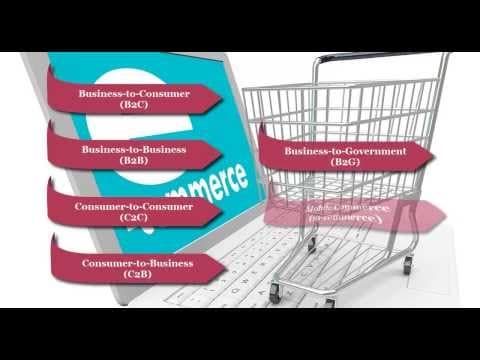
This article delves into the various types of e-commerce, including B2C, B2B, C2C, C2B, B2G, and m-commerce, highlighting their definitions, characteristics, and examples to provide a comprehensive understanding of the e-commerce landscape.
E-commerce has transformed the way businesses and consumers interact, enabling transactions to occur over the internet. This article explores the major types of e-commerce, classified based on the nature of the transactions. The primary categories include Business to Consumer (B2C), Business to Business (B2B), Consumer to Consumer (C2C), Consumer to Business (C2B), Business to Government (B2G), and Mobile Commerce (m-commerce).
Business to Consumer (B2C) e-commerce involves transactions between companies and individual consumers. This type of e-commerce allows customers to gather information and purchase both physical goods, such as books and consumer products, and information goods, which include digital content like software and eBooks. B2C is recognized as the second largest and one of the earliest forms of e-commerce, facilitating the direct sale of products to consumers over electronic networks.
B2B e-commerce refers to transactions between businesses. This category accounts for approximately 80% of all e-commerce transactions and is expected to grow at a faster rate than B2C. The B2B market consists of two primary components: infrastructure and e-markets. Companies engaged in B2B e-commerce benefit from cost savings, increased speed, reduced errors, and the elimination of many manual processes.
A notable example of B2B e-commerce is Walmart, which interacts with major suppliers like Procter & Gamble and Johnson & Johnson electronically. Through this system, suppliers can access inventory statuses in real-time, allowing them to replenish products efficiently. In a B2B environment, essential documents such as purchase orders, invoices, and shipping logistics are managed directly through the network, leading to improved supply chain management and operational efficiency.
C2C e-commerce enables consumers to sell directly to other consumers using the internet and web technologies. This type of e-commerce encompasses a wide range of services and products sold through platforms like auction sites (e.g., eBay) and classified ads. Additionally, consumers can advertise their products and services within organizational intranets, facilitating sales among employees.
Consumer to Business (C2B) e-commerce involves individuals selling products or services to businesses. This model allows consumers to offer specific products or services at prices they determine, creating a unique marketplace where businesses can source goods directly from individuals.
B2G e-commerce refers to transactions between businesses and government entities. This type of commerce is characterized by the use of the internet for public procurement, licensing procedures, and other government-related operations. B2G e-commerce typically features two main aspects: the public sector plays a leading role in establishing e-commerce, and there is a significant need for the public sector to enhance the effectiveness of its procurement systems.
Mobile Commerce (m-commerce) involves the buying and selling of goods and services through wireless technology, primarily using handheld devices such as smartphones and personal digital assistants. Japan is recognized as a global leader in m-commerce, where the delivery of content over wireless devices has become faster, more secure, and scalable. As mobile technology continues to advance, some experts predict that m-commerce may surpass traditional wireline e-commerce as the preferred method for digital transactions, particularly in regions like Asia Pacific, where mobile phone users outnumber internet users.
The landscape of e-commerce is diverse, encompassing various transaction types that cater to different market needs. Understanding these major types of e-commerce—B2C, B2B, C2C, C2B, B2G, and m-commerce—provides valuable insights into how businesses and consumers interact in the digital age. As technology continues to evolve, the dynamics of e-commerce will likely shift, presenting new opportunities and challenges for all stakeholders involved.