
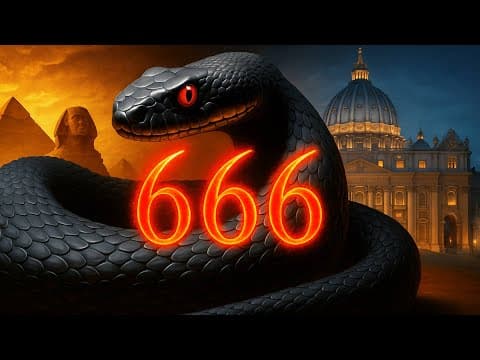
This blog post delves into the concept of the Mark of the Beast, tracing its historical significance and spiritual implications throughout biblical history. It emphasizes the importance of understanding the mark not as a physical symbol but as a representation of obedience and worship, drawing parallels from various historical events and religious systems. The post encourages readers to discern the deceptive nature of the mark and to engage in discussions about these critical truths.
Soon, the world will marvel after the beast and take its mark, fulfilling God's words. However, very few understand the meaning of these things. In this blog post, we will explore the Mark of the Beast through time, aiming to provide a comprehensive overview of its significance and implications.
Welcome to this important discussion on the Mark of the Beast. My goal today is not to present a thesis or a detailed defense of these concepts but rather to highlight a significant pattern throughout history. By examining this pattern, we can discern the destination of history and gain understanding of the delusion that is soon to come upon the world.
The Mark of the Beast is described in the Book of Revelation, which is a prophetic and symbolic text. It is crucial to approach this book with a balanced hermeneutic, recognizing both literal and symbolic interpretations. Revelation is filled with visions designed to convey spiritual truths, and thus, a literal interpretation should be used sparingly.
The Mark of the Beast is often misconceived as a physical mark, such as a chip or QR code. However, it is essential to understand that the mark represents a spiritual issue of obedience and worship. From the beginning of biblical history, the theme of obedience grounded in faith has been consistent. True faith leads to obedience, and this principle is evident throughout scripture.
To comprehend the Mark of the Beast, we must look at its historical context. The Bible provides numerous examples of obedience and disobedience, starting with Cain and Abel, Noah, Abraham, and Moses. Each of these figures faced challenges that tested their faith and obedience to God.
The first instance of a mark in the Bible is found in Genesis 4:15, where God places a mark on Cain to protect him from being killed. This mark symbolizes the protection of the wicked, illustrating that even those who oppose God can prosper temporarily.
As humanity progressed, wickedness grew, leading to God's judgment through the flood. The antediluvian world likely had a new world order system, with the Nephilim ruling as demigods, enforcing obedience through fear and oppression.
Following the flood, the Tower of Babel represents humanity's attempt to unify under a single religious system. This system enforced obedience to Nimrod's sun-worshiping religion, which continued to influence subsequent empires.
In Egypt, Pharaoh enforced obedience through oppression, commanding the Israelites to build cities and even ordering the death of their firstborn sons. The Israelites' refusal to obey Pharaoh's commands exemplifies the tension between God's people and oppressive systems.
After their liberation from Egypt, the Israelites often fell into apostasy, worshiping false gods and participating in pagan rituals. This pattern of disobedience led to God's judgment and the eventual destruction of the temple.
The Babylonian Empire, under King Nebuchadnezzar, enforced worship of a golden image, demanding obedience from all subjects. Shadrach, Meshach, and Abednego's refusal to worship this image serves as a powerful example of standing firm in faith against oppressive systems.
The Roman Empire continued this trend of enforcing worship, with emperors demanding to be worshiped as gods. Early Christians faced persecution for refusing to bow to these demands, illustrating the ongoing struggle between true faith and state-imposed religion.
With the legalization of Christianity under Constantine, the papacy emerged as a powerful institution, enforcing obedience through various means, including Sunday laws. This marked a significant shift in the relationship between church and state, leading to centuries of persecution against dissenters.
In the contemporary world, we see a resurgence of religious and political systems that seek to enforce obedience. The rise of secularism, communism, and Zionism has created a complex landscape where the true nature of worship and obedience is often obscured.
The Mark of the Beast will not be an obvious physical mark but rather a deceptive system that appears to align with the will of God. It will manifest through cultural pressures, laws, and propaganda, compelling individuals to conform to a false sense of worship.
As we reflect on the historical patterns of the Mark of the Beast, it becomes clear that the challenge of obedience is a recurring theme throughout scripture and history. The mark represents a spiritual allegiance to a system that may appear righteous but ultimately leads to destruction.
It is crucial for believers to discern the deceptive nature of the mark and to engage in discussions about these critical truths. By understanding the historical context and spiritual implications, we can better prepare ourselves for the challenges that lie ahead.
Let us strive to share these insights with others, helping them to recognize the truth and avoid the pitfalls of deception. The world will soon marvel after the beast, but we must remain vigilant and steadfast in our faith.



















