
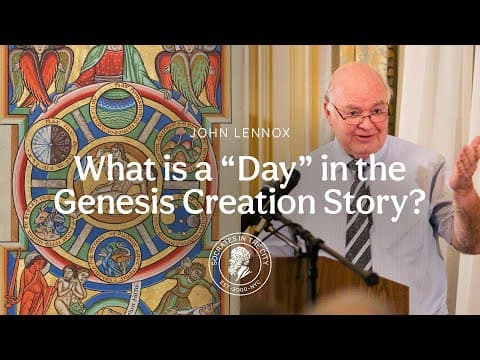
This blog post delves into the various interpretations of the term 'day' in the Genesis creation narrative, examining historical perspectives, different theological views, and the implications of these interpretations on our understanding of creation and humanity's unique value.
The Genesis creation narrative has sparked extensive debate regarding the interpretation of the term "day" as it relates to the creation week. Throughout history, many have drawn parallels between the creation week described in Genesis and the ordinary week of human life. This discussion is particularly relevant as we consider the Jewish calendar, which dates from creation, currently marking the year 5773.
Prominent figures in Christian history, such as Martin Luther and John Calvin, adhered to the belief that the days of creation were literal 24-hour periods occurring less than 10,000 years ago. However, even before the advent of modern science, thinkers like Justin Martyr and Clement of Alexandria proposed alternative interpretations. Justin Martyr suggested that the days could represent long ages, while Clement posited that creation could not be confined to time, as time itself began with creation.
Augustine of Hippo also grappled with the concept of time in relation to creation, suggesting that God created everything in an instant, with the days serving merely as a framework for human understanding.
The interpretations of the Genesis creation days can be categorized into several mainstream views:
A critical distinction arises between logical and chronological order in the Genesis narrative. For instance, comparing Genesis 1 with Isaiah 45:12 reveals that the order of creation may not be strictly chronological. This raises questions about how we interpret the sequence of events in Genesis.
The Framework View, particularly John Walton's Cosmic Temple View, emphasizes the parallel nature of the first three days with the second three. However, it is essential to recognize that even within this framework, there are implications of an underlying chronology.
The existence of multiple interpretations of the same text indicates a level of complexity that warrants careful consideration. Many readers may not fully grasp the nuances of the text, often conflating what it says with what it means. A thorough examination of Genesis 1 reveals a structured narrative: an introduction, six days of creation, and a concluding day of rest.
The sequence of creation culminates in the creation of human beings, made in the image of God. This aspect is particularly significant in contemporary discussions about the value of human life, as it asserts that humans hold a unique status in the universe.
The term "day" is pivotal in this discussion. The first mention of "day" in Genesis 1:5 contrasts light with darkness, suggesting that it cannot be strictly defined as a 24-hour period. The subsequent occurrences of the word further complicate the interpretation, especially regarding the seventh day, which lacks the phrase "evening and morning."
Augustine and others have suggested that God's rest on the seventh day signifies a cessation of creation, which continues to this day. This implies that the seventh day may represent a different kind of time frame compared to the first six days.
Genesis 2:4 introduces the concept of creation with the word "day" used in a broader sense, indicating an indefinite period. This multifaceted use of the term suggests a sophisticated narrative structure that transcends a simplistic reading.
The initial verses of Genesis separate the creation of the heavens and the Earth from the subsequent days of creation, indicating that the creation narrative may not adhere to a strict timeline. This raises questions about the age of the Earth and the universe, suggesting that the text does not explicitly address these issues.
In conclusion, the interpretation of the days of creation in Genesis is a complex and nuanced topic. The various views highlight the richness of the text and the importance of understanding its implications for humanity's place in the universe. The assertion that humans are made in the image of God carries profound significance, especially in a world that often seeks to diminish human value.
As we reflect on the Genesis creation story, it is essential to approach it with an open mind, recognizing the depth of its message and the implications it holds for our understanding of life, creation, and our unique role within it.



















