
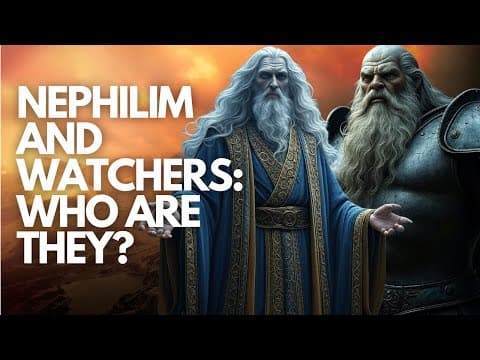
This blog post delves into the biblical accounts of the Nephilim, the giants mentioned in the Old Testament, exploring their origins, characteristics, and the implications of their existence. It discusses the interpretations of the 'sons of God' and 'daughters of men,' the role of the Watchers, and the historical context surrounding these figures. The post also examines the theological significance of the Nephilim in relation to God's covenant with Israel and the spiritual warfare depicted in a
In this blog post, we will explore the fascinating and often controversial topic of the Nephilim, the giants mentioned in the Old Testament. The existence of these beings raises many questions about their origins, characteristics, and the implications of their presence in biblical narratives. This discussion is inspired by inquiries from subscribers and draws heavily on the work of Philip Campbell, a Catholic author who has extensively researched this subject.
The term "Nephilim" appears in the Old Testament, specifically in Genesis 6, which describes a mysterious union between the "sons of God" and the "daughters of men." This union resulted in the birth of the Nephilim, described as mighty men of old, renowned for their strength and stature. The identity of the "sons of God" is a matter of significant debate among scholars and theologians.
Traditionally, many Catholic and rabbinical interpretations suggest that the "sons of God" refer to angelic beings, specifically the Watchers or Gregori, who descended to Earth and took human wives. This view posits that the Nephilim were the offspring of these unions, thus explaining their extraordinary size and strength.
Conversely, contemporary scholarship often interprets the "sons of God" as the descendants of Seth, Adam's son, suggesting that they intermarried with the descendants of Cain, leading to moral corruption. However, Campbell and others argue that the traditional view aligns more closely with the literal interpretation of scripture.
The Hebrew word "Nephilim" is derived from the root word meaning "to fall," leading to interpretations such as "fallen ones" or "those who cause others to fall." However, many scholars assert that the term more accurately refers to giants, as evidenced by their descriptions in biblical texts. The Nephilim are mentioned again in the Book of Numbers, where Israelite spies report seeing giants in the land of Canaan, further supporting the notion that they were indeed a race of giants.
In addition to the Nephilim, the Bible mentions other races of giants, including the Anakim, Rephaim, and Emim. These groups are often described in similar terms, suggesting a broader category of giant beings that existed in the ancient world. For instance, Og, the king of Bashan, is noted for his enormous bed, measuring approximately 13.5 feet long, indicating his giant stature.
The Watchers, or Gregori, are central to understanding the origins of the Nephilim. These beings are described in various ancient texts as having descended to Earth and engaged in illicit relationships with human women. This act of rebellion against God is seen as a significant factor leading to the corruption of humanity, which ultimately prompted the Great Flood.
The presence of the Nephilim and their connection to the Watchers raises profound theological questions about the nature of sin, divine judgment, and the spiritual warfare depicted throughout the Bible. The narrative suggests that the Nephilim were not merely physical giants but also symbolic of the ongoing battle between good and evil, as represented by God's covenant with Israel and the opposition posed by these giant races.
A critical aspect of the Nephilim narrative is the curse placed upon Canaan, the son of Ham, after Ham's sin against Noah. This curse has been interpreted as a foreshadowing of the future conflicts between the Israelites and the Canaanite nations, many of which were associated with the Nephilim. The biblical accounts of Israel's conquest of Canaan often highlight the necessity of eradicating these giant races to fulfill God's promise to Abraham.
One of the most intriguing questions is how the Nephilim could exist after the flood, which was intended to cleanse the Earth of wickedness. Some interpretations suggest that the Watchers continued their illicit unions with human women after the flood, leading to the re-emergence of giant races. This ongoing conflict between the descendants of the Watchers and the people of Israel is depicted throughout the Old Testament, culminating in the battles against figures like Goliath, who is identified as a descendant of the Nephilim.
The exploration of the Nephilim and their origins reveals a complex interplay of biblical history, theology, and ancient tradition. The existence of these giants serves as a reminder of the spiritual battles that permeate the biblical narrative, illustrating the consequences of sin and the ongoing struggle between divine and demonic forces. Understanding the Nephilim not only enriches our comprehension of the Old Testament but also invites us to reflect on the broader implications of faith, morality, and the nature of humanity in relation to the divine.



















