
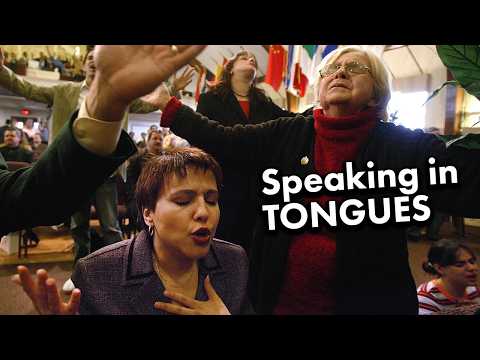
This blog post delves into the practice of speaking in tongues, or glossolalia, examining its historical roots, neurological implications, and social dynamics. It highlights how this ritual affects brain structure and cognitive functions, while also addressing the communal aspects of the practice within religious contexts.
Speaking in tongues, also known as glossolalia, is a ritual commonly practiced by Pentecostal and charismatic Christians. This phenomenon involves the oral production of phonetic sequences that do not correspond to any known language or grammar. In this blog post, we will explore the historical context, neurological implications, and social dynamics of glossolalia, shedding light on what happens in the brain during this unique practice.
Glossolalia derives from the ancient Greek words for language or tongue and refers to the ritualistic speaking of sounds that often resemble an ancient or foreign language. Practitioners often describe the experience as uncontrolled, as if they are channeling these sounds rather than consciously producing them. This practice can take various forms, from private devotional use to public displays during worship services.
Historically, glossolalia has roots in early Christian practices, particularly during the day of Pentecost, as described in the New Testament. Early Pentecostals viewed speaking in tongues as a gift of the Holy Spirit, a sign of the second blessing that sanctifies believers. This practice has seen a revival with the rise of Pentecostalism, which now boasts over 500 million practitioners worldwide, particularly in regions like Africa, Asia, and Latin America.
Neuroscientists and psychologists have begun to study the effects of glossolalia on the brain. Research indicates that individuals who frequently engage in this practice may exhibit structural differences in their brains. For instance, a 2020 study found increased gray matter volume in the left frontal pole and right middle frontal gyrus among glossolalia practitioners. These areas are associated with cognitive functions such as multitasking and filtering out distractions.
The act of producing seemingly random sounds without forming meaningful sentences requires significant cognitive effort. Glossolalia practitioners must suppress their natural inclination to use meaningful language, which engages executive control functions in the brain. This suggests that glossolalia may be a learned behavior that involves complex cognitive processes.
Further research has explored how glossolalia affects language acquisition. A study conducted in Budapest compared Pentecostals who practiced glossolalia with those who did not. The results indicated that glossolalia practitioners were better at acquiring and retaining rules of an artificial grammar, suggesting that the practice may enhance verbal skills.
Glossolalia is often misunderstood and sometimes associated with disorganized speech patterns seen in mental disorders like schizophrenia. However, research indicates that glossolalia is distinct from such conditions. Studies have shown that individuals who practice glossolalia tend to have lower rates of depression and higher emotional stability compared to non-practitioners.
Another area of research has focused on mentalization, the ability to understand and interpret the mental states of others. Studies have found that glossolalia practitioners engage in more complex mentalization compared to control groups, suggesting that this practice may enhance social cognition and emotional understanding.
While neuroscience provides insights into the cognitive aspects of glossolalia, it is essential to consider the social and communal dynamics involved. Speaking in tongues often occurs during heightened emotional moments in worship services, reinforcing the practice within a community context. Gender and race also play significant roles, as marginalized groups have historically been more likely to engage in glossolalia, reflecting its democratized nature.
Glossolalia has sometimes been negatively associated with magic, often viewed as a ritual lacking semantic meaning. However, it is crucial to recognize that glossolalia serves as a powerful form of expression within religious contexts, allowing individuals to connect with the divine and their community.
The practice of speaking in tongues is a complex interplay of cognitive, neurological, and social factors. While neuroscience sheds light on the brain's involvement in glossolalia, it cannot fully capture the rich tapestry of communal and cultural dynamics that accompany this ritual. Understanding glossolalia requires a holistic approach that considers both the individual and the collective experience within religious practices.



















