
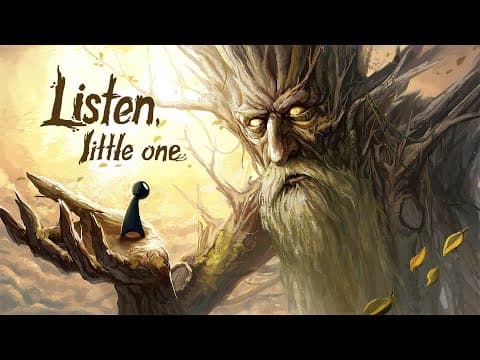
This blog post delves into the profound wisdom of trees, exploring their representation in literature and culture. It examines how trees, both real and fictional, symbolize patience, knowledge, and a connection to the natural world, offering insights into human existence and the environment.
When you look at a particularly old tree, it’s an existential experience. Every giant, sprawling oak came from an acorn, and some pine trees can live for thousands of years. How much history and how many human lifetimes have passed while those trees have been growing, rooted in place? Trees witness a lot: new growth emerging after devastating fires, abundant summers, barren winters, and the bodies of animals returning to the earth that once sustained them. Life, then death, then life again. If they could think, imagine how deep a tree’s perspective would be, and how much it could learn after decades, maybe centuries, of watching.
The idea of sentient trees is not new. Humans have been imagining this concept for a long time. Think of the Ents in The Lord of the Rings, the Great Deku Tree from The Legend of Zelda, or Grandmother Willow from Pocahontas. These representations appear in art, literature, pop culture, and media, showcasing a variety of forms: helpful trees, malevolent trees, quiet trees, and violent trees. However, across almost all incarnations, they are often portrayed as wise, full of experience and insight accumulated over years of slow, patient growth. They know things that humans have long forgotten and can see into both our world and an older, wilder one.
The Ents are perhaps the most iconic example of talking trees. They first appeared in The Lord of the Rings, where hobbits Merry and Pippin find themselves lost in Fangorn Forest and meet Treebeard, one of the oldest Ents. Pippin describes Treebeard’s eyes as having “an enormous well behind them, filled up with ages of memory and long, slow, steady thinking.” This encounter illustrates the primordial nature of trees and their connection to history.
Treebeard embodies the slow, deliberate nature of trees. He speaks only when he has something truly worth saying, and his name is described as “like a story” that’s “growing all the time.” He shares glimpses of the past, including tales of the Entwives, and teaches the hobbits about the breadth of history. The Ents’ patience contrasts sharply with the hastiness of the world, which Treebeard despises, especially when it leads to the destruction of forests in the name of war and industry.
In A Monster Calls by Patrick Ness, an ancient yew tree serves as a monster that comes to heal a young boy named Conor, whose mother is dying of cancer. This tree has lived since the time of giants and dragons, embodying the wild earth. Throughout the story, the Monster shares its long perspective with Conor, helping him confront his feelings about his mother’s suffering. The Monster’s wisdom reveals the gray areas between right and wrong, offering a perspective that humans often struggle to grasp.
Similarly, in Algernon Blackwood’s The Willows, two men navigating the Danube River encounter willow trees that seem to possess a dark intelligence. As they venture deeper into the forest, the trees become threatening, revealing a connection to an alien world. This story illustrates that not all trees need to speak to convey intelligence; their presence alone can command fear, awe, and respect.
In The Lord of the Rings, Treebeard mentions Huorns—trees that have become silent and brooding, withholding years of anger and malice. These trees represent a more sinister aspect of nature, as seen in the encounter with Old Man Willow, who nearly kills the hobbits before their quest begins. Such trees symbolize a connection to an ancient, unknowable world, inspiring reverence and caution.
In reality, trees cannot speak. Yet, as seen in The Willows and the Huorns, they still teach us valuable lessons. The Lorax, a character created by Dr. Seuss, famously states, “I speak for the trees, for the trees have no tongues.” This character embodies the long-term perspective of sustainability, contrasting sharply with the short-term greed of the Onceler, who represents humanity’s tendency to exploit natural resources without regard for the consequences.
The Onceler’s fate serves as a cautionary tale about the importance of environmental stewardship. By the end of the story, he becomes a symbol of the past, rooted in his tower, reflecting on the destruction he caused. This narrative illustrates how trees can serve as teachers, guiding us toward a more sustainable future.
The common thread in these stories is the fantasy of trees as wise beings. They challenge the limits of human perception and represent a wisdom that can only be gained with age—one that exceeds even the longest human lifetimes. Trees in literature act as guides, teachers, and guardians of the unknown, offering insights that resonate deeply with our own experiences.
Every time a tree speaks in fiction, it is a reflection of humanity’s desire to understand the world and our place within it. The wisdom attributed to trees is ultimately a projection of our own thoughts and feelings, a way to explore complex themes of life, death, and the interconnectedness of all living things.
While we may never possess the vast knowledge and experience of a tree, we can learn from their representation in literature and culture. Trees remind us of the importance of patience, perspective, and the need to connect with the natural world. They serve as a bridge between our world and one that is often beyond our comprehension.
In the end, when we listen to the wisdom of trees, we are not just hearing their voices; we are engaging in a dialogue with ourselves, reflecting on our own lives and the lessons we can learn from the natural world around us.



















