In this blog post, we delve into a detailed discussion with Suan Sonna, a Catholic apologist, about the papacy and icon veneration. We explore the historical and theological foundations of these doctrines, address common objections from Protestant and Eastern Orthodox perspectives, and highlight the significance of apostolic succession and the role of images in the faith. This comprehensive dialogue aims to clarify misconceptions and provide a deeper understanding of Catholic beliefs.
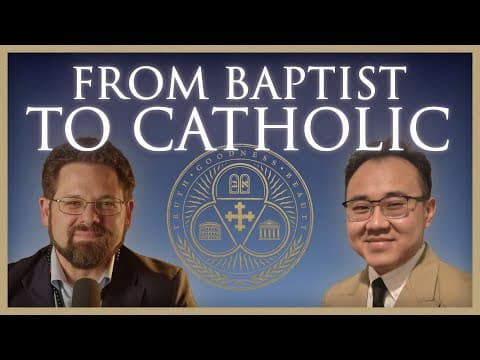
In this blog post, we delve into a detailed discussion with Suan Sonna, a Catholic apologist, about the papacy and icon veneration. Suan is the director of apologetics for the Diocese of Bridgeport, Connecticut, and holds degrees from Harvard Divinity School and Yale. He is also a Baptist convert to Catholicism and the host of the Intellectual Catholicism YouTube channel and podcast.
The conversation begins with an overview of Suan's background and his journey into Catholicism. He shares his experiences growing up in a Baptist family and how his theological studies led him to embrace the Catholic faith. The discussion then transitions into the main topics: the papacy and icon veneration.
The papacy is often a contentious topic among Christians, particularly between Catholics and Protestants. Suan explains that the papacy is rooted in the belief that Peter, as the first pope, was given a unique authority by Christ. This authority is seen as a continuation through apostolic succession.
Suan addresses common Protestant objections to the papacy, particularly the argument that Peter's authority was not passed on to his successors. He emphasizes the importance of understanding the context of biblical passages, such as Matthew 16:18, where Jesus declares Peter as the rock upon which He will build His Church.
Suan argues that the authority given to Peter is not diminished by the presence of other apostles but rather establishes a hierarchy within the Church. He also points out that the early Church recognized the primacy of Rome, as evidenced by writings from Church Fathers like St. Clement of Rome.
A key aspect of the papacy is the concept of apostolic succession, which asserts that the authority of the apostles has been passed down through the generations of bishops. Suan highlights that this succession is essential for maintaining the integrity of the Church's teachings and practices.
The discussion then shifts to icon veneration, which is often misunderstood by those outside the Catholic and Orthodox traditions. Suan explains that veneration of icons is not the same as worship, which is due to God alone. Instead, it is an expression of honor towards the saints represented in the icons.
Suan emphasizes that the practice of venerating images has deep roots in Christian history. He cites the Second Council of Nicaea (787 AD), which affirmed the legitimacy of icon veneration and clarified the distinction between veneration and worship. The council's decrees were based on the understanding that the honor given to an image ultimately goes to the person it represents.
In response to Protestant objections that icon veneration is a form of idolatry, Suan argues that this misunderstanding stems from a lack of familiarity with the theological principles underlying the practice. He points out that many Protestants engage in similar acts of honor towards images of loved ones or national symbols without considering them idolatrous.
Suan also discusses the archaeological evidence supporting the practice of icon veneration. He notes that early Christian art and imagery can be found in various archaeological sites, indicating that the veneration of images was a common practice among early Christians. This evidence challenges the notion that icon veneration is a later development or a borrowing from pagan practices.
In conclusion, Suan Sonna's insights into the papacy and icon veneration provide a comprehensive understanding of these important aspects of Catholic theology. By addressing common objections and highlighting the historical and theological foundations of these practices, Suan encourages a deeper appreciation for the richness of the Catholic faith.
As we continue to explore these topics, it is essential to approach them with an open mind and a willingness to engage with the sources and traditions that shape our understanding of Christianity.