
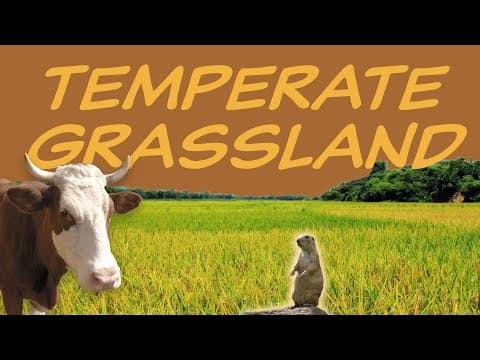
The temperate grassland biome, known for its vast expanses of grasses and mild climate, plays a crucial role in global agriculture and biodiversity. This blog post delves into its characteristics, the flora and fauna that thrive there, and the impact of human activity on this vital ecosystem.
Do you enjoy crunchy cereal for breakfast, toasty toast, or slurpy spaghetti? These delicious foods are all made from grains like wheat, which originate from seeds planted in gardens or farmers' fields. Many of the foods we consume are grown in the temperate grassland biome, one of Earth's 11 biomes, often referred to as the planet's breadbasket due to its significant agricultural output. However, agriculture is not the only activity that takes place in these regions. Let's explore the temperate grassland biome and discover its wonders.
The temperate grassland biome is characterized by large open spaces dominated by grasses, with very few trees. To understand this biome better, we can break down its name:
Combining these definitions, the temperate grassland biome is a grassy area with a mild climate where specific plants, especially grasses, and animals, particularly herbivores, thrive together.
Temperate grasslands can be found on every continent except Antarctica, covering extensive areas that often seem endless. Depending on the region, these grasslands are known by different names:
Temperate grasslands experience moderate rainfall, typically between 20 to 35 inches (50 to 90 centimeters) annually, primarily occurring in late spring and early summer. This amount of precipitation is sufficient for grasses and wildflowers but not enough to support large forests. The soil in these regions is often very fertile, making them crucial for agriculture.
The climate is marked by hot summers and cold winters, with temperatures ranging from over 90 degrees Fahrenheit (32 degrees Celsius) in summer to below 0 degrees Fahrenheit (-18 degrees Celsius) in winter. Strong winds are common, contributing to soil drying and increasing the risk of wildfires, which play a natural role in maintaining the grass-dominated landscape.
The temperate grassland biome is rich in biodiversity, with various plant and animal species uniquely adapted to the environment.
Grasses such as bluestem, buffalo grass, and rye grass dominate the landscape. Unlike monoculture wheat fields, natural grasslands feature a mixture of different plants, including wildflowers like sunflowers, asters, and clovers, which provide food for pollinators such as bees and butterflies. Trees are sparse, typically found near water sources, while shrubs and bushes are rare.
The grasslands are home to a variety of wildlife:
Many humans have settled in temperate grasslands due to their fertile soils, making them some of the most productive agricultural areas globally. These regions are ideal for growing crops such as wheat, corn, and soybeans, essential for feeding the world's population. Farmers also graze livestock like cattle and sheep, providing meat, milk, and wool.
However, converting natural grasslands into farmland can lead to environmental impacts, including habitat loss and soil degradation. To mitigate these effects, sustainable farming practices such as crop rotation and reduced pesticide use are necessary to maintain soil health and preserve the delicate ecosystem balance.
Next time you enjoy a meal, consider the origins of the wheat in your sandwich or the corn in your tortilla chips, which likely came from a temperate grassland. Understanding the significance of this biome enhances our appreciation for the food we consume and the ecosystems that support it. The temperate grassland biome is not just a backdrop for agriculture; it is a vibrant ecosystem teeming with life and interconnectedness, deserving of our respect and protection.



















