
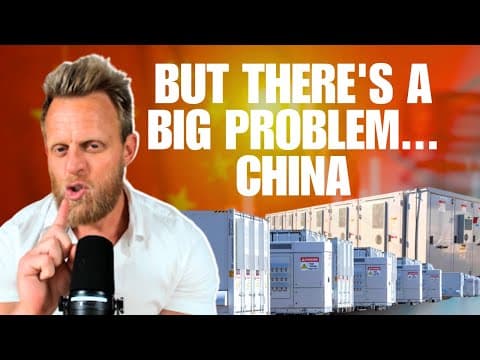
January 2023 saw a record 13.6 GWh of battery energy storage built globally, with 65% of these projects located in China. This surge highlights the shift towards renewable energy and the growing importance of battery technology in supporting solar and wind power, particularly in regions like Saudi Arabia, which is investing heavily in solar farms and battery storage despite its oil-rich background.
Battery energy storage is experiencing unprecedented growth, with January 2023 marking a record month for installations. A staggering 13.6 GWh of battery energy storage was built globally, the highest amount ever recorded in a single month. This surge reflects a broader trend where governments and businesses are investing heavily in mega batteries to support the energy grid.
While the numbers are impressive, they also raise some concerns. Approximately 65% of the new battery storage capacity installed in January was manufactured in China. This statistic has sparked debates about China's energy policies, especially given the country's previous reputation for expanding coal power. However, recent data indicates that China is shifting its focus towards renewable energy sources, ceasing the approval of new coal power plants and ramping up investments in solar and wind energy.
China is currently building renewable energy projects at an astonishing rate, equivalent to the output of five nuclear power plants every week. According to the Electric Vehicle Battery Charging and Infrastructure Analyst from Benchmark Mineral Intelligence, January alone saw the initiation of 81 new battery projects worldwide, all of which are substantial in scale. Notably, two-thirds of these projects were located in China.
Among the significant projects reported was a 1.2 GWh battery storage facility in Huai Province. Additionally, the only non-lithium-ion battery storage systems activated during January were vanadium flow batteries, which collectively provided a total storage capacity of 90 MWh. Interestingly, no sodium-ion batteries were deployed during this period, raising questions about their future viability in the energy storage market.
In a surprising turn, Saudi Arabia has emerged as a leader in battery storage technology, despite its historical reliance on oil. The country has recently activated the world's largest single-phase battery, a 500 MW, 2,000 MWh facility located in Bisha, Asir Province. This mega battery is designed to provide around eight hours of runtime and is built to withstand the extreme temperatures typical of desert environments, which can exceed 50°C.
The battery system in Saudi Arabia consists of 122 prefabricated battery units, similar in size to Tesla's mega pack batteries, and utilizes lithium iron phosphate technology. This choice of battery chemistry is particularly suited for high-temperature conditions, as traditional lithium-ion batteries, such as those using nickel manganese cobalt (NMC) chemistry, may not perform well under such extreme heat.
The project aligns with Saudi Arabia's Vision 2030 initiative, which aims for 50% of the country's energy to come from renewable sources. To support this goal, the Saudi procurement company is planning to tender four additional battery projects of the same size, which would collectively power approximately 15 million households.
The developments in battery storage technology are not just limited to Saudi Arabia and China. The global trend indicates a growing recognition that batteries can serve as a reliable base load power source, capable of supporting grids powered entirely by solar energy. This shift is particularly relevant in regions with abundant sunlight, where solar farms can be paired with battery storage to create a sustainable energy ecosystem.
As the world continues to embrace renewable energy, the role of battery storage will become increasingly critical. With 90% of the global population residing in sun-rich areas, the potential for solar and battery-powered grids is immense. The future of energy storage looks bright, and as technology advances, we can expect to see even more innovative solutions emerging to meet the world's energy needs.



















