
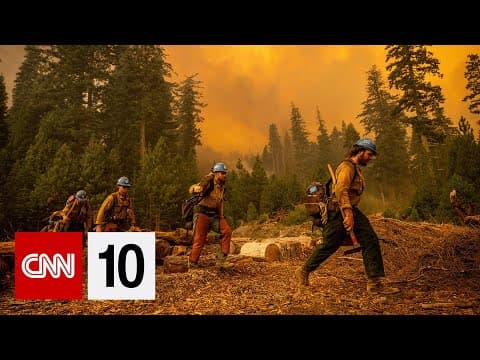
The January 2025 wildfires in Los Angeles County have raised serious concerns about firefighting resources, infrastructure, and building codes. Despite efforts to contain the blazes, factors such as insufficient personnel, inadequate water supply, and outdated building regulations have contributed to the devastation, prompting a reevaluation of strategies to combat future wildfires.
Hello sunshine, I'm Coy Wire, and welcome to CNN 10, your 10 minutes of news where I simply tell you the what, letting you decide what to think. Today, we focus on the ongoing wildfires in Los Angeles County that have devastated communities and raised critical questions about firefighting preparedness and infrastructure.
As of January 13, 2025, fire crews in LA County are working tirelessly to contain four major fires that erupted over the weekend. Progress has been made on the Hurst and Kenneth fires, allowing resources to be redirected to the largest blaze, the Palisades fire. Despite these efforts, the Palisades fire remains only 11% contained and is threatening inland communities, including the Getty Center and UCLA.
Firefighters have been battling these blazes since they ignited a week ago, and with high winds expected to return early this week, there is concern that any progress made could be undone. Over 150,000 residents are currently under evacuation orders, and the LA County Medical Examiner has reported an increase in the death toll from the Eaton and Palisades fires.
As officials prioritize containment, many agencies are investigating the reasons behind the fires' destructive nature. CNN's Nick Watt outlines several key factors that have contributed to the widespread devastation:
One of the primary issues identified is the lack of adequate firefighting personnel. LA County's Fire Chief, Kristen Crowley, had previously warned that budget cuts and staffing shortages would hinder the department's ability to respond effectively to large-scale emergencies. With climate change increasing the risk of wildfires and construction in danger zones on the rise, the need for more boots on the ground has never been more critical.
Another significant challenge has been the availability of water to combat the flames. Firefighters reported that multiple homes were threatened due to a lack of water tenders and insufficient hydrant pressure. The Palisades area, being at the end of the city water system, faced particularly severe issues, with some hydrants running dry at crucial moments. Experts suggest that no city water system could have flawlessly handled the demands of such a catastrophic event.
Building codes also play a role in the fire's impact. While structures built after 2008 are subject to stringent fireproofing codes, only about 5% of buildings in the affected areas were constructed after 2010. This means that many older structures, which are not required to be retrofitted, remain vulnerable to fire damage. The contrast between newer and older buildings has resulted in significant losses, with some new homes surviving while older ones were completely destroyed.
Power lines have historically been a source of ignition for wildfires, and this situation is no different. Previous fires, such as the Woolsey fire, were sparked by downed power lines during high winds. In the days leading up to the current fires, there were multiple power line faults reported in the area. Experts argue that burying power lines could prevent such ignitions, as seen in the town of Paradise, which is currently rebuilding with underground power lines after devastating fires in 2018.
The January 2025 wildfires in Los Angeles County represent a perfect storm of conditions that have led to unprecedented destruction. As firefighters continue to battle the blazes, it is clear that a reevaluation of firefighting resources, infrastructure, and building regulations is necessary to prevent future catastrophes. The ongoing situation serves as a stark reminder of the challenges posed by climate change and the urgent need for proactive measures to protect communities from the devastating effects of wildfires.



















