
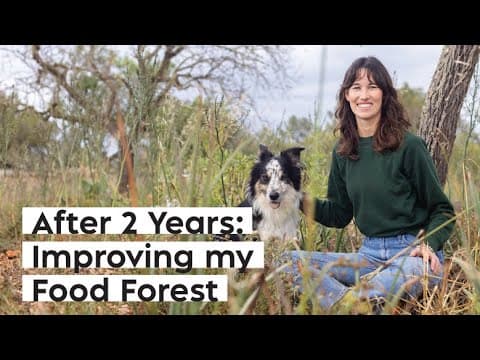
After two and a half years of developing a Mediterranean food forest on the East Coast of Mallorca, several challenges emerged including poor soil quality, harsh summer conditions, and insufficient ground cover. This article explores five critical mistakes made during the project and outlines practical solutions such as using pioneer plants for shade, improving soil fertility, and ensuring adequate mulch coverage to enhance the food forest's resilience and productivity.
After two and a half years of dedicated work, Scarlett reflects on her journey of transforming a derelict piece of land on the East Coast of Mallorca into a thriving Mediterranean food forest. This article delves into the challenges faced, the mistakes made, and the strategies implemented to improve the system for better plant synergy and sustainability.
When Scarlett purchased the land, it was completely overgrown and abandoned for many years. Early soil analysis revealed extremely poor, very alkaline, and shallow soil with barely any topsoil in many areas. This presented a significant challenge for planting and soil management.
Only a few original almond trees survived, and Scarlett ordered 30 tons of compost, combined with biochar and manure, to enrich the planting holes.
The Mediterranean climate poses a significant challenge with hot, dry summers lasting months without rain. This causes ground cover to die back, leaving soil exposed and vulnerable, which negatively affects the roots of newly planted trees.
The soil was extremely poor and shallow, making digging and planting difficult. To address this:
Many trees, including old almonds and some new plantings, struggled due to intense summer heat and poor soil. Scarlett learned the importance of pioneer plants, especially pioneer trees, which provide shade, improve soil fertility, add organic matter, and help retain moisture.
Ground cover died back during dry months, leaving soil bare and roots exposed. To combat this:
In the first year, straw was unavailable locally due to a dry winter, and in the second year, Scarlett was occupied and late in applying mulch. This led to soil drying out.
Scarlett left 7-meter-wide corridors between tree rows intending to develop grassland as a secondary ecosystem. This diversity is crucial for ecosystem resilience.
Building a Mediterranean food forest is a complex and evolving process, especially when starting with poor soil and challenging climate conditions. Scarlett's experience highlights the importance of soil enrichment, strategic planting of pioneer species, maintaining continuous ground cover, and creating diverse ecosystems. By learning from these five key mistakes and implementing corrective measures, the food forest is on a path to becoming a resilient and productive system.
Patience, observation, and adaptation are essential in permaculture projects. Scarlett's journey demonstrates that setbacks are opportunities for learning and improvement. With continued effort and thoughtful management, the Mediterranean food forest will thrive and serve as a model for sustainable land restoration and food production.



















