
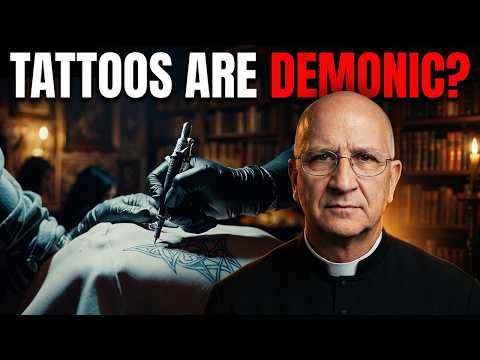
Fr. Chad Ripperger discusses the spiritual dangers of tattoos, highlighting their biblical prohibition, association with occult practices, and potential as demonic entry points. He explains the historical and moral context within Catholic doctrine, the role of tattoo artists in occult involvement, and offers guidance on decommissioning tattoos through specific rituals.
In a recent discussion, Fr. Chad Ripperger sheds light on the spiritual implications of tattoos from a Catholic perspective. He addresses common misconceptions and explains why tattoos are considered a serious moral issue within the Church, particularly focusing on their potential as entry points for demonic influence.
Fr. Ripperger references the Book of Leviticus, which explicitly states, "Do not tattoo or pierce yourselves like the pagans do." This commandment clearly forbids tattooing, emphasizing its spiritual significance. Historically, Catholic moralists from the 1800s through the mid-20th century consistently taught that tattooing was a sin, often linked to the fifth commandment and viewed as a form of mutilation.
In the early Church, converts were examined for tattoos, especially those associated with pagan practices, as these were seen as signs of infiltration. The Church considered tattooing morally sinful for centuries until recent times when some documents, possibly including the Catechism, suggested tattoos are acceptable if not contrary to Christian sentiment. Fr. Ripperger clarifies that this modern stance contradicts longstanding Church teaching.
The only exception historically allowed was tattooing to restore the natural appearance, such as covering scars or blemishes, which was seen as restoring the body's order rather than mutilating it.
Fr. Ripperger explains that tattoos can serve as entry points for demonic attacks for two main reasons:
Mutilation of the Body: Tattooing involves physically altering the body, which is considered a temple of the Lord. This mutilation opens the door to diabolic influence.
Occult Involvement of Tattoo Artists: Many tattoo artists are involved in occult practices and may incorporate occult elements into tattoo ink or designs, unknowingly or deliberately enhancing the diabolic influence.
He shares cases where demons encouraged individuals to get tattoos, viewing the tattoo as a brand marking the person. These demons fiercely protect the tattoo's spiritual hold, resisting efforts to remove or decommission it.
Interestingly, Fr. Ripperger notes that tattoos of religious images can be even more problematic. He recounts a case where a woman had a tattoo of St. Michael on her back. When priests performed a ritual to decommission the tattoo, the demon attached to it reacted with intense pain and resistance, demonstrating the spiritual power such tattoos can hold.
For those who already have tattoos, Fr. Ripperger offers hope. There are rituals that priests can perform, adapted from the rite of reconciliation of a church that has been violated, to decommission tattoos. This is because the body is considered a temple of the Lord, and tattooing modifies it in a way that can be spiritually harmful.
Additionally, there are rituals laypeople can use themselves to decommission their tattoos. Many individuals experience relief from internal spiritual struggles once their tattoos are decommissioned.
Those interested in assistance can contact the ministry at info@del.oro for guidance and support.
In a related discussion, Fr. Ripperger explains that both men and women are created in the image of God, specifically the Blessed Trinity. This is reflected in human intellect and will. He elaborates on the theological symbolism where the husband can represent God the Father, the wife God the Son, and their children the Holy Spirit, illustrating the unity and love within the Trinity.
Fr. Chad Ripperger's insights provide a comprehensive understanding of why tattoos are viewed as spiritually dangerous within Catholic teaching. They are not merely a matter of personal expression but carry significant moral and spiritual consequences, especially when linked to occult practices and demonic influence. For those with tattoos, there are pathways to spiritual healing and liberation through decommissioning rituals.
This teaching invites reflection on the sanctity of the human body as a temple of God and encourages adherence to biblical and traditional Church teachings regarding bodily integrity.
For further support or inquiries about decommissioning tattoos, individuals are encouraged to reach out to the ministry mentioned above.



















