
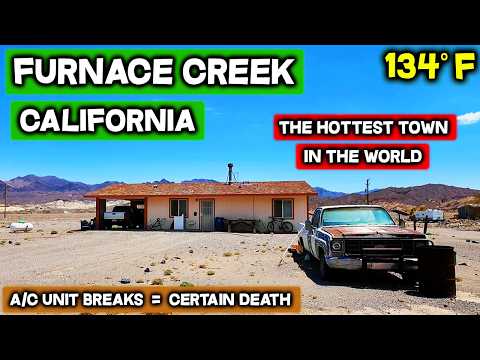
Furnace Creek, California, holds the record for the hottest temperature ever recorded on Earth. Despite its extreme climate, 136 residents live year-round in this isolated town, which serves as a hub for visitors to Death Valley National Park. The blog explores the town's history, demographics, and the challenges of living in such extreme heat.
Furnace Creek, California, is known as the hottest town on Earth, with a staggering average July high temperature of 126°F (52°C). This small community, located in the heart of Death Valley National Park, has a year-round population of just 136 people. This blog post delves into the reasons behind its extreme climate, the history of the town, and what life is like for its residents.
On July 10, 1913, Furnace Creek recorded the hottest temperature ever documented on Earth at 134°F (57°C). This record still stands today, making Furnace Creek not only the hottest town in America but also the hottest inhabited community in the world. The extreme heat is a result of its low elevation, sitting at 226 feet below sea level, and its location within a rain shadow between two mountain ranges, leading to minimal rainfall of just 2.2 inches annually.
Despite the harsh conditions, 136 people choose to live in Furnace Creek year-round. The town primarily serves as a visitor center and accommodation for tourists exploring Death Valley National Park, which spans 3.4 million acres. The closest populated town is Beatty, Nevada, located about 40 miles away, while the nearest city for shopping and medical services is Pahrump, approximately 60 miles to the east.
Furnace Creek is home to a diverse population, with a median age of 54.4 years. The demographics reveal that 69% of the residents are white, 18% are Hispanic or Latino, and 11% are Native American. Interestingly, the town has a higher percentage of females (56%) compared to males (44%). The median household income is around $41,500, significantly below the national average, contributing to a poverty rate of 31.5%.
Living in Furnace Creek requires careful preparation for the extreme heat. Residents must stay hydrated, often consuming up to 16 cups of water daily, and avoid outdoor activities during peak temperatures. The town experiences around 350 sunny days per year, and the average temperature in July is 108.1°F (42.3°C), the highest average temperature of any month in any location worldwide.
Furnace Creek's history dates back to the discovery of borax in the early 1880s. The town was established to support borax mining operations, which were vital to the local economy. The famous 20 Mule Team wagons transported borax from the mines to the nearest railroad, a journey of 165 miles that took about ten days.
The town's original Greenland Ranch was built by businessman William T. Coleman in 1883 to provide food and shelter for borax workers. Over the years, the ranch evolved into a tourist destination, especially after the establishment of Death Valley National Monument in 1933.
Furnace Creek offers limited amenities, including two hotels, a golf course (the lowest in the world), and a general store. The Furnace Creek Visitor Center provides essential information for tourists, while the local restaurants cater to visitors and residents alike. Interestingly, one-fifth of the 1.1 million tourists who visit Death Valley each year come during the summer months, drawn by the unique experience of extreme heat.
The Oasis at Death Valley Resort is a key feature of Furnace Creek, providing accommodations and recreational activities. The resort includes a golf course, swimming pools, and dining options, making it a popular stop for tourists. The resort's history is intertwined with the town's development, as it has evolved to meet the needs of visitors while maintaining its unique character.
Furnace Creek is a remarkable example of human resilience in the face of extreme environmental conditions. The town's unique history, coupled with its extreme climate, creates a fascinating narrative about life in one of the hottest places on Earth. For those who choose to live and work in Furnace Creek, the heat is just one aspect of a life filled with adventure, community, and the beauty of Death Valley National Park.



















