
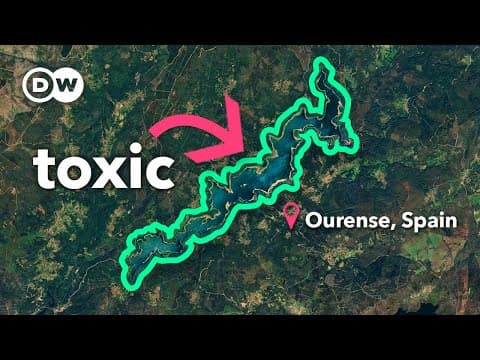
Residents of Galicia, Spain, are battling severe pollution from industrial pig farming that threatens their health and environment. This unprecedented case in the EU seeks to hold authorities accountable for failing to address the crisis, potentially setting a precedent for similar issues across Europe.
Imagine living next to something you know is harmful, yet no one acknowledges its existence. This is the daily reality for residents of Galicia, Spain, where pollution from industrial pig farming is destroying local waterways and communities. Behind the picturesque landscapes lies a hidden crisis that has been worsening for decades, affecting ecosystems and human health alike.
In the idyllic region of Galicia, the beauty of rolling hills and lush forests masks a significant environmental issue. Residents are plagued by pollution that manifests in the form of foul odors and visible blue rings in the water. This pollution is not just a local concern; it affects waterways across Europe and beyond, making accountability a complex challenge.
Manuel García, a local activist, gained notoriety in 2020 for his efforts to expose the pollution crisis in his community. His activism led to a profile by Greenpeace and a legal battle involving a €1 million lawsuit aimed at silencing him. Manuel believes that the root of the problem lies in the industrial pig farming practices prevalent in the region.
In A Limia, a small town in southern Galicia, the ratio of pigs to humans is staggering—approximately 100,000 pigs for every resident. These pigs produce an immense amount of waste, estimated at 1 to 2 tons per year per animal. The waste, often stored improperly, runs off into nearby fields and waterways, leading to severe ecological damage.
Historically, the region was rich in biodiversity, with residents relying on local resources for sustenance. However, pollution has decimated local wildlife, including frogs and fish, transforming once-thriving ecosystems into polluted wastelands. The Limia River, once a source of recreation and life, has become a sewage treatment plant, with residents reporting severe health issues linked to the pollution.
The pollution is characterized by eutrophication, where excessive nutrients, particularly nitrates, lead to harmful algal blooms. These blooms consume oxygen in the water, harming aquatic life and producing carbon dioxide when they die off. The visible signs of this pollution, such as blue-green algae, are alarming, yet the sources are often difficult to trace.
In a groundbreaking move, residents like Pablo and Mercedes are bringing a case to the EU, claiming that livestock pollution violates their human rights. They argue that the authorities have failed to protect their health and environment, demanding accountability and restoration of the affected waterways.
Serafín, a nitrate specialist, has analyzed water samples from the Limia basin, revealing alarming nitrate levels far exceeding legal limits. Many residents are forced to buy bottled water due to contamination, which poses serious health risks, particularly to infants. The case aims to prove that the primary source of this pollution is industrial farming, with evidence suggesting that up to 99% of nitrates originate from these practices.
The outcome of this case could have far-reaching implications, not just for Galicia but for the entire EU. Industrial livestock pollution is a global issue, with similar problems reported in the United States and other countries. The potential for millions of deaths due to antibiotic resistance linked to livestock farming adds urgency to the situation.
Despite existing regulations aimed at controlling livestock pollution, enforcement remains a challenge. Jesús Orejas, head of the Animal Health Service in Galicia, acknowledges the difficulties in balancing industry growth with environmental protection. Spain's rapid rise as the EU's top pork producer complicates regulatory efforts, as the government faces pressure to support the industry while addressing pollution concerns.
As the trial begins, the plaintiffs are hopeful. They argue that the evidence presented by experts clearly links industrial livestock farming to the pollution affecting their lives. The case is unprecedented in the EU, and its outcome could set a legal precedent for similar cases across Europe.
While the case targets government authorities, the role of corporations like Coren, a major meat cooperative, cannot be overlooked. Manuel claims to have witnessed illegal waste dumping from Coren farms, and the company has faced scrutiny for its environmental practices. Despite their claims of compliance with regulations, the community's trust in these corporations is waning.
The fight for clean waterways in Galicia is emblematic of a larger struggle against industrial pollution across Europe. As residents seek justice and accountability, their case could pave the way for significant changes in environmental policy and corporate responsibility. The outcome of this trial will not only impact the local community but could also resonate throughout the EU, highlighting the urgent need for effective regulation and protection of public health and the environment.



















