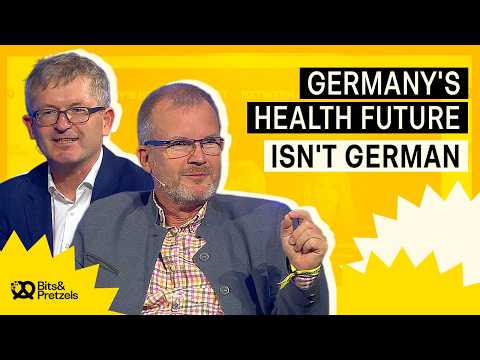
Germany's healthcare market presents significant opportunities for startups due to unmet needs and available funding. However, bureaucratic hurdles, risk aversion, and resistance to change slow innovation. Collaboration between startups, insurers, and corporates, along with regulatory reforms and better data usage, are key to unlocking growth. Successful ecosystems like Munich's startup factory and examples like Biontech show promise for the future.
Germany's healthcare system is a complex and bureaucratic environment that presents both significant opportunities and challenges for startups and innovators. Despite being one of the largest healthcare markets with substantial funding potential, the system struggles with resilience and is slow to adapt to new technologies and business models.
The healthcare sector in Germany is ripe for innovation due to many unmet demands and needs. There is also a considerable amount of money available for investment. However, the market is not exploding with startups as one might expect. The primary reasons for this are:
Bureaucracy and Risk Aversion: The German healthcare system is highly bureaucratic, and there is a prevailing mindset that digital approaches must carry zero risk. This zero-risk policy effectively stifles innovation because risk and opportunity are inherently linked.
Resistance to Change: Many stakeholders in the healthcare system benefit from the current structure and are reluctant to embrace change, often citing concerns like data privacy as reasons to resist innovation.
Germany excels in healthcare research but faces challenges in commercialization. Bringing scientific breakthroughs from the lab to market typically takes 8 to 10 years. To address this, initiatives like the Munich startup factory have been established, where multiple high-growth companies are founded weekly, raising significant capital collectively.
The key to success lies in collaboration across the entire healthcare value chain, including universities, insurance companies, hospitals, and startups. The example of Biontech demonstrates that such collaboration can lead to global success.
The barriers to innovation are both political and structural. For example, health funds in Germany were only recently allowed to invest in startups, and even then, under conditions of zero financial risk, which is unrealistic for investment.
This risk aversion limits the ability of large health insurers, who have substantial capital, to support startups effectively. The venture capital market in Germany is much smaller compared to the potential capital available within the healthcare system.
Insurers like Tika, which serve millions of members, can play a crucial role in helping startups navigate the complex healthcare system. Early engagement with insurers can help startups understand market mechanisms, identify gaps, and develop viable business models.
Startups benefit from ecosystem support, including infrastructure, training, and pitch preparation, which increases their chances of success. Collaboration between corporates and startups is essential, and examples like Brainlab show how partnerships can evolve from early-stage projects to established companies.
Germany can learn from other ecosystems such as Copenhagen's Bio Innovation Institute, Stanford's biolabs, and Boston's healthcare innovation hubs. Adapting best practices from these regions while tailoring solutions to the German and European context is vital.
One area of focus is addressing psychological healthcare challenges, such as long waiting times and access to the right specialists. Transferring successful models from other countries can improve patient outcomes.
Data privacy laws in Europe, particularly the GDPR, are often interpreted differently across German states, creating inconsistencies that hinder startups. Balancing data privacy with data usage is critical, especially as healthcare innovation increasingly relies on AI and data analytics.
Countries like China leverage data collected from medical devices to improve AI capabilities, a strategy that is difficult to replicate in Germany due to strict data regulations. Finding a middle ground will be essential to retain startups and foster innovation.
A major issue in the healthcare system is the lack of integrated processes. Patient care often consists of fragmented, random encounters with various providers without a cohesive plan.
An ideal startup would create a system that manages patient care as a coordinated process, similar to an automotive factory's production line, ensuring patients follow the necessary steps for their treatment efficiently.
For Germany to become a leader in healthcare innovation, several key developments are necessary:
Data Laws and Usage: Establishing data laws that enable effective and secure data usage across Europe, including a single point of identification for patients.
European Collaboration: Developing a pan-European healthcare innovation ecosystem rather than fragmented national systems.
Improved Patient Experience: Reducing waiting times in emergency rooms and streamlining patient care processes.
For entrepreneurs and researchers, finding a passion topic is crucial. The advice is simple:
Germany remains the third-largest industrial nation with significant financial resources and tools to support innovation. The current environment, with institutions like Unanimatum, TUM, and Technica, provides a fertile ground for healthcare startups to thrive.
Germany's healthcare market is a complex but promising space for startups. Overcoming bureaucratic inertia, embracing risk, fostering collaboration, reforming regulations, and balancing data privacy with innovation are essential steps to unlock the sector's full potential.
With continued efforts and leadership from both the public and private sectors, Germany can become a global leader in healthcare innovation, improving patient outcomes and creating successful new companies.
The future of healthcare innovation in Germany will be much better than the present and hopefully amazing.