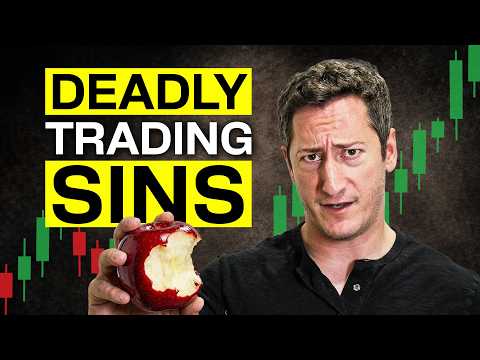
After 15 years of trading and training thousands, the author identifies the 10 biggest trading mistakes that destroy accounts, including unrealistic expectations, lifestyle pressures, risking real capital too soon, and comparing progress to others. By addressing these sins and adopting proper risk management, mentorship, and mindset, traders can improve their chances of long-term success.
Trading can be a rewarding yet challenging career path. Many traders lose significant amounts of money, including college funds, retirement accounts, and years of savings, due to common mistakes. After 15 years of trading and training thousands of traders, I have identified the 10 deadly sins that destroy trading accounts. You are likely committing at least half of these mistakes right now. This article will walk you through these mistakes and how to fix them to improve your trading journey.
Many new traders expect to become profitable within a few months or a year. This belief sets you up for failure because you do not give yourself enough time to learn and grow. At Trillium, the trading firm where I started, the expected learning curve is around two years, even with the best resources, mentorship, and full-time commitment.
If you are trading independently without such resources, you need to adjust your expectations accordingly and seek proper learning tools. Trading success requires patience and a reasonable timeframe to develop your skills.
Putting more financial pressure on your trading by living beyond your means can force bad decisions. Traders often need trades to work instead of letting them work, leading to impulsive and risky behavior.
Successful traders are typically conservative with their earnings, building cash reserves and investing in safe strategies to balance risk. Minimizing external financial pressures is crucial to maintaining clear judgment and making sound trading decisions.
Many traders jump into real money trading for the emotional rush or experience, which often leads to unnecessary losses. You must prove your strategy works with data before risking real capital.
Start with a demo account to collect trade data and verify your edge. Although demo accounts may offer unrealistic fills and exclude fees, they are safer than risking real money prematurely. Once you demonstrate profitability in a demo environment, begin live trading with minimal capital and scale gradually.
Social media often showcases traders with massive wins, which can make your progress feel inadequate. However, you rarely see their drawdowns, risk levels, or whether their trades are genuine.
Trading is not a race. Everyone has different starting points, capital, and learning curves. Comparing yourself to others distracts you from focusing on your own improvement and goals. Remember, trading is a game of you versus yourself and the market.
Focusing solely on profit and loss (P&L) rather than execution leads to emotional damage. A profitable day with poor discipline is celebrated, while a losing day with perfect execution feels like failure.
Long-term success comes from consistently making optimal decisions, not chasing immediate outcomes. Use daily report cards to evaluate whether you followed your trading rules rather than how much money you made each day.
Traders often rely on opinions, narratives, and predictions, but the market only responds to price action. The chart is the final authority.
Ignoring clear signals and arguing with price leads to losses. Learn to listen to the chart without ego. It will tell you when you are early, wrong, or when a trade is no longer valid.
Trading in isolation can be brutal and isolating. Without feedback, accountability, or someone to test your ideas, bad habits can grow unchecked.
Successful traders often come from firm environments or build communities around them. Sharing lessons, mistakes, and strategies accelerates learning and makes trading more enjoyable. The relationships and communities you build are among the most valuable aspects of your trading career.
New traders often try to call tops and bottoms to feel smart, but this is usually ego-driven and dangerous.
Trends exist because money flows in one direction. Fighting the trend without a clear, tested reason is a quick way to blow your account. Align yourself with the dominant trend and wait for clear entry points. The trend truly is your friend.
Risk management is non-negotiable. Without predefined stops, daily loss limits, and clear rules for when to step away, you risk blowing up your account.
Good risk management ensures you survive to trade another day. Many talented traders have wiped themselves out by neglecting these safeguards, while others have survived tough days because of them.
Mentorship is not about blindly copying trades but learning from those who have already made the mistakes you are about to make.
Trying to figure everything out alone means paying full tuition to the market. A good mentor shortens your learning curve, helps you avoid traps, and provides a framework to build upon.
Look for mentors a few levels ahead of you, be respectful of their time, and offer reciprocal value. Communities and events like Traders for a Cause can be great places to find mentorship.
If you recognize some of these trading sins in yourself, that is a positive first step. Awareness is key to fixing these mistakes. Trading is not about perfection but systematically removing behaviors that sabotage your success.
By cleaning up these 10 areas, you give yourself a real chance in a game where most people never do. Remember, trading success requires patience, discipline, risk management, community, and continuous learning.
Thank you for reading, and I wish you the best on your trading journey.