
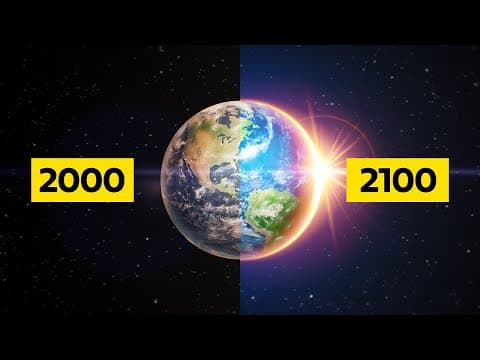
This blog post explores a hopeful future where humanity successfully combats climate change by 2100, detailing the challenges faced, the actions taken, and the transformative changes in energy, transportation, and global cooperation that lead to a stabilized climate and a healthier planet.
Most history videos focus on the past, but this one is different. It presents a history of the future—a future where we overcome the climate crisis. This narrative is not the most likely scenario, but it is a possible future where, by the year 2100, the Intergovernmental Panel on Climate Change (IPCC) publishes a special report detailing how global average temperatures have stabilized and how carbon dioxide concentrations in the atmosphere peaked and began to fall.
The early decades of the 21st century continued the trends of the late 20th century, with clear evidence that the climate was changing. Carbon dioxide levels rose significantly due to the burning of fossil fuels—coal, gas, and oil. Scientists warned that if these trends continued, global temperatures would rise, extreme weather events would become more frequent, and millions of species would face extinction.
The scientific community stressed the need to limit warming to less than 2°C, ideally below 1.5°C, to avoid catastrophic tipping points. However, the world was slow to respond. While renewable energy sources like solar began to gain traction, sectors such as heating, transport, and agriculture lagged behind due to the influence of powerful fossil fuel companies.
In 2023, a strong El Niño phase raised global temperatures, making it the warmest year on record. Extreme weather events became more intense, with devastating floods and heatwaves. The science of attribution allowed researchers to link these events directly to climate change, raising public awareness and concern.
By 2028, the climate activist movement gained momentum, leading to significant public support for decarbonization. The Paris Agreement of 2015 committed nations to reducing carbon emissions, and protests demanding action became widespread. Landmark legislation, such as the European Climate Law and the American Inflation Reduction Act, began to take effect, promoting energy efficiency and the transition to electrified systems.
As the 2030s began, China and India made significant strides in renewable energy, with China peaking its emissions in 2027. However, both nations continued to rely heavily on coal, delaying a full transition to cleaner energy sources. Activism and international pressure eventually led to commitments to phase out coal by 2050.
In 2034, landmark legal protections for oceans were enacted, but the Great Barrier Reef suffered catastrophic bleaching, losing 86% of its corals. The loss of biodiversity became a pressing concern, with scientists identifying multiple global tipping points that could lead to irreversible changes in the climate system.
By 2040, the world faced a grim reality as global temperatures reached a 1.5°C anomaly. Climate-related mental health issues surged, and political instability increased due to extreme weather events and resource scarcity. The year 2044 marked a pivotal moment when the fossil fuel industry began to collapse under the weight of its own unsustainable practices.
Governments faced immense pressure from the public to deny bailouts to failing fossil fuel companies. This refusal marked a significant shift in public sentiment against fossil fuels, leading to a rapid transition to renewable energy sources. The global economy began to stabilize as investments shifted towards sustainable practices.
By the mid-2050s, the world had made substantial progress in decarbonization. The European Union and the United States announced reaching carbon neutrality, and sustainable aviation fuels became cost-competitive, significantly reducing emissions from air travel. The global electrical grid transformed, powered predominantly by renewable sources.
Despite ongoing challenges, such as regional conflicts over water resources and the impacts of climate change, a new generation of leaders emerged, committed to addressing the climate crisis. The global community rallied around reforestation and sustainable practices, leading to a significant reduction in methane emissions.
By 2063, carbon dioxide concentrations peaked, and the world celebrated as emissions turned net negative. The global temperature anomaly stabilized, and while the impacts of climate change remained, the worst-case scenarios were avoided. The remaining coral species were preserved in captivity, and efforts to restore biodiversity began to show promise.
As the century progressed, the world adapted to its new climate reality. The lessons learned from the past fueled a commitment to sustainability and environmental stewardship. The global community recognized the importance of collective action and the need to address historical injustices related to climate change.
The narrative of a future where humanity successfully combats climate change is not just a dream; it is a possible reality shaped by the actions we take today. The challenges are immense, but so is our capacity for change. The story of the 21st century is one of resilience, innovation, and hope—a testament to what we can achieve when we come together to protect our planet.



















