
This article explores the sharp decline in global plastic waste trade due to regulatory changes and environmental concerns, alongside an in-depth analysis of the global job market based on the 2026 International Labor Organization report. It highlights challenges such as rising informal employment, stalled structural transformation, and the uncertain impact of AI on labor markets, revealing a world facing complex economic and environmental transitions.
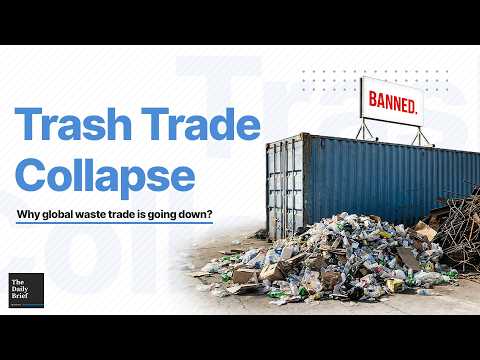
Global trade discussions often focus on tariffs, industrial policies, and free trade deals, but one overlooked aspect is the trade of waste. For years, there was a thriving industry moving waste across borders, particularly plastic waste. However, data shows a sharp decline in global plastic waste trade from about 12.4 million tons in 2014 to 5.8 million tons in 2023.
The global waste trade was not merely rich countries dumping garbage on poorer ones; it was a complex system rooted in industrial economics. Waste is not uniform; some materials like aluminum are valuable industrial inputs, while others, such as soiled paper plates, are liabilities.
Rich countries produced large volumes of mixed waste, which was expensive to sort and politically difficult to manage domestically. Exporting waste to countries with cheaper labor allowed for sorting and recycling into raw materials for manufacturing. China was the largest importer, handling over half of the world's traded plastic waste by 2016.
This system allowed exporters to claim recycling efforts and importing countries to create jobs and extract value from secondary raw materials. However, contamination in waste shipments often led to environmental and health issues in importing countries, with some waste ending up in informal, unsafe disposal methods.
In 2018, China implemented the "National Sword" policy, banning 24 categories of solid waste imports and tightening contamination limits. This caused a significant shift in waste flows to Southeast Asian countries like Malaysia and Thailand, which later also imposed restrictions.
India banned plastic waste imports in 2019, with some relaxation in 2022. Turkey became a major destination for EU plastic waste but also introduced restrictions. The Basel Convention amendments in 2021 further tightened controls on plastic waste shipments, requiring prior informed consent from importing countries.
The European Union plans to ban plastic waste exports to non-OECD countries starting November 2026, pushing further regionalization of waste management.
While the decline in waste trade might seem like environmental progress, it does not necessarily mean better recycling. OECD countries have seen recycling rates stall, with increased reliance on incineration and landfilling. Some waste is being mislabeled or reclassified to circumvent regulations.
Unlike plastic waste, scrap metal trade is increasing, seen as a strategic climate asset. Recycling metals like steel and aluminum significantly reduces carbon emissions compared to producing from virgin materials. Countries like Turkey, India, and Vietnam are major importers of ferrous scrap.
However, export controls are emerging to secure domestic supply for green manufacturing, potentially leading to new trade tensions over scrap materials.
The International Labor Organization's 2026 Employment and Social Trends report provides a comprehensive view of the global job market.
Globally, unemployment is low at under 5%, with about 186 million people unemployed. However, a broader measure called the "jobs gap," which includes those willing to work but not actively seeking jobs, exceeds 400 million.
The global rate of informal employment—jobs without protections or regulations—is rising after decades of decline. By 2026, informality may reach 2.1 billion workers.
Population growth in regions with high informality, especially Sub-Saharan Africa, contributes to this trend. Moreover, the structural transformation from low-productivity to high-productivity sectors has slowed significantly, stalling economic development pathways.
In 2025, 284 million workers lived in extreme poverty, earning less than $3 a day despite having jobs. In low-income countries, poverty among workers has increased since 2015.
Educated youth face high unemployment rates (around 36.6%), often holding out for formal sector jobs, while less educated youth take informal, low-quality jobs. This creates a crisis of youth neither employed nor in education or training (NEET), with a university degree sometimes increasing this risk.
Debt servicing costs at historic highs limit these countries' ability to invest in economic transformation, forcing austerity in many cases.
These countries face shrinking workforces due to aging populations, contracting at about 0.1% per year, reducing growth rates by roughly 2% annually. This demographic shift coincides with technological disruptions.
Manufacturing has traditionally been a pathway out of poverty, absorbing low-skilled workers. However, recent trends show a decline in manufacturing jobs linked to foreign demand, especially in rich countries.
Automation and robotics have transformed factories, requiring more technically skilled workers engaged in design, research, and marketing rather than assembly line work. Consequently, trade-oriented jobs are increasingly in the services sector, demanding higher education and skills.
AI introduces labor market uncertainty. While it has not yet caused large-scale job displacement, it has cooled hiring and job vacancies.
Highly educated youth are particularly vulnerable, as AI can replace routine cognitive tasks traditionally performed by this group. The sectors most disrupted by AI may also see the largest productivity gains, creating a digital divide with no safe harbor for workers.
The global waste trade is undergoing a profound transformation driven by environmental concerns and regulatory changes, leading to reduced plastic waste trade but increased challenges in waste management.
Simultaneously, the global labor market faces complex challenges: rising informal employment, stalled economic transformation, demographic shifts, and technological disruptions. While unemployment rates appear stable, underlying issues threaten long-term economic progress and social stability.
Cochin Shipyard secured a $360 million contract to build six LNG-powered container ships for French shipping company CMA CGM, marking the first Indian-made container ship order for an Indian shipyard.
Hindustan Unilever plans to invest 2,000 crore rupees over two years to expand production in premium beauty, personal care, and home care liquids, focusing on automation and tech-enabled supply chains.
Bangladesh has barred SpiceJet from overflying its airspace due to unpaid navigation charges, forcing longer routes and increased fuel costs for flights to northeast India. SpiceJet is negotiating to resolve the issue.
Disclaimer: This content is for informational purposes only and does not constitute recommendations or endorsements of any stocks, brands, or products.



















