
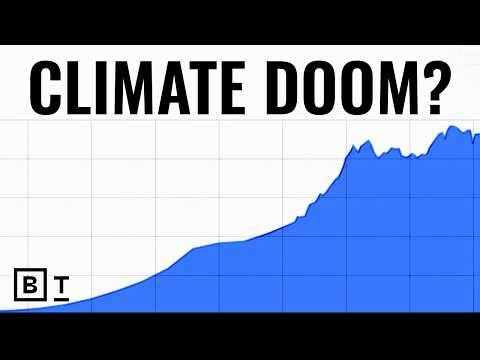
Hannah Ritchie, a researcher at the University of Oxford, discusses the solvability of major environmental issues, including climate change, food production, and plastic waste. She emphasizes the importance of data-driven optimism, the need for systemic changes in energy, transport, food, and construction, and the role of individuals in driving sustainable practices.
My name is Hannah Ritchie. I'm a researcher at the University of Oxford and the deputy editor of "Our World in Data." I recently published a book titled "Not the End of the World: How We Can Be the First Generation to Build a Sustainable Planet." In this blog post, I will share insights from my recent interview discussing our biggest environmental problems and how we can address them.
Many people today feel a sense of doom regarding the state of the planet, particularly concerning climate change. I used to share this perspective, feeling overwhelmed by the enormity of the challenges we face. However, stepping back and examining the data has shifted my viewpoint. While these problems are indeed significant and urgent, they are also solvable.
We have already solved major environmental issues in the past, such as the depletion of the ozone layer and acid rain. These successes demonstrate that humanity is capable of addressing large-scale problems when we focus on data and solutions rather than despair.
Climate change is primarily driven by human emissions of greenhouse gases, which stem from two main sources: energy and industry (approximately 75% of emissions) and food and agriculture (about 25%). The energy sector includes emissions from powering homes, transportation, and industrial processes, while agriculture contributes through deforestation, fertilizer use, and livestock emissions.
Over the past few decades, we have seen a slowdown in the growth of global CO2 emissions. In fact, per capita emissions peaked around 2012, and many wealthy nations have successfully reduced their emissions, even when accounting for offshoring production to other countries.
The Paris Agreement aims to limit global temperature rise to well below 2 degrees Celsius, with an aspirational target of 1.5 degrees. Personally, I believe the 1.5-degree target is increasingly difficult to achieve due to the scale and pace of necessary emissions reductions. However, every fraction of a degree matters, and we must strive to limit warming as much as possible.
To effectively combat climate change, we need to target four key areas: energy, transport, food, and construction.
Transitioning from fossil fuels to low-carbon energy sources, such as renewables (solar, wind, hydropower) and nuclear energy, is crucial. The cost of these alternatives has decreased significantly, making them economically viable compared to traditional fossil fuels.
Transportation accounts for about 20% of CO2 emissions, primarily from road vehicles. We can reduce emissions by promoting public transport, cycling, and walking, as well as transitioning to electric vehicles. Electric cars, while initially more carbon-intensive to produce, offer significant long-term emissions reductions.
Food production is a major contributor to greenhouse gas emissions. To build a sustainable food system, we must invest in more productive agriculture, change our diets to reduce meat and dairy consumption, and minimize food waste.
The construction industry also contributes to emissions, particularly through cement production. Innovations such as carbon capture and storage, using alternative materials, and reducing cement usage can help mitigate these emissions.
The poorest populations, particularly in tropical and subtropical regions, will be hit hardest by climate change. They often lack the resources to adapt to rising temperatures and extreme weather events. Addressing poverty and improving resilience through access to energy and infrastructure is essential for protecting these communities.
Sustainability encompasses two key components: reducing environmental impact and providing a good quality of life for all people today. We must strive to lift people out of poverty while minimizing our ecological footprint.
This generation has a unique opportunity to progress sustainably. While individual actions, such as reducing carbon footprints, are important, systemic changes are necessary for meaningful impact. Focusing on major contributors to emissions, such as diet and transportation, can lead to significant reductions.
Reducing meat and dairy consumption, minimizing food waste, and opting for plant-based diets can greatly decrease individual carbon footprints. Incremental changes can lead to substantial collective impact.
Food production is at the heart of many environmental issues, contributing to emissions, deforestation, and biodiversity loss. To build a sustainable food system, we must ensure everyone has access to nutritious food while minimizing environmental impacts.
Investing in agricultural technology and practices can help close the gap between current yields and attainable yields, particularly in regions like Africa where crop yields remain low.
Plastic has transformed our world, but its prevalence has led to significant environmental challenges. The key issues include plastic waste leaking into oceans and the proliferation of microplastics.
To tackle plastic waste, we need to improve waste management infrastructure globally, particularly in low-income countries. Recycling can help, but it is not a complete solution. Innovations in waste management and technology can mitigate the problem.
The narrative that overpopulation is the root cause of environmental problems is misleading. While population growth has slowed, technological advancements in agriculture have increased food production, allowing us to feed more people sustainably.
Framing humans as a cancer to the planet is damaging and counterproductive. Instead, we should focus on solutions that empower people and promote sustainable practices.
In conclusion, while we face significant environmental challenges, there is hope. By focusing on data-driven solutions, systemic changes, and individual actions, we can work towards a sustainable future. The key is to remain optimistic and proactive in addressing these pressing issues.



















