
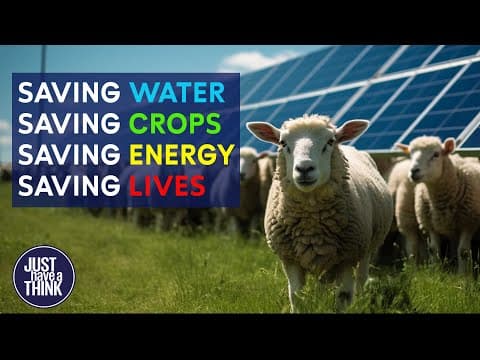
This blog post explores the innovative concepts of agrivoltaics and solar canals, highlighting their potential benefits for agriculture and water conservation, while addressing the challenges of implementation and the need for supportive government policies.
In 2021, amidst the global pandemic, Indian Prime Minister Narendra Modi announced an ambitious plan to add 60 gigawatts of solar photovoltaic capacity in India within three years. This initiative aimed to reduce the country's reliance on coal for electricity. However, a significant challenge was the lack of available land for the installation of millions of solar panels. To overcome this, innovative thinkers proposed placing solar panels above agricultural land and along India's extensive canal systems. This concept, known as agrivoltaics and solar canals, has gained international attention and is being adopted in various countries, including China, Australia, Europe, and North America.
Fast forward to November 2024, India has nearly achieved its solar capacity goal, installing an additional 54.47 gigawatts, bringing the total to almost 95 gigawatts. This capacity exceeds that of the entire UK grid, showcasing India's commitment to renewable energy. However, the implementation of solar panels over agricultural land and waterways has faced hurdles, including high installation costs and competitiveness issues.
The urgency for innovative solutions is underscored by the ongoing climate crisis. For every degree Celsius of warming, the atmosphere can hold 7% more moisture. As of 2024, the average temperature increase compared to pre-industrial levels is approximately 1.6 degrees Celsius, leading to significant disruptions in rainfall patterns. Regions reliant on seasonal rainfall, such as monsoon areas, are experiencing extreme weather events, including droughts and unseasonal precipitation.
Higher temperatures also increase plant evapotranspiration rates, necessitating more water for crops, which exacerbates water scarcity in already vulnerable regions. This context highlights the importance of initiatives that can mitigate water loss, such as covering agricultural land and canals with solar panels.
Theoretically, using solar panels to cover agricultural land and canals presents a win-win scenario. However, the high costs associated with these projects pose a significant barrier. Research from the Fraunhofer Institute in Germany indicates that the levelized cost of electricity (LCOE) for agrivoltaics ranges from 7 to 12 eurocents per kilowatt-hour. While this is more expensive than ground-mounted solar, it remains cheaper than traditional energy sources like nuclear power.
Despite the potential benefits, developers in regions like Gujarat, India, are hesitant to invest in solar canals due to the higher costs compared to ground installations. This situation illustrates the need for government intervention to promote sustainable infrastructure projects through incentives and regulations.
The advantages of solar canals extend beyond energy generation. Studies have shown that solar panels can perform more efficiently in cooler microclimates created by water bodies. Additionally, the shade provided by the panels significantly reduces evaporation and helps control aquatic weed growth. A study from the University of California found that solar panels covering California's canal network could reduce annual evaporation by approximately 39,000 cubic meters per kilometer of canal.
The financial benefits of solar canal projects often outweigh the initial infrastructure costs. Research indicates that the net present value (NPV) of solar canal projects can exceed that of conventional ground-mounted solar by 20 to 50%, depending on the region.
One notable example is Project Nexus in California, which aims to test various configurations of solar panels over the state's canal network. This project is particularly relevant given California's ongoing drought challenges. In India, the Canal Solar Power Project, initiated in 2012, has expanded significantly, with plans to cover 19,000 kilometers of canals, potentially generating 2.2 gigawatts of capacity while conserving land and water resources.
Agrivoltaics also offer long-term benefits. Research indicates that strategically placed solar panels can optimize sunlight exposure for crops, enhancing growth while minimizing water loss. A study by Oregon State University found that properly positioned panels could increase electricity production by up to 10%. In France, agrivoltaics have led to increased grape yields by 20 to 60% while reducing irrigation needs by 70%.
Globally, agrivoltaics are gaining traction. In China, a massive project over goji berry plantations has reduced soil evaporation by 40% and created thousands of jobs. In the United States, a significant portion of future solar PV development is expected to occur on agricultural land, with many farmers recognizing agrivoltaics as a complementary revenue stream rather than a threat to food production.
The potential of agrivoltaics and solar canals to address climate challenges and enhance agricultural productivity is immense. However, realizing this potential requires proactive government involvement, supportive policies, and a shift in public perception regarding the coexistence of solar energy and agriculture. As the world grapples with the impacts of climate change, innovative solutions like these could play a crucial role in creating a sustainable future.
What are your thoughts on the future of renewable energy and agrivoltaics? Share your insights in the comments below.



















