
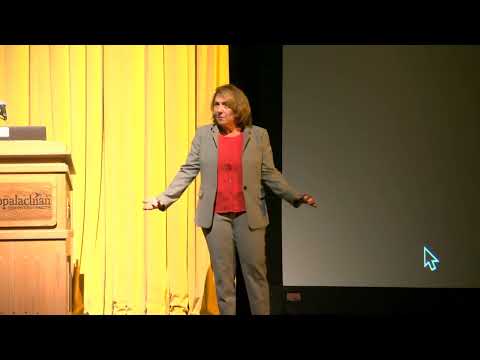
Dr. Hope Jahren's talk at Appalachian State University highlights the complexities of global change, emphasizing the role of technology, population growth, and energy consumption in shaping our environment. Her book, 'The Story of More,' serves as a call to action for understanding and addressing climate change through personal and collective responsibility.
Dr. Hope Jahren, an award-winning scientist and author, recently spoke at Appalachian State University about her book, The Story of More: How We Got to Climate Change and Where to Go from Here. This event was part of the university's Common Reading Program, which aims to foster interdisciplinary discussions among students and faculty. The timing of the event coincided with Climate Week, a global initiative aimed at raising awareness about climate issues.
In her talk, Dr. Jahren introduced the concept of the "Great Acceleration," a term used to describe the rapid increase in human impact on the planet since the 1950s. She noted that while thousands of academic articles have been written on this topic, her book aims to make this information accessible to a broader audience. By weaving personal narratives with scientific data, she emphasizes the importance of storytelling in fostering a meaningful climate conversation.
Dr. Jahren discussed how technology has been a significant driver of change. For instance, she compared the technology used in baseball over the past 50 years, noting that while some tools have remained the same, others have evolved dramatically, impacting both the game and society.
One of the most striking statistics she presented was the doubling of the global population from about 4 billion in 1970 to over 8 billion today. Despite this growth, food production has tripled due to advancements in agricultural technology, particularly during the Green Revolution. This increase in food supply has allowed societies to shift focus from mere survival to other pursuits.
Dr. Jahren highlighted that energy consumption has also tripled in the last 50 years, primarily due to the shift in societal focus from basic needs to more energy-intensive activities. She pointed out that while the world has made strides in food production, the energy required to support modern lifestyles has increased significantly, leading to higher CO2 emissions.
The increase in CO2 emissions has resulted in a 30% rise in atmospheric CO2 levels and a corresponding increase in global temperatures. Dr. Jahren emphasized the link between these changes and the rising sea levels, which have increased by about 5 inches globally.
Dr. Jahren called for a new energy revolution, akin to the agricultural advancements of the past. She stressed that while renewable energy sources like wind and solar are growing, they still represent a small fraction of the overall energy mix. To combat climate change effectively, a comprehensive approach that includes diverse energy solutions is necessary.
Throughout her talk, Dr. Jahren engaged the audience with humor and personal anecdotes, making complex scientific concepts relatable. She encouraged students to think critically about their roles in addressing climate change and to consider how their fields of study could contribute to solutions.
Dr. Hope Jahren's presentation at Appalachian State University served as a powerful reminder of the interconnectedness of human activity and environmental change. Her book, The Story of More, not only provides insights into the challenges we face but also inspires hope for a more sustainable future. As she concluded, the path forward requires collective action and innovative thinking to create a world that prioritizes both human and environmental well-being.



















