
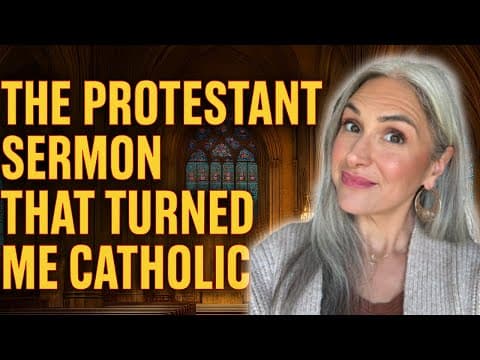
A sermon criticizing Catholic traditions sparked my curiosity and led me to explore the faith. This post discusses the sermon, the misconceptions about Catholic practices, and my journey to understanding the beauty of Catholicism.
In a surprising turn of events, a sermon from my former church, Aphy Creek Christian Fellowship in Oregon, became a pivotal moment in my spiritual journey. The pastor's harsh criticisms of Catholicism not only piqued my curiosity but ultimately led me to explore the Catholic faith more deeply. This blog post will delve into the sermon, the misconceptions surrounding Catholic traditions, and my personal journey toward embracing Catholicism.
During a 30-minute segment of the sermon, the pastor launched into a tirade against Catholic practices. He mocked their traditions and described their churches as ridiculous and borderline disgusting. This blatant disrespect was shocking and made me question the validity of his claims. Instead of dismissing the Catholic Church outright, I felt compelled to investigate the truths behind his statements.
One of the points raised in the sermon was the architecture of Catholic churches. The pastor expressed confusion about whether to be impressed or grossed out by the beauty of these ancient buildings. For instance, he mentioned the Church of the Holy Sepulchre in Jerusalem, a site believed to be where Jesus was buried. This church, nearly 2,000 years old, is a marvel of history and architecture, attracting millions of visitors each year.
Upon entering the Church of the Holy Sepulchre, one can witness a profound display of devotion. Visitors engage in various acts of worship, such as rubbing prayer beads on a stone believed to be where Jesus was laid. The pastor questioned the authenticity of this belief, pointing out that it was Constantine's mother who identified this site as significant. This raised an important question: does the reverence for the stone overshadow the worship of Jesus Christ himself?
The sermon continued with critiques of Catholic rituals, such as the veneration of saints and the use of relics. The pastor described how people worshipped at the church, lighting candles and crawling on their knees to pay homage to the site. He noted the overwhelming presence of statues, including one of St. Peter, whose feet have been kissed so many times that they are worn down to the bone.
While the pastor's comments were intended to ridicule, they highlighted a common misunderstanding about the role of saints in Catholicism. Saints are not worshipped as deities; rather, they are honored as intercessors who can pray on behalf of the faithful. This distinction is crucial in understanding Catholic devotion and the significance of relics.
The pastor also referenced the Church of the Three Fountains, which commemorates the martyrdom of St. Paul. According to tradition, when Paul's head was severed, it bounced three times, and fountains sprang up at each spot. While the pastor found humor in this story, it reflects the deep reverence Catholics have for their martyrs and the stories that shape their faith.
Towards the end of the sermon, the pastor criticized the practice of communion, reducing it to a mere symbol with a plastic cup of grape juice and a piece of bread. This dismissal of the sacrament struck me as disrespectful to the profound meaning it holds in Catholic worship. Communion is a sacred act of remembrance, a way to connect with Jesus and the community of believers.
The pastor's negative portrayal of Catholicism ultimately led me to question why he was so fixated on criticizing the faith. Instead of turning away, I chose to explore the Catholic Church for myself. I began to appreciate the rich history, the beauty of its traditions, and the depth of its teachings.
In conclusion, what began as a disrespectful sermon turned into a catalyst for my spiritual exploration. The criticisms I encountered prompted me to seek the truth about Catholicism, leading me to embrace a faith that I now find deeply meaningful. The journey has been enlightening, and I encourage others to look beyond surface-level criticisms and explore the beauty and depth of Catholic traditions for themselves.



















