
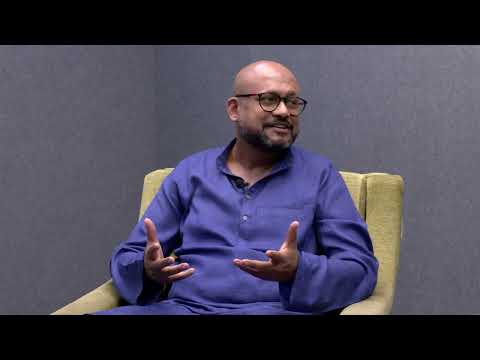
Ashish Agarwal, a rural management postgraduate, initiated Paraan Mitra to revolutionize waste management in Ahmedabad by empowering rag picking sisters. Starting from a college competition, he conducted extensive research revealing exploitation in the sector. Paraan Mitra created self-sustainable scrap shops and partnered with Ahmedabad Cantonment Board, improving livelihoods and waste management. The initiative now supports thousands of women and promotes social entrepreneurship.
Ashish Agarwal, a postgraduate in rural management, embarked on a remarkable journey to transform waste management in Ahmedabad. His initiative, Paraan Mitra, focuses on empowering rag picking sisters—women who collect recyclable waste—by creating a self-sustainable business model that addresses both social justice and environmental concerns.
After completing his masters, Ashish worked in Bihar before moving to Ahmedabad. The turning point came during a competition at the Institute of Rural Management Anand (IRMA), where Ashish and his team presented a solution to waste management in tier 2 cities by empowering rag picking sisters as micro-entrepreneurs.
Although initially a theoretical project, the competition judges connected Ashish to Gandhi Ashram and Manav Sadhna, an organization working with slum communities in Ahmedabad. This connection led Ashish and his team to conduct six months of in-depth research on the ground.
The research revealed a massive, complex waste management sector in Ahmedabad, worth approximately 1,000 crore rupees annually. More than 100 types of waste are treated and recycled, but the rag picking sisters, who do most of the work, were severely exploited.
Typically, these women start their day as early as 3 or 4 AM, traveling 8 to 10 kilometers and bending over 1,000 times to collect 15 to 20 kilograms of waste. Despite their hard work, they receive only a fraction of the fair price for the recyclables they collect due to rigged measuring devices and unfair practices by scrap shop owners.
Ashish and his team realized that by creating scrap shops owned and operated by the rag picking sisters themselves, they could eliminate exploitation and increase the women's income by up to 33%. This model focused on social empowerment, with waste management serving as a tool to uplift the community.
Setting up the first scrap shop required overcoming significant challenges, including financial constraints and opposition from local exploiters who profited from the existing system. The team faced harassment and had to frequently engage with law enforcement to protect their initiative.
Financially, the scrap shops required around 25 lakh rupees to start, which was manageable with organizational support. However, the social challenges were more daunting.
To raise awareness and dignity for the rag picking sisters, Paraan Mitra designed programs involving volunteers from schools, colleges, and corporates. One flagship program, the "Waste Pilgrimage," invited volunteers to accompany the sisters early in the morning to experience rag picking firsthand.
These interactions transformed perceptions, fostering respect and support for the sisters. The sisters also visited schools to share their stories, further bridging the gap between different societal sections.
A major milestone was winning the tender to manage waste for 3,500 households in the Ahmedabad Cantonment area. This partnership allowed Paraan Mitra to organize rag picking sisters into a formal workforce with proper uniforms, ID cards, and safer working hours.
The sisters collected, segregated, composted, and sold waste in an organized manner, marking a significant shift from informal to mainstream waste management. Support from the United Nations Development Program and Coca-Cola under the Extended Producer Responsibility (EPR) framework helped provide necessary machinery and financial backing.
After nearly a decade, Paraan Mitra operates 78 centers across Ahmedabad, supporting over 6,700 rag picking sisters daily. The cooperative model ensures that the women are the actual owners, with profits shared transparently.
To date, the initiative has enabled the recycling of approximately 5 million kilograms of waste. The team behind Paraan Mitra consists of over 50 members dedicated to sustaining and expanding the model.
Ashish encourages young entrepreneurs, especially students, to explore social entrepreneurship. He emphasizes the vast opportunities to create self-sustainable models that empower marginalized communities while addressing pressing social issues.
He highlights that social entrepreneurship can be both personally fulfilling and professionally rewarding, urging youth to take risks and experiment with innovative solutions.
Paraan Mitra exemplifies how addressing social dimensions within environmental challenges can lead to sustainable and equitable solutions. By focusing on dignity, empowerment, and community engagement, Ashish Agarwal and his team have transformed waste management in Ahmedabad, creating a replicable model for social entrepreneurship.
If you are in Ahmedabad, visiting one of Paraan Mitra's centers, such as the large facility near Ahmedabad airport, offers an inspiring glimpse into this impactful work.
This story underscores the importance of integrating social justice with environmental sustainability and the power of grassroots initiatives to drive meaningful change.



















