
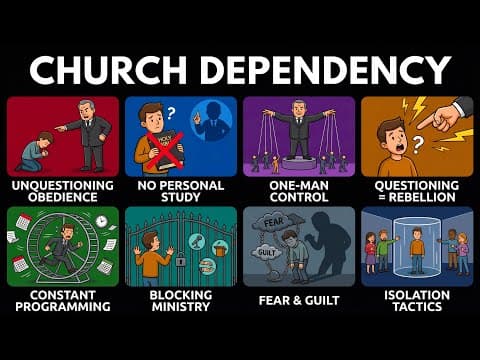
Many churches unintentionally foster unhealthy dependency on leaders by demanding unquestioning obedience, discouraging personal Bible study, and controlling spiritual access. This creates a power imbalance that stifles individual spiritual maturity and replaces Christ's lordship with human control. True biblical leadership should empower believers to engage directly with God and scripture, not keep them dependent on a single authority.
In many churches around the world, a subtle yet profound issue persists—practices that create unhealthy dependency on church leaders. These habits, often disguised as spiritual obedience and respect, can replace the lordship of Christ with human control, ultimately hindering believers' spiritual growth and freedom.
This article explores the various church habits that foster leader dependency, the dangers they pose, and how they contrast with the true gospel message.
One common teaching in many churches is the call to obey leaders without question, submitting to their authority as if it were the voice of God. This teaching is often rooted in scriptures like Hebrews 13:17, which instructs believers to respect those who lead them in faith. However, this verse is frequently twisted to demand absolute obedience, surrendering personal conscience and discernment.
When obedience to a pastor becomes indistinguishable from obedience to God, the gospel shifts dramatically. Instead of relying on Christ's finished work, spiritual health becomes dependent on compliance with a leader's directives. Believers stop seeking God directly and start seeking permission from human authorities. This trade-off replaces the freedom offered by the cross with bondage to human control.
This practice creates a dangerous power imbalance where questioning is seen as rebellion and disagreement as apostasy. Leaders who foster such environments dominate rather than shepherd, controlling rather than guiding. They often resist accountability themselves, preaching submission while operating with unchecked authority. Scripture is weaponized to silence dissent and maintain power.
The people most affected are those who genuinely desire to follow God but have been taught that true faith means never questioning the man in the pulpit. This is not biblical leadership but spiritual manipulation disguised in religious language.
Another habit that fosters dependency is discouraging personal Bible study and interpretation. Some churches enforce an unspoken rule: do not study the Bible independently or interpret scripture without leadership guidance.
This rule is often framed as humility, protecting the flock from false teaching, and honoring trained leadership. While it is true that the Bible is complex and context matters, the solution is not to ban personal study but to equip believers to study well.
Discouraging independent Bible reading keeps people spiritually illiterate and dependent on a middleman to encounter God through His word. It ensures that the pastor's interpretation becomes the only accepted truth, preventing the congregation from developing discernment to recognize when teachings contradict scripture.
Believers conditioned to doubt their own discernment and defer all spiritual decisions to a leader remain perpetually immature in their faith. They become unable to hear God's voice for themselves because they have been trained to believe they cannot. This dependency is often by design, as dependent people are easier to control.
Many churches maintain packed calendars filled with activities, programs, and meetings for every age and interest. While this may appear as a thriving community, it often leads to exhaustion and burnout.
A congregation so busy doing church activities may never have time to truly be the church. This constant programming can serve as a subtle form of control, keeping members dependent on the institution rather than fostering genuine spiritual growth and freedom.
When leadership demands unquestioning loyalty and controls access to God's favor, it becomes autocratic rather than shepherding. The early church emphasized knowledge of scripture and personal faith, but some modern churches fall into patterns where the message is "fall in line or leave."
This approach shrinks believers under condemnation rather than helping them grow in grace. Meaningful decisions flow through a narrow gate controlled by leadership, which is leadership in name but autocracy in practice.
Christ never intended for His followers to live under the thumb of human authority. He came to set captives free, not to replace one form of bondage with another. The gospel invites believers into direct communion with God, not mediated access through a man demanding unquestioning loyalty.
When obedience to a pastor replaces obedience to Christ, believers are no longer following Jesus but a system designed to keep them dependent on someone other than Him.
Unquestioning obedience, discouragement of personal Bible study, constant programming, and centralized control are church habits that create unhealthy leader dependency. These practices undermine spiritual maturity, replace Christ's lordship with human authority, and foster environments of manipulation rather than genuine faith.
True biblical leadership empowers believers to engage directly with God and scripture, encouraging personal growth, discernment, and freedom in Christ. Churches should strive to build communities that point people to Jesus, not institutions that keep them dependent on human leaders.
Have you observed these patterns in your church? Reflecting on these issues can help believers and leaders alike foster healthier, more biblically grounded communities.



















