
This article explores the dynamics of ecosystem service projects in India, focusing on the Mahogani agroforestry project and the Suko Maji watershed initiative. It highlights challenges in carbon credit revenue sharing with farmers, contrasts market-driven and community-led approaches, and emphasizes the importance of effective measurement and incentives in sustaining ecosystem services.
Ecosystem service projects aim to balance environmental conservation with community benefits. Two notable examples from India—the Mahogani agroforestry project in Bastar and the Suko Maji watershed project in Hana—offer valuable insights into how such initiatives function and the challenges they face.
The Mahogani project involves agroforestry on community land, where smallholder farmers plant fast-growing mahogany trees. The project promised farmers a share of revenue generated from carbon credits earned by sequestering carbon through these plantations.
MVAPL, the project developer, registered the project with international registries such as Vera to sell voluntary carbon credits. However, the revenue sharing was heavily skewed. The developers received a significantly larger share of the carbon credit revenue compared to the farmers. In some cases, farmers were not even informed about the details of this revenue split.
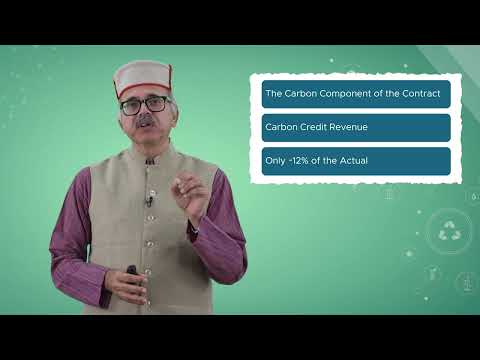
Despite the promise of revenue sharing, an investigation revealed that farmers did not fully understand the carbon component of their contracts. The company retained most of the carbon credit revenue, citing project expenses and risks. Consequently, only 12% of the actual earnings reached the farmers. This made the project a flawed Payment for Ecosystem Services (PES) arrangement, where the service providers—the farmers—were undercompensated.
In contrast, the Suko Maji watershed project, often regarded as India's first PES-like initiative, was community-driven. Located in the catchment hills of Chandigarh, this project began in the late 1970s and 1980s.
Villages undertook soil conservation, afforestation, and water harvesting activities, which drastically reduced siltation in the Sukna lake supplying water to Chandigarh. In return, the government granted exclusive use rights over forests and harvested water resources to the local community.
Although not formally called PES at the time, the principles were evident. The community provided ecosystem services such as sediment reduction, reforestation, and water regulation. The beneficiaries—the city and state—compensated the community implicitly through legal access and shared benefits, including grazing rights and access to non-timber forest products.
The contrasting outcomes of the Mahogani and Suko Maji projects raise important questions:
The Suko Maji project’s success can be attributed to its community-led approach, clear benefits to local stakeholders, and transparent sharing of resources. In contrast, the Mahogani project’s reliance on international carbon markets and opaque revenue sharing led to undercompensation of farmers.
Effective PES schemes depend on accurate measurement of ecosystem services. This includes:
Instruments like Payment for Ecosystem Services offer incentives to maintain these services, but only if they can be measured well.
Ecosystem service projects hold great promise for environmental conservation and community development. However, their success hinges on fair compensation, transparency, and effective measurement. The experiences of the Mahogani and Suko Maji projects highlight the need for locally driven initiatives and equitable benefit-sharing mechanisms to ensure sustainable outcomes for both nature and people.



















