
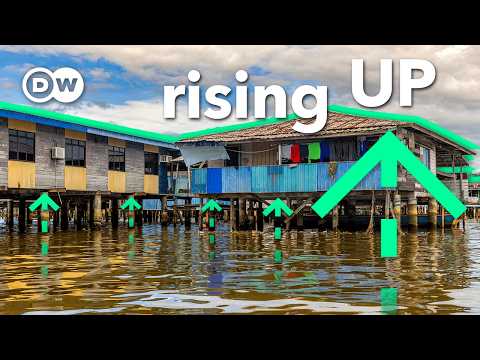
As sea levels rise due to climate change, countries around the world are implementing various strategies to combat the effects, including building protective barriers, restoring natural ecosystems, and even considering migration. This blog explores the challenges and solutions being adopted globally to address this pressing issue.
We have always been fascinated by tales of civilizations swallowed by the sea, from Atlantis to the legend of Lemuria. Today, these stories may not be as far from reality as we think. Ocean levels are rising faster than ever, and cities worldwide are preparing for it by raising sea walls, elevating homes, and even reclaiming land from the ocean. But will these measures be effective? Can we truly adapt to the challenges posed by rising sea levels?
Approximately 1 billion people live within 10 kilometers of the coast, including major financial hubs like Mumbai, New York, Shanghai, and Jakarta. Since 1880, sea levels have risen by more than 20 centimeters, and the rate of increase is accelerating. Currently, sea levels are rising by about 3-4 millimeters each year, which may seem insignificant, but over a lifetime, it accumulates significantly. By the end of the century, projections suggest that sea levels could rise by roughly one meter compared to levels from 1900, with some estimates indicating a rise of two to three meters.
Two primary factors contribute to rising sea levels, both driven by human activity:
Melting Ice: Global temperatures have risen by approximately 1.5 degrees Celsius compared to pre-industrial levels, leading to the melting of ice sheets and glaciers, particularly in Greenland and Antarctica. This melting contributes significantly to rising sea levels.
Thermal Expansion: As water warms, it expands. The oceans absorb about 90% of the heat trapped by carbon dioxide in the atmosphere, leading to thermal expansion and further contributing to rising sea levels.
The consequences of rising sea levels are severe, threatening vital coastal infrastructure such as ports and power plants. Increased flooding, storm surges, and coastal erosion are becoming more frequent, while saltwater intrusion is contaminating farmland and drinking water supplies.
One of the most straightforward solutions is to build protective barriers such as sea walls, dykes, and levees. For example, in Germany's northern coast, local authorities regularly assess how high dikes need to be raised based on projected sea levels for the next century. However, these structures are expensive and often unaffordable for poorer regions. Moreover, sealing off areas can create risks, such as the "bathtub effect," where water becomes trapped in a flooded area.
In addition to man-made structures, natural solutions are gaining attention. Salt marshes, mangrove forests, and wetlands serve as soft barriers against flooding. In India, for instance, mangroves are being planted to buffer against flooding and stabilize beaches. These ecosystems can trap sediment and even migrate inland as sea levels rise, providing a sustainable form of protection.
Some regions are adapting by learning to coexist with rising waters. In New York, new construction standards require buildings in flood-prone areas to be elevated or sealed to prevent water ingress. In Indonesia, residents of Timbulsloko have raised their homes on stilts to cope with rising seas and land subsidence. Innovative solutions like floating foundations are also being explored, with projects like Oceanix Busan proposing floating cities as a long-term adaptation strategy.
In some cases, countries are taking drastic measures to create new land. The Maldives is currently dredging over 11 square kilometers of land to accommodate 65,000 homes. Similarly, Tuvalu is building new land to protect against rising sea levels while also pursuing migration options for its citizens, signing a pact with Australia to allow permanent residency for Tuvaluans.
Retreating from coastal areas is the most drastic and complex solution. Tuvalu's migration pact highlights the difficult decisions that must be made as entire communities face the prospect of losing their homes. The social, cultural, and financial implications of such moves are profound and require careful consideration.
Many adaptation measures are often reactive, implemented only after disasters occur. However, sea level rise is a long-term issue that requires proactive planning. Decision-makers often view it as a distant problem, making it challenging to prioritize action. To effectively combat rising sea levels, a long-term perspective is essential, along with a commitment to reducing fossil fuel emissions, the primary driver of climate change.
As we face the reality of rising sea levels, it is crucial to adopt smart, tailored adaptation strategies that consider the unique challenges of each region. The future of coastal communities depends on our ability to innovate and respond to this pressing issue. We must act now to ensure that future generations do not find themselves in a world reminiscent of the tales of civilizations lost to the sea.



















