
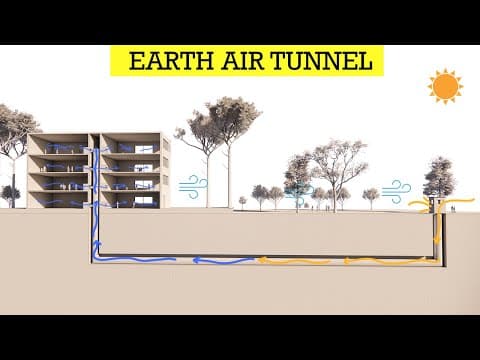
Earth air tunnel systems use underground pipes to naturally cool air in summer and warm it in winter by leveraging the stable underground temperature. This sustainable method reduces reliance on electricity for heating and cooling, lowers energy consumption, and maintains comfortable indoor climates year-round. Proper design and installation are key to maximizing efficiency and preventing issues like condensation.
Imagine being able to cool your home during the scorching summer months and warm it in the chilly winter without using any electricity. It sounds like magic, but the solution lies just beneath your feet. This article explores the concept of earth air tunnels—a simple yet powerful method to control indoor temperature naturally and sustainably.
To grasp how earth air tunnels work, we first need to understand underground temperatures. Just a few meters below the Earth's surface, the temperature remains relatively constant throughout the year, unlike the air above ground which fluctuates with the seasons.
For example, in many climates, the soil temperature at a depth of 2 to 3 meters stays between 10 to 20 degrees Celsius year-round. This means that during summer, the ground is cooler than the air, and in winter, it is warmer. Earth air tunnels take advantage of this natural phenomenon to regulate indoor temperatures.
The concept is straightforward. Air is drawn through pipes buried underground where it exchanges heat with the surrounding soil. In summer, the air cools down before entering your home, and in winter, it warms up, reducing the need for conventional air conditioning or heating.
As air moves through the underground pipes, heat transfers between the air and the surrounding soil. The longer the air stays underground, the more it adjusts to the soil temperature. This temperature-adjusted air then enters the home, providing natural cooling in summer and natural heating in winter.
Consider a summer day when the outside air temperature is 35 degrees Celsius. Instead of bringing this hot air directly into your home, it first travels through the underground pipes where the soil temperature is around 15 degrees Celsius. As the hot air moves through the tunnel, it transfers heat to the cooler soil. By the time the air reaches your home, it has cooled down to a comfortable 18 to 22 degrees Celsius, significantly reducing the need for air conditioning.
In winter, the process works in reverse. Cold outside air passes through the underground pipes where the soil temperature is warmer than the air. The air absorbs heat from the soil, warming up before entering your home. This natural warming reduces the need for conventional heating systems.
Earth air tunnel systems offer a simple, natural, and energy-efficient way to regulate indoor temperatures by harnessing the stable temperature of the earth beneath us. Whether facing the heat of summer or the cold of winter, this technology can significantly reduce energy consumption, lower electricity bills, and create a comfortable living environment.
If you are interested in sustainable home solutions, earth air tunnels are definitely worth considering as a practical and eco-friendly alternative to traditional heating and cooling systems.



















