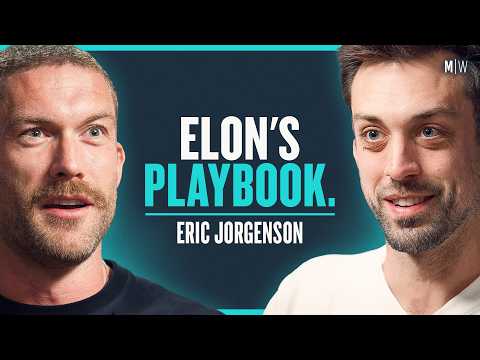
Elon Musk's extraordinary success stems from a unique combination of intense purpose, high risk tolerance, relentless urgency, and deep technical expertise. This article explores insights from Eric Jorgenson's book on Elon Musk, revealing how Musk's approach to problem-solving, leadership, and innovation drives his groundbreaking achievements in Tesla, SpaceX, and beyond.
Elon Musk is widely regarded as one of the most singular and productive entrepreneurs of our time. From founding Tesla and SpaceX simultaneously to pushing the boundaries of technology and space exploration, Musk's achievements often seem impossible. Eric Jorgenson, author of a comprehensive book on Elon Musk, shares deep insights into the principles and mindset that drive Musk's success.
Elon Musk's ventures, Tesla and SpaceX, are monumental accomplishments on their own. Achieving both simultaneously places him in a league of his own, possibly among the greatest entrepreneurs ever. Beyond these, Musk is involved in projects like Neuralink, XAI, and the Boring Company, showcasing his wide-ranging ambitions.
One of the most profound realizations in studying Musk is the central role of purpose. Musk is driven by massive, altruistic missions such as making life multi-planetary, advancing sustainable energy, and developing revolutionary technologies. This purpose fuels his willingness to take enormous risks and push relentlessly forward.
Musk exhibits a high tolerance for risk, often taking chances that others deem reckless. He famously states, "Failure is irrelevant unless it's catastrophic," highlighting his readiness to keep trying until he succeeds. This risk-taking is coupled with a bias for immediate action and maniacal urgency, attacking bottlenecks and problems with relentless focus.
Musk's work rate is extraordinary, often working 100-hour weeks and expecting similar dedication from his teams. He instills a culture of urgency, where problems are addressed immediately, and deadlines are aggressive, often with a 50% chance of success to push the limits. This intensity can lead to burnout but also accelerates innovation and progress.
Unlike many CEOs, Musk is deeply involved in technical details due to his expertise in physics and economics. This allows him to make informed decisions, control product development tightly, and understand the economic implications of his choices.
Musk employs memory techniques and has an exceptional recall of technical details and project bottlenecks. This enables him to micromanage effectively and provide precise guidance to his teams.
Musk leads from the front, often sleeping on factory floors and being physically present where problems occur. His leadership demands exceptional ability and dedication, leading to high turnover but also attracting brilliant, mission-driven individuals. He hires young, talented engineers capable of rapid problem-solving and fosters a culture of intensity and urgency.
A key principle Musk applies is questioning the necessity of every part and process. By eliminating unnecessary components and simplifying designs, Tesla and SpaceX achieve significant cost reductions and reliability improvements. This relentless focus on reducing the "idiot index"—the difference between raw material cost and price—unlocks breakthroughs that make products more accessible.
Despite his focus on action, Musk maintains a significant public presence through social media and interviews. This helps rally support, attract investors, and shift public perception, especially for revolutionary ideas like electric cars and space travel, which initially faced skepticism.
SpaceX began as a philanthropic effort to inspire space exploration by sending a greenhouse to Mars. Musk challenged the high costs of rockets by assembling a team of engineers and applying first principles thinking to drastically reduce launch costs. Today, SpaceX holds a near-monopoly on space launch services and is pioneering technologies like Starship and space-based solar power.
Tesla's innovation journey includes fundamental breakthroughs in electric vehicles, autonomy, and battery technology. The company is transitioning to build humanoid robots and robo-taxis, aiming to transform multiple industries. Tesla also vertically integrates its supply chain, including lithium refining, to overcome constraints.
Tesla is developing humanoid robots powered by AI, trained using real-world data collected from Tesla drivers. While adoption may be gradual due to the uncanny valley effect, these robots could revolutionize labor in factories, laundromats, and other service industries.
Musk's childhood was marked by trauma and abuse, which some believe fuels his relentless drive and discomfort with peace. He exhibits traits consistent with Asperger's and bipolar tendencies, contributing to his intense focus and tolerance for pain and risk.
Public opinion on Musk is highly polarized, with some admiring his achievements and others criticizing his ethics or behavior. Jorgenson emphasizes focusing on Musk's useful traits and principles rather than personal or political controversies.
Elon Musk's ability to achieve the impossible is not just a matter of intelligence but a unique blend of purpose, risk tolerance, urgency, technical mastery, and leadership. While his approach may not be suitable for everyone, understanding these principles offers valuable insights into how extraordinary success is crafted.
For more insights and to explore Eric Jorgenson's work, visit ejorgansson.com and Elon Musk book website.