Grocery prices have surged by 28% since 2020, making shopping difficult for many Americans. This article explores the concept of government-run grocery stores, exemplified by the military commissary system, as a potential solution. Despite criticisms, these stores offer significant savings through subsidies and a unique pricing model, providing a blueprint for addressing food affordability and food deserts.
Grocery prices have reached unprecedented highs, with a 28% increase since 2020 alone. Consumers often notice the same products priced very differently across various stores. For example, peanut butter, jelly, and bread can cost nearly twice as much at some stores compared to others. This disparity raises the question: how can some stores offer groceries at significantly lower prices?
While many factors contribute to rising grocery costs—such as market consolidation, algorithmic pricing, and profit maximization—there is a growing conversation about real solutions to make groceries more affordable for families.
Two politicians, New York City Mayor Zoran Mamdani and former President Donald Trump, have discussed grocery prices, but with very different approaches. Mamdani proposes government-owned grocery stores operated as nonprofit public utilities to provide affordable groceries. This concept is not new and has been tried in various places like Florida and Kansas City, but critics argue these efforts have failed.
Economic Viability: Grocery stores operate on razor-thin profit margins of 1-2%. Private grocers optimize inventory, labor, and purchasing power on a massive scale. Government-run stores might face procurement restrictions and political oversight, limiting their ability to compete and potentially requiring taxpayer subsidies.
Government Control Over Food Access: Critics worry that government stores might not respond to consumer demand effectively, with inventory decisions influenced by politics rather than market needs.
Inefficiency of Government Agencies: Many believe government agencies are inefficient, slow, and bureaucratic, which could translate into poor shopping experiences and operational challenges.
Given these concerns, privatization is often seen as the only viable solution.
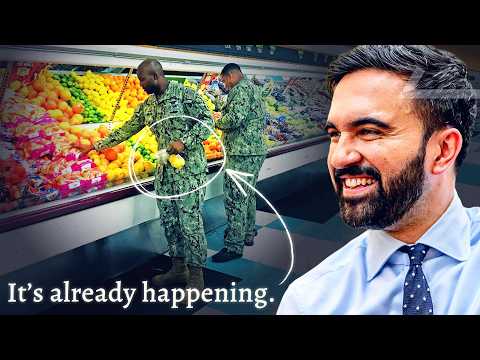
Contrary to skepticism, the largest chain of government-run grocery stores exists within the military: the Defense Commissary Agency (DeCA). With nearly 250 commissaries worldwide, DeCA provides groceries to military families at significantly reduced prices.
The commissary system dates back to 1825, initially serving military personnel and later extending to their families. It is considered a valuable non-pay benefit for service members, helping to offset the cost of living.
Rachel, a military spouse living at West Point, shared her experience shopping at the commissary. For her family, the commissary is the primary grocery store, especially since options in the area are limited. She aims to keep her monthly food budget under $1,000, which is below the national average of $1,500 for households of three to four people.
The commissary feels like a normal grocery store, offering a variety of brands and products, dispelling myths of limited choices or Soviet-style markets.
Historically, DeCA used a "cost plus 1%" pricing model, selling products at cost plus a small margin. However, this created a perception that prices were not significantly lower than retail.
To address this, DeCA adopted a variable pricing model, selling essential items like milk at a loss to provide savings where it matters most to families. Losses on these "known value items" are offset by slightly higher prices on less critical products. This approach prioritizes affordability over pure efficiency.
When Bill Moore, former CEO of DeCA, tried to run the agency like a business by closing unprofitable stores, Congress intervened to keep them open, recognizing their importance in preventing food deserts for military families.
Privatization efforts have been consistently rejected by Congress, as no private company has been able to guarantee the legally required savings of approximately 23.7% for military families.
DeCA receives about $1.5 billion annually from the defense budget, enabling it to subsidize grocery prices for military families. This funding is crucial to maintaining the savings and service levels that private grocers cannot match.
The military commissary system demonstrates that government-run grocery stores can provide significant savings and meet consumer needs when adequately funded and managed with a focus on service rather than profit.
While critics argue that government inefficiency and political interference would doom such efforts, the commissary's success suggests otherwise. It also highlights the importance of subsidies in making groceries affordable, especially for vulnerable populations.
Skyrocketing grocery prices are a pressing issue affecting millions of Americans. Government-run grocery stores, modeled after the military commissary system, offer a radical but proven solution to provide affordable food access.
Though challenges exist, including funding and political will, the commissary example shows that with the right approach, government involvement can help alleviate food insecurity and reduce grocery costs for families.
As discussions continue, protecting and expanding such benefits could be a key strategy in addressing the grocery affordability crisis nationwide.
Category: Business