
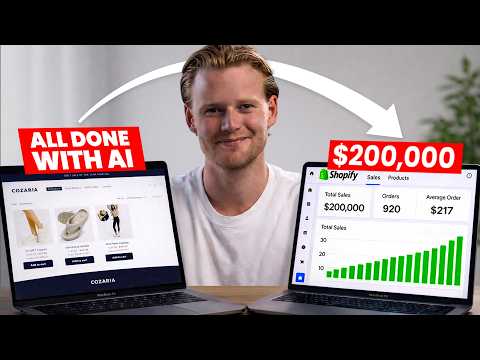
This article details the journey of building a profitable Shopify dropshipping store using AI tools, from product selection and branding to ad creation and overcoming challenges like ad account bans. The store made its first sale within one hour of launching ads, demonstrating AI's potential to accelerate e-commerce success.
Is it possible to create a profitable e-commerce store using AI? Having created multiple million-dollar e-commerce stores before, I know the process can take months or even years. This time, I wanted to see if AI could speed things up and build a store in just one month.
I used a variety of AI tools including ChatGPT, Cord, Higsfield, Nano Banana, Arcads, and more. The first step was to use an AI store builder to set up a Shopify theme. After several prompts and clicks, I had a store populated with some products. However, some products, like an oversized hooded blanket, seemed unlikely to be profitable.
Instead of random products, I prefer selling items I am passionate about or knowledgeable of, as I understand the target customer better. I asked ChatGPT for dropshipping product category ideas based on my interests: comfortable clothing, money, and golf. It suggested items like golf swing posture corrector bands and foldable lounge slippers with hard soles. I liked the idea of a slipper brand.
Next, I needed a brand name that was short (5-10 letters), premium-sounding, and with an available domain to avoid legal issues. Using ChatGPT's research model, I generated 12 potential names and checked domain availability. I emphasized the importance of a flexible, trademarkable, and domainable name to allow future product expansion. After refining the prompt to position ChatGPT as a senior brand strategist, I found a suitable name: Koseria.
Creating a logo traditionally took me about 6 hours using Canva templates, often with unsatisfactory results. This time, I used a detailed AI prompt positioning the AI as a senior logo designer to generate simple, premium text-based logos in just over a minute. The logos included variations in lowercase, title case, and uppercase, along with favicons essential for website trustworthiness.
Uploading random photos from AliExpress risks getting banned on platforms like Facebook and Shopify due to poor quality and authenticity. To avoid this, I sourced inspiration photos from Pinterest and used ChatGPT to create JSON files describing the scene, clothing, lighting, and angles. These descriptions were fed into another AI tool to generate unique, never-before-seen images.
To showcase my actual product, I used an AI tool that, given two reference photos and highlighted changes, created perfect product images featuring my slippers.
I used a comprehensive AI prompt to generate compelling product page copy, including unique selling propositions, specifications, and answers to potential customer objections. Clear communication about fabric type and sizing helps build trust and increases the likelihood of purchase.
After about 4 hours of work, the store was functional but needed fine-tuning for aesthetics and user experience. Unlike traditional methods requiring product samples, photoshoots, and editing over weeks, AI accelerated this process dramatically.
I ensured the website had perfect padding, alignment, and trust elements like a navigation menu and contact information to facilitate informed purchases.
Facebook ads remain the strongest advertising platform for e-commerce. Using the AI-generated product images, I animated clips with natural, iPhone-style movements to maintain authenticity and trustworthiness.
I created a UGC (User Generated Content) style script with ChatGPT and used CapCut to assemble the clips and voiceovers. Initially, the voice sounded robotic, but by adding voice prompts, I achieved a more natural tone.
Static image ads were also created quickly by combining AI-generated photos with copy from ChatGPT.
Twenty-four hours before launch, the store was either going to be a success or a failure. Remarkably, the first sale came just one hour after launching the ads. This immediate success was a huge morale boost, as the first Shopify sale is always exciting regardless of past experience.
After uploading a women's apparel product with some skin exposure, my Facebook ad account was banned for unusual activity. This is rare for me, as I usually maintain trustworthy brands with excellent customer service.
I contacted Facebook support and explored options: appealing the ban or using a Facebook agency account. I chose to appeal and also considered agency accounts cautiously due to potential risks.
While resolving ad issues, I set up email marketing using Omnisend, a beginner-friendly and cost-effective platform with excellent customer support. I used ChatGPT to generate email flows like welcome series and abandoned cart reminders, incorporating dynamic blocks to handle multiple products.
Email marketing is crucial for nurturing customers and promoting future products, a step often overlooked by dropshippers.
After regaining access to the ad account, I tested five products. One product stood out, generating over $600 in sales on a $120 ad spend, resulting in approximately $100 profit for the day. Without testing other products, profit could have been around $300.
The plan is to continue testing, scaling the winning product with new creatives and website optimizations, and introducing upsells to increase average order value.
Over the past month, my e-commerce portfolio surpassed $1 billion in topline sales. The Koseria brand alone made $2,300 in sales over five days, with one day yielding over $300 profit.
All AI-generated assets and software tools are valuable, compounding resources that can help transition from a 9-to-5 job to building a sustainable AI-powered brand.
AI can indeed build a store that customers will buy from. With continued effort over six months, I believe this store can reach a million-dollar run rate and evolve into a genuine AI brand focused on product quality and brand values.
For those interested, I have a full course detailing every step of this process.
This journey demonstrates the power of AI in accelerating e-commerce store creation, from product selection and branding to marketing and overcoming challenges. While AI streamlines many tasks, success still requires strategic thinking, iteration, and persistence.



















