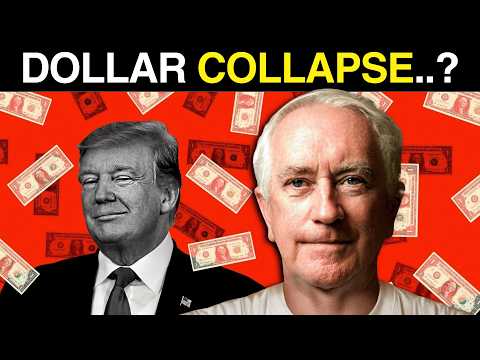
The decline of the US dollar and the instability in global trade reflect long-standing flaws in the international financial system established post-World War II. Economist Mark Carney highlights the selective enforcement of rules and the erosion of trust in the US-led order. The legacy of Bretton Woods, shaped by Harry Dexter White's dollar-centric system, contrasts with Keynes' more balanced proposal. Current crises underscore the need for systemic reform beyond US political cycles.
The value of the US dollar and the stability of the global financial system have become hot topics amid recent economic and political developments. Former President Donald Trump has expressed that a weaker dollar benefits US manufacturing, but his tariff policies have introduced significant risks to international trade relations. Meanwhile, confidence in the dollar and the broader US economic stability is showing signs of erosion, raising concerns about who will bear the cost if the system breaks down.
Donald Trump has publicly stated that the dollar's decline is "great," believing it supports the US manufacturing sector. However, his administration's tariff policies have created uncertainty and risk in trade with the United States. This uncertainty contributes to the dollar's decline, which some experts argue has multiple underlying causes beyond just political decisions.
Mark Carney, former Governor of the Bank of England, delivered a striking speech at the World Economic Forum, breaking from the usual platitudes. He acknowledged that the so-called International Rules-Based Order was always partially false, with the strongest nations exempting themselves when convenient. Trade rules were enforced asymmetrically, and international law was applied selectively depending on the parties involved.
Carney stated that this system was a useful fiction that maintained open sea lanes, a stable financial system, collective security, and frameworks for dispute resolution. However, he warned that this bargain no longer works, and we are in the midst of a rupture, not a transition. The idea of mutual benefit through integration is breaking down when integration becomes a source of subordination for some countries.
Carney's speech highlights a critical issue: the erosion of trust in America as a reliable leader in the global system. The rise of Donald Trump and his policies have exposed the fragility of the system the US helped create. The selective application of rules and the dominance of the US in the international order have been revealed as unsustainable.
The question arises: can the world trust America to lead a reformed system that addresses these flaws? The answer appears increasingly doubtful, regardless of who wins future US elections.
To understand the roots of the current financial system's problems, we must look back to the Bretton Woods Conference at the end of World War II. Harry Dexter White, the chief American delegate and a government bureaucrat, was the dominant figure in designing the post-war financial architecture.
White's proposal replaced the British pound with the US dollar as the primary currency for international trade and linked the dollar to gold at a fixed rate of $35 per ounce. This system, known as the Bretton Woods system, aimed to provide stability but began to break down under President Nixon, leading to a dual standard and eventually the end of the gold standard.
At Bretton Woods, there was an alternative proposal by the renowned economist John Maynard Keynes. Keynes advocated for a system that would penalize both trade surplus and trade deficit countries to encourage balanced trade. This approach aimed to share the burden of adjustment more fairly, rather than placing it almost entirely on deficit countries.
Keynes' system was arguably more sustainable over time, as it sought to prevent large imbalances that could destabilize the global economy. However, White's dollar-centric system prevailed.
The current financial system has experienced multiple crises, including the stock market crash of 1987, the Russian and Asian financial crises, and the 2007-2008 global financial crisis. These events highlight the instability and vulnerabilities inherent in the system.
Carney's claim of a stable financial system is met with skepticism given this history. The selective enforcement of rules and the dominance of the US have contributed to repeated financial shocks.
Adding complexity to the narrative, it appears that Harry Dexter White may have shared secrets with the Soviets, blurring the lines between ideological divides. This fact challenges simplistic left-versus-right interpretations of the Bretton Woods outcomes.
The key issue remains which proposal was more sustainable and equitable. Keynes' approach offered a more balanced framework, but it was not adopted.
The current global financial system, rooted in the post-war order shaped by Harry Dexter White, is showing its age and flaws. The selective application of rules, the dominance of the US, and the erosion of trust have led to a rupture in the international order.
Donald Trump's policies have exposed and accelerated these issues, but the problems run deeper and predate his presidency. Reforming the system will require moving beyond reliance on US leadership alone and addressing the fundamental imbalances that Keynes highlighted decades ago.
The future of the dollar and the global financial system depends on whether the international community can build a more equitable and stable framework that restores trust and balances interests fairly among nations.
This comprehensive analysis underscores the importance of understanding the historical context and current challenges facing the US dollar and the global financial system, as well as the lasting impact of political decisions and economic policies on international stability.