
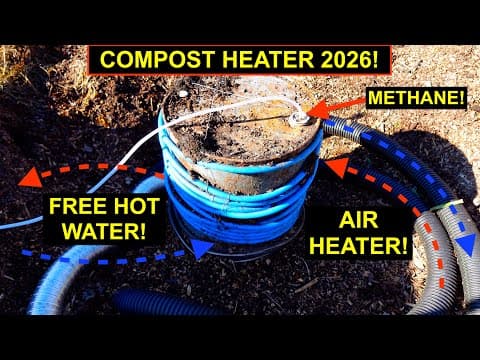
This comprehensive guide explores the construction and operation of a DIY compost heater inspired by Jean Pain's method, designed to provide free, sustainable heating for greenhouses during winter. It covers the preparation, materials, heating mechanisms, and energy calculations involved in building a large-scale compost bioreactor, including water and air heating systems, methane harvesting, and insulation techniques to maximize heat retention and efficiency.
Welcome back to the greenhouse! Today, we dive into the fascinating world of compost heating, inspired by the pioneering work of Jean Pain, a Swiss-born French inventor. This long-awaited guide details the process of building a free bioreactor to heat your greenhouse throughout the winter using compost heat. Whether you're a seasoned gardener or a sustainability enthusiast, this article will walk you through the entire process, from preparation to operation.
Jean Pain was a visionary inventor who documented how composting organic matter could generate significant heat. He coined the term "compost heating" and demonstrated that water could be heated up to 60°C (140°F) from groundwater temperatures of 45 to 52°C (113 to 125°F) at a flow rate of about 4 liters per minute (just under one gallon per minute). He stored this hot water in tanks inside his basement to heat his home through the floor during winter, effectively providing free heating.
Pain also experimented with harvesting hot air using tubes and large drums buried inside compost piles. These drums not only captured heat from decomposing organic matter but also harvested methane gas produced in anaerobic conditions (absence of oxygen). He even converted his truck to run on methane harvested from these tanks, showcasing the versatility of compost heating.
Building a compost heater requires careful preparation and coordination. The process involves creating a large compost pile integrated with water and air heating systems, insulated to retain heat efficiently. Here's a breakdown of the key components and steps:
Understanding the heat output is crucial for sizing the compost heater to your greenhouse needs:
This compost heating system operates off solar power, utilizing large batteries and timers to run pumps and fans. Once the initial investment is made, the system provides free, renewable energy to heat the greenhouse throughout winter, reducing reliance on traditional heating methods and lowering energy bills.
Building a DIY compost heater based on Jean Pain's method is a sustainable and cost-effective way to heat greenhouses during cold months. By combining organic materials, water and air heating systems, and proper insulation, you can create a powerful bioreactor that generates significant heat and even methane gas. This guide provides a comprehensive overview of the process, from materials and construction to operation and energy calculations.
If you have questions or want to learn more about operating these systems, feel free to engage and explore further resources. Harnessing the power of compost heat is an innovative step towards sustainable living and energy independence.
Stay tuned for updates on temperature monitoring and system performance in the coming days and weeks!



















