
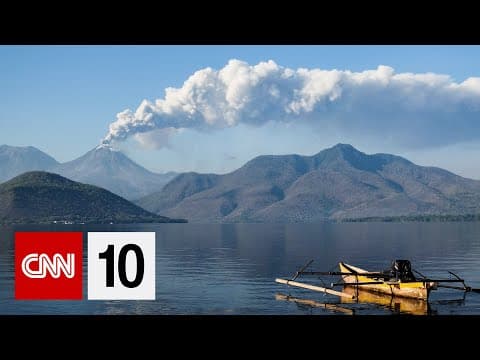
This blog post explores the relationship between melting glaciers and increased volcanic activity in Iceland, highlighting scientific research that suggests climate change may be influencing volcanic eruptions. It also discusses the implications for local communities and the environment.
Iceland, known as the land of Fire and Ice, is a unique geographical location where glaciers and volcanoes coexist. With 32 active volcanoes and about 10% of its land covered by glaciers, Iceland serves as a natural laboratory for scientists studying the effects of climate change. Recent observations indicate a concerning trend: an increase in volcanic eruptions coinciding with the melting of glaciers due to rising global temperatures.
Scientists are investigating whether the melting of glaciers is contributing to the frequency of volcanic eruptions in Iceland. As glaciers shrink, the heavy ice that compresses the Earth's crust is removed, potentially allowing magma to move more freely underground. This change in pressure can lead to increased volcanic activity, as seen with the ASA volcano in Iceland's Central Highlands, which has risen approximately 80 cm in the past three years due to pressure building beneath it.
The melting of glaciers is a direct consequence of climate change, which has been accelerating in recent years. Researchers have found that the rate of magma production beneath Iceland has increased two to three times over the last three decades due to ice loss. This phenomenon raises questions about the stability of the region and the potential for more frequent and intense volcanic eruptions.
In recent months, volcanic eruptions in Southwest Iceland have prompted evacuations and destruction of property. While volcanoes can provide geothermal energy and other benefits, the hazards they pose to local communities are significant. The recent eruptions serve as a stark reminder of the volatile nature of Iceland's landscape and the potential dangers associated with climate change.
The increase in volcanic activity not only threatens the safety of residents but also impacts tourism, which is a vital part of Iceland's economy. Approximately 2 million tourists visit Iceland each year, drawn by the allure of its natural wonders, including active volcanoes and ancient glaciers. As volcanic eruptions become more frequent, the balance between preserving these attractions and ensuring public safety becomes increasingly complex.
Iceland's unique combination of glaciers and volcanoes provides a critical opportunity for scientists to study the impacts of climate change on geological activity. As researchers continue to explore the connections between melting ice and volcanic eruptions, the findings will be essential for understanding the broader implications of climate change on our planet. The situation in Iceland serves as a cautionary tale about the potential consequences of global warming and the urgent need for action to mitigate its effects.
In a related note, did you know that the Louvre Museum in Paris was originally built as a fortress? Commissioned by King Philip II in 1190 AD, it has since transformed into the largest museum in the world, housing over 500,000 works of art.
As we continue to monitor the changes in Iceland, it is crucial to remain aware of how climate change is reshaping our world, not just in terms of natural beauty but also in terms of safety and sustainability.



















