
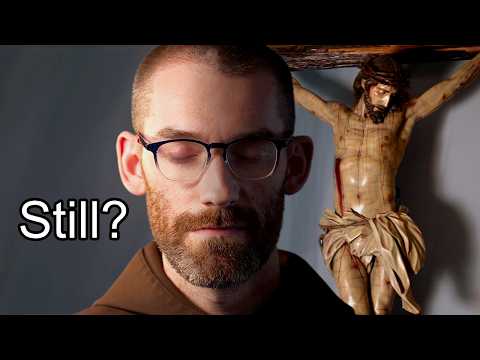
This article explores the question of why Christians continue to suffer despite Jesus Christ's victory over sin and death. Drawing on the life and teachings of St. John of the Cross, it explains how suffering can be embraced with hope and love, transformed through union with Christ's love, and ultimately overcome in eternal life. The article encourages believers to trust in God's love and find strength in their weakness through prayer and faith.
Praise be to Jesus Christ.
Many Christians ask themselves a profound and difficult question: If Christ has won us the victory, why do we still suffer so much? Why is life still painful despite being a practicing Christian? This question touches the heart of Christian experience, as many believers have been converted from lives of serious sin or are fighting against it, freed from burdens by Christ's love, yet still find themselves weighed down by the heaviness of life.
Christ promised, "Take my yoke upon you, for my yoke is easy and my burden light, and you will find rest for your souls." Yet, many faithful Christians find their souls weighed down, their lives difficult and burdensome. This paradox invites us to explore the meaning of suffering in the Christian life.
St. John of the Cross offers profound insight into accepting suffering with hope and love amid trials. Born into a deeply faith-filled household, John also experienced the harsh realities of a broken world. His father died when John was only three years old. His mother, Catalina, was among the poorest of the poor and undertook a hunger pilgrimage, traveling hundreds of miles on foot to find food for her sons. Tragically, one brother died of malnutrition, and another was given up to relatives for years to survive.
John received free education from Jesuits and later worked in a hospital caring for those suffering from syphilis, choosing to serve the most broken people with disturbing sores and tragic life stories. This immersion in suffering shaped his understanding of God's love amid brokenness.
Many Christians face similar sufferings today—loss of loved ones, poverty, illness, depression, difficult relationships, or struggles with sin and addiction. When the alarm clock rings and the thought "I cannot take another day of this" arises, St. John of the Cross's life offers an answer to the question: If God loves me, why doesn't He take my suffering away?
Despite his hardships, John did not become bitter. Instead, he focused on Jesus crucified. He saw Jesus exemplified in his mother's love and care, her faithfulness despite suffering, and her sacrifices for her children. The love of his parents was the foundation that enabled John to endure suffering, sweetening and lightening his burden.
Only the all-encompassing love of Jesus crucified could protect and heal the bitterness that suffering might have caused. Jesus pierces through our sufferings with immense love, transforming all suffering by embracing it with compassion. We are not alone in our suffering.
God loved the world so much that He gave His only begotten Son so that we might have eternal life. Even if all we can do is pray, "I can't do this. God, please help me," this act of faith and love is enough.
The victory of Jesus does not always remove our sufferings but transforms them into a union of love. St. John of the Cross himself endured imprisonment by his own religious brothers, confined in darkness for nine months without basic comforts. Yet, he never complained or ridiculed his persecutors, forgiving them and accepting suffering out of love for Jesus.
John surrendered to God's love through faith and hope, even without fully understanding why he suffered. This faith inflamed his love for God and bore incredible fruits in the Church, inspiring sublime spiritual poetry and mystical teachings on union with God.
While the sufferings of saints like John of the Cross may seem overwhelming, Jesus repeatedly tells us not to be afraid. He promises we will not be tried beyond our strength. We may feel too weak to endure or to have faith like John, but the cross is not about superhuman strength.
As St. Paul says, Jesus was crucified in weakness. He freely took upon Himself suffering and death in total weakness, fulfilling Isaiah's prophecy of the suffering servant: "He was despised and rejected, a man of suffering acquainted with grief... by His wounds we are healed."
Jesus died in weakness, allowing Himself to be crushed by evil out of love for the Father, knowing the consequences of sin must be repaired. God's love does not delight in our suffering but longs to heal us through love.
Both Jesus and John of the Cross knew that trust in God's love, even when hidden beneath suffering, empowered them to endure and transform their pain. We are called to be willing to be weak and to approach Jesus burdened and hurting, assured of His grace and help.
Jesus said, "Fear not, little flock, for it is the Father's good pleasure to give you the kingdom. God has chosen the weak to confound the strong."
Jesus was innocent, meek, and humble, silent like a lamb led to slaughter. Though misunderstood and rejected, He laid down His life and took it up again, reversing the curse of Adam. Now He dwells with the Father where there is no suffering, pain, or tears.
For those suffering in hospital rooms, grieving loss, isolated, or facing hardships, believe in God's love manifested in Jesus Christ. We do not need to change before coming to Him; we must simply turn to Him in prayer and say, "Lord, I cannot do this. I need You and believe You will help me."
Jesus will not test us beyond our strength, and no situation is beyond His understanding and love. Receiving God's love in prayer enables us to embrace suffering out of love, transforming it into communion with Jesus's victory over sin and death.
This week, when you encounter suffering, turn to God in prayer, admit your weakness, and trust in His love. This habit will transform your sufferings into gateways of communion with Jesus.
The joy of Christ's victory is not always realized by removing suffering in this life but by the certainty that all suffering will be obliterated in the next. Jesus Christ is risen from the dead, and no one can take that hope away.
As Scripture proclaims:
Where, O death, is your victory? Where, O death, is your sting?
Thanks be to God who gives us the victory through our Lord Jesus Christ.



















