
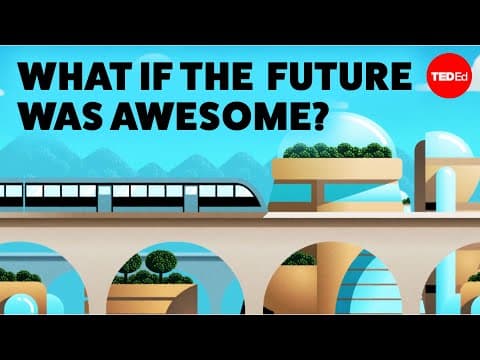
This blog post explores a hopeful vision of Earth in 2125, highlighting sustainable transformations in Los Angeles, Lagos, and São Paulo through innovative technologies and community-driven initiatives inspired by the solarpunk movement.
Faced with the realities of current crises, it is easy to assume our world is headed in a bleak direction. However, there is good reason to be hopeful. With developments in science and technology, a positive future is more viable than ever before. This post explores what the future of three cities could look like if we harness the tools we already have at our disposal to solve today's problems. These visions are inspired by solarpunk, an art and social movement that imagines sustainable worlds in which humans, nature, and technology exist in harmony.
In 2125, Los Angeles has transformed from a city once plagued by water shortages and heavy reliance on cars. Today, residents glide down Highway 101 on electric bikes, buses, and trains, with no fees for these services. Instead, people contribute their technical or gardening skills or provide entertainment for others as they travel.
Year-round sunlight makes Los Angeles well-suited for solar infrastructure, but water remains a limited resource. City dwellers manage this scarcity by maintaining water-efficient farms in high-rises and on the 17 million square meters of land that once housed parking spaces. Here, students and scientists mist local fruits, vegetables, and grains with nutrients, creating portable farms that stack layers of plants and fertilizers into temperature-controlled shipping containers. These containers can be transported to city residents and beyond, ensuring access to fresh produce.
In Lagos, Nigeria, the city’s coast has undergone a remarkable transformation. Previously, sand mining and urban expansion eroded roughly 84% of the shoreline, putting the city at risk of catastrophic flooding. In response, the city restored its wetlands, which now act as natural sponges.
An intricate array of pipes equipped with turbines captures the energy of flowing water and converts it into electricity. This renewable energy powers buildings and services throughout Lagos, including the famous Balogun market, a hub for trade, socializing, and entertainment.
Along the coast, residents steward thousands of native mangrove plants, which serve as carbon sinks, clean up past pollutants, and support biodiversity. The community celebrates the mangrove in various forms; local designers use its tannins to dye fabrics, while scientists research its pharmaceutical potential and its uses as a natural pesticide. Further out to sea, sustainable fishing practices are embraced, and fish processing waste is repurposed to power ships, floating farms, and public housing.
São Paulo, Brazil, has fully reimagined its housing landscape. Once battling heavy pollution and unsanitary living conditions for a third of its population, the city now features homes, schools, local government buildings, and entertainment spaces constructed from repurposed materials from the former auto industry.
These buildings generate their own solar power and capture rainwater for reuse. At the center of this transformation is a new solar football stadium that not only generates energy but also serves as an incubator for growing native plants. In areas where the land remains toxic, citizen scientists are cultivating thousands of mushrooms that break down harmful chemicals in the soil, attracting insects and birds back to the area.
The visions of Los Angeles, Lagos, and São Paulo embody the principle of life enmeshed with the promises and limitations of its surroundings. While this future may seem far from reach, it is achievable, and it might not even take us 100 years to get there. Around the world, communities are embracing similar ideas to build more sustainable systems.
Optimism can be a powerful mobilizing force. With natural technologies and renewable energy at our disposal, we have many transformative tools available. All we need is the will to implement them. The future of our planet can be bright, sustainable, and harmonious if we choose to act now.



















