
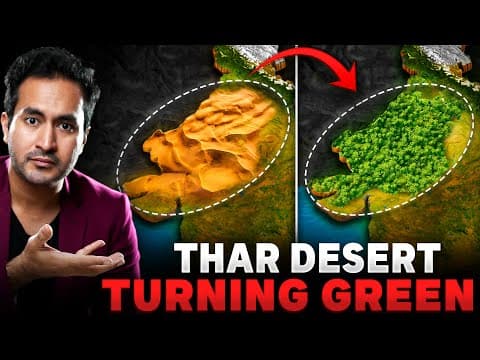
India is undertaking a remarkable initiative to transform the Thar Desert into a green forest, driven by innovative techniques and the paradoxical effects of global warming. While this transformation could enhance local biodiversity, it poses significant risks of reduced rainfall and potential agricultural crises across the country.
The Thar Desert, known for its harsh climate and minimal rainfall, is on the brink of a remarkable transformation into a lush green forest. This initiative has already begun, and it is drawing attention from both national and international media. The Thar Desert receives only about 150 mm of rainfall annually, a figure that can be surpassed by cities like Mumbai in just a few hours. The region experiences extreme temperatures, with winter lows reaching nearly -5 degrees Celsius and blistering summer heat.
Interestingly, the very global warming that threatens ecosystems worldwide is contributing to the greening of the Thar Desert. While global warming is causing widespread deforestation and glacier melting, it is also creating conditions that allow the Thar to flourish. This paradox raises concerns, as the greening of the desert could lead to severe droughts in other parts of India, potentially resulting in food shortages.
To understand the current situation, we must look back to 1792 when the Thar Desert faced severe droughts and famines every three years. The Central Arid Zone Research Institute has documented that many residents abandoned the area due to these harsh conditions. By the time of India's independence, the population density in the Thar was only about 102 people per square kilometer.
Post-independence, Prime Minister Jawaharlal Nehru was presented with a solution by hydraulic engineer Kanwar Sen. The proposal involved diverting water from Punjab's rivers to irrigate the barren lands of the Thar Desert. However, this plan faced two major challenges: financial constraints and ongoing disputes over water resources between India and Pakistan.
In 1957, Nehru signed the Indus Water Treaty with Pakistan, resolving the river dispute and allowing India to control the waters of the Ravi, Sutlej, and Beas rivers. The government allocated $20 million for the canal project, a significant investment at the time. By 1985, the Indira Gandhi Canal Project was successfully completed, marking a significant milestone in the greening of the Thar Desert.
The completion of the canal project doubled the agricultural land in the Thar Desert. In 1956, only 12.7% of the land was cultivated, but by 1990, this figure had risen to 24.9%. This transformation was so significant that it was featured in the Executive Intelligence Review as one of the most successful projects addressing water scarcity in the region.
To further enhance greening efforts, the Indian government drew inspiration from British techniques used in Sindh, where the foreign babool plant had transformed the landscape. This plant thrives in arid conditions, improves soil nitrogen levels, and provides fodder for livestock. Its ability to spread rapidly makes it an ideal candidate for afforestation initiatives in the Thar Desert.
Recent studies by meteorologists, including Bhupendra Nath Goswami from Gauhati Cotton University, indicate that global warming is creating unusual pressure systems in the Bay of Bengal. These systems are redirecting rainfall patterns, causing more rain to fall in the Thar Desert while reducing precipitation in northern and northeastern India. If this trend continues, the Thar could become a green oasis, but at the cost of severe droughts in other regions.
While the greening of the Thar Desert may seem beneficial, it poses significant risks. The transformation could disrupt the natural balance, leading to a decrease in rainfall across India. Research suggests that by 2050, 30 Indian cities could face extreme water crises due to these changing patterns.
Another alarming consequence of a greener Thar Desert could be the resurgence of locust swarms. These insects thrive in newly greened areas, leading to potential agricultural devastation. In 2020, locusts from Africa invaded India, destroying crops across vast areas. If the Thar becomes a breeding ground for locusts, it could threaten food security in surrounding states like Punjab and Haryana.
The transformation of the Thar Desert into a green forest is a complex and multifaceted issue. While it presents opportunities for biodiversity and agricultural development, it also carries significant risks that could impact food security and water availability across India. As this ambitious project unfolds, it is crucial to monitor its effects on the environment and the broader implications for the country.
This initiative serves as a reminder of the delicate balance between human intervention and natural ecosystems, highlighting the need for sustainable practices in the face of climate change.



















